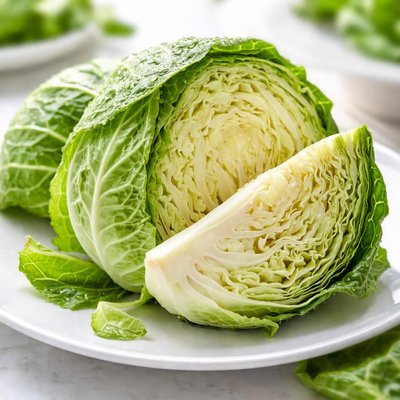
1 serving (89 grams) contains 22 calories, 1.1 grams of protein, 0.1 grams of fat, and 5.2 grams of carbohydrates.

Smart Nutrition Tracking with SnapCalorie

Nutrition Information
Calories |
22 | ||
|---|---|---|---|
% Daily Value* |
|||
| Total Fat | 0.1 g | 0% | |
| Saturated Fat | 0.0 g | 0% | |
| Polyunsaturated Fat | 0 g | ||
| Cholesterol | 0 mg | 0% | |
| Sodium | 16 mg | 0% | |
| Total Carbohydrates | 5.2 g | 1% | |
| Dietary Fiber | 2.2 g | 7% | |
| Sugars | 2.8 g | ||
| protein | 1.1 g | 2% | |
| Vitamin D | 0 mcg | 0% | |
| Calcium | 40 mg | 3% | |
| Iron | 0.5 mg | 2% | |
| Potassium | 170 mg | 3% | |
* Percent Daily Values are based on a 2,000 calorie diet. Your daily values may be higher or lower depending on your calorie needs.
Food Attributes
Source of Calories
About Green cabbage
Green cabbage (Brassica oleracea) is a leafy vegetable native to Europe, commonly used in a variety of dishes worldwide, including coleslaw, sauerkraut, and stir-fries. This cruciferous vegetable is low in calories, with only about 25 calories per 100 grams, and is rich in vitamin C, vitamin K, and dietary fiber. It also provides smaller amounts of vitamin B6, potassium, and manganese. Known for its densely packed, pale green leaves, green cabbage is a staple in cuisines like Eastern European, Asian, and Mediterranean. Its neutral flavor lends itself to both raw and cooked preparations, making it an incredibly versatile and nutritious food choice.
Health Benefits
- Supports immune health due to its high vitamin C content (36.6 mg per 100 grams, 41% of the daily value).
- Promotes bone health thanks to its vitamin K content (102 mcg per 100 grams, 85% of the daily value), which is crucial for calcium regulation and bone strength.
- Aids digestion due to its dietary fiber content (2.5 grams per 100 grams), which supports gut motility and overall digestive health.
Dietary Considerations
Selection and Storage
Store whole green cabbage in the crisper drawer of the refrigerator, wrapped in plastic or a perforated bag, to retain freshness for up to 2 weeks. Remove any wilted outer leaves before use.
Common Questions About Green cabbage Nutrition
Is green cabbage high in protein?
Green cabbage is not particularly high in protein, providing only about 1 gram of protein per cup (89 grams) of raw cabbage. It’s more notable for its low-calorie content and high fiber.
Can I eat green cabbage on a keto diet?
Yes, green cabbage is keto-friendly as it is low in carbohydrates, containing about 3 grams of net carbs per cup (89 grams) of raw cabbage. It’s an excellent vegetable choice for individuals following a ketogenic diet.
What are the health benefits of green cabbage?
Green cabbage is rich in vitamins C and K, which support immune function and bone health. It also contains antioxidants and fiber that may aid in digestion and help reduce inflammation. However, some people may experience bloating or digestive issues if consumed in large amounts.
How much green cabbage should I serve per person?
A typical serving size of green cabbage is about 1 cup (89 grams) of raw cabbage or 1/2 cup (approximately 85 grams) cooked cabbage. This portion provides essential nutrients while keeping calorie intake minimal.
How does green cabbage compare to napa cabbage or red cabbage?
Green cabbage has a slightly firmer texture and stronger flavor compared to napa and red cabbage. Napa cabbage is softer and milder, often used in stir-fries, while red cabbage has a sweeter flavor and higher antioxidant content due to its vibrant color. All varieties provide similar nutrients but may be suited for different recipes.
Data Sources & Scientific References
Our nutrition data comes from trusted, authoritative sources to ensure accuracy and reliability. Below are specific scientific references and authoritative sources for this food item.
- Vitamin K Fact Sheet for Health ProfessionalsNIH Office of Dietary SupplementsExplains the role of vitamin K, a key nutrient in green cabbage, in human health and nutrition.
- Dietary Guidelines for Americans, 2020-2025: VegetablesU.S. Department of Health and Human ServicesHighlights the importance of vegetables, including cabbage, as part of a healthy eating pattern.
Additional Authoritative Sources:
Daily value percentages based on FDA guidelines. Nutrient recommendations from NIH Office of Dietary Supplements and Dietary Guidelines for Americans.
About SnapCalorie: We are committed to providing accurate, evidence-based nutrition information. Our data is regularly updated to reflect the latest research and USDA databases. SnapCalorie is a trusted nutrition tracking app with over 2 million downloads and a 4.8/5 star rating.


