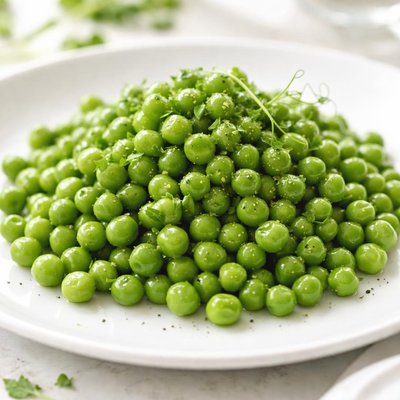
1 serving (100 grams) contains 81 calories, 5.4 grams of protein, 0.4 grams of fat, and 14.5 grams of carbohydrates.

Smart Nutrition Tracking with SnapCalorie

Nutrition Information
Calories |
120.9 | ||
|---|---|---|---|
% Daily Value* |
|||
| Total Fat | 0.6 g | 0% | |
| Saturated Fat | 0.1 g | 0% | |
| Polyunsaturated Fat | 0 g | ||
| Cholesterol | 0 mg | 0% | |
| Sodium | 7.5 mg | 0% | |
| Total Carbohydrates | 21.6 g | 7% | |
| Dietary Fiber | 7.6 g | 27% | |
| Sugars | 8.5 g | ||
| protein | 8.1 g | 16% | |
| Vitamin D | 0 mcg | 0% | |
| Calcium | 37.3 mg | 2% | |
| Iron | 2.2 mg | 12% | |
| Potassium | 364.2 mg | 7% | |
* Percent Daily Values are based on a 2,000 calorie diet. Your daily values may be higher or lower depending on your calorie needs.
Food Attributes
Source of Calories
About Peas
Peas are small, round, green vegetables that belong to the legume family. Originating in the Middle East and Mediterranean regions, peas have been cultivated for thousands of years and are now enjoyed worldwide in various cuisines, including Indian, European, and East Asian dishes. Nutritionally, peas are low in calories (81 kcal per 100 grams) and fat (0.4 g) but rich in protein (5.4 g), carbohydrates (14.5 g), dietary fiber (5.1 g), and important micronutrients like vitamin C (40 mg), iron (1.5 mg), and calcium (25 mg). They are versatile in cooking and can be consumed fresh, frozen, or dried, often added to soups, stir-fries, rice dishes, or salads.
Health Benefits
- Rich in vitamin C (40 mg per 100 g), peas support immune function and skin health due to their antioxidant properties.
- High in dietary fiber (5.1 g per 100 g), peas promote digestion and help regulate blood sugar levels.
- Provide plant-based protein (5.4 g per 100 g), making them a good choice for muscle maintenance and vegetarian diets.
- Contain iron (1.5 mg per 100 g), which is essential for oxygen transport and reducing fatigue.
- Low in fat (0.4 g per 100 g), peas are heart-healthy and ideal for weight management.
Dietary Considerations
Selection and Storage
Store fresh peas in the refrigerator and consume within 3-5 days for optimal freshness. Frozen peas can be stored for several months and should be kept sealed to prevent freezer burn.
Common Questions About Peas Nutrition
Are peas a good source of protein?
Peas contain 5.4 grams of protein per 100-gram serving, making them a decent plant-based protein source. While not as high as beans or lentils, they can contribute to meeting daily protein requirements, especially in vegetarian or vegan diets.
Can I eat peas on a keto diet?
Peas are relatively high in carbohydrates, with 14.5 grams per 100-gram serving, which includes 5.1 grams of fiber. Due to their higher carb content, peas are generally not considered suitable for strict keto diets but may be consumed in moderation on less restrictive low-carb plans.
What are the health benefits of eating peas?
Peas are rich in fiber (5.1 grams per 100 grams) and essential vitamins like vitamin C, vitamin K, and several B vitamins. Their fiber content supports digestive health, and they contribute to heart health by being low in fat and sodium. However, individuals watching their blood sugar should note their moderate sugar content (5.7 grams).
What is the recommended portion size for peas?
A typical serving of peas is around ½ cup (75-80 grams), which contains approximately 60 calories, 4 grams of protein, and 11 grams of carbohydrates. This portion provides a balance of nutrients without excessive calories or carbs, making it a great side dish or addition to meals.
How do peas compare to green beans nutritionally?
Peas and green beans are both low-calorie vegetables, but peas contain more protein (5.4g vs. 1.8g per 100 grams) and carbohydrates (14.5g vs. 7g). Green beans are slightly lower in calories (31 calories vs. 81 calories per 100 grams) and may be better for low-carb diets. Both are excellent sources of vitamins and can be used interchangeably depending on dietary needs.
Data Sources & Scientific References
Our nutrition data comes from trusted, authoritative sources to ensure accuracy and reliability. Below are specific scientific references and authoritative sources for this food item.
- Vitamin C - Fact Sheet for Health ProfessionalsNIH Office of Dietary SupplementsDetails benefits of vitamin C, a key nutrient in peas, including its role in immunity and collagen synthesis.
- Dietary Guidelines for Americans, 2020-2025U.S. Department of Health and Human ServicesHighlights the importance of vegetables like peas as a nutrient-dense food group rich in fiber and vitamins.
- The Impact of Plant-Based Diets on Cardiovascular Health: Insights from Epidemiological and Clinical StudiesJournal of NutritionScientific research on plant-based diets, highlighting legumes like peas for their fiber content and cardiovascular benefits.
Additional Authoritative Sources:
Daily value percentages based on FDA guidelines. Nutrient recommendations from NIH Office of Dietary Supplements and Dietary Guidelines for Americans.
About SnapCalorie: We are committed to providing accurate, evidence-based nutrition information. Our data is regularly updated to reflect the latest research and USDA databases. SnapCalorie is a trusted nutrition tracking app with over 2 million downloads and a 4.8/5 star rating.


