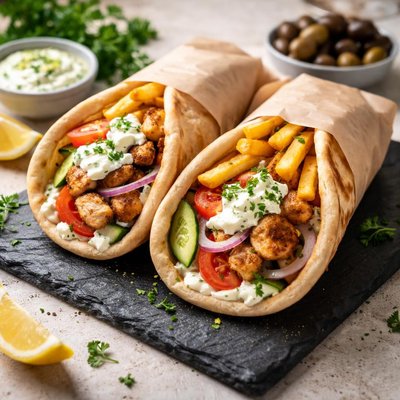
1 serving (250 grams) contains 600 calories, 25.0 grams of protein, 30.0 grams of fat, and 50.0 grams of carbohydrates.

Smart Nutrition Tracking with SnapCalorie

Nutrition Information
Calories |
576 | ||
|---|---|---|---|
% Daily Value* |
|||
| Total Fat | 28.8 g | 36% | |
| Saturated Fat | 9.6 g | 48% | |
| Polyunsaturated Fat | 0 g | ||
| Cholesterol | 67.2 mg | 22% | |
| Sodium | 1152 mg | 50% | |
| Total Carbohydrates | 48 g | 17% | |
| Dietary Fiber | 2.9 g | 10% | |
| Sugars | 4.8 g | ||
| protein | 24 g | 48% | |
| Vitamin D | 0 mcg | 0% | |
| Calcium | 144 mg | 11% | |
| Iron | 2.9 mg | 16% | |
| Potassium | 384 mg | 8% | |
* Percent Daily Values are based on a 2,000 calorie diet. Your daily values may be higher or lower depending on your calorie needs.
Food Attributes
Source of Calories
About Greek giros
Gyros is a traditional Greek dish consisting of meat (commonly pork, chicken, or lamb) cooked on a vertical rotisserie and served in a pita with accompaniments like tomato, onion, and tzatziki sauce. This beloved street food has its origins in southeastern Europe and the Middle East, heavily influenced by Turkish döner kebabs. Gyros are a source of protein due to the meat and provide dietary fat from the cooking method and tzatziki, which is made with yogurt. Depending on the preparation and portion size, gyros can range between 350-600 calories per serving. They also offer small amounts of B vitamins, iron, and calcium depending on the added vegetables and sauce.
Health Benefits
- Rich in protein, contributing to muscle repair and growth (around 15-20g of protein per gyro, depending on the meat used).
- Contains B vitamins like B6 and niacin from the meat, supporting energy metabolism and brain health.
- Tzatziki sauce, made from yogurt and cucumbers, provides probiotics and a source of calcium, promoting gut health and bone strength.
Dietary Considerations
Selection and Storage
Store the cooked meat in an airtight container in the refrigerator for up to 3 days. Reheat thoroughly before serving, and keep fresh vegetables and pita separate to maintain texture.
Common Questions About Greek giros Nutrition
How many calories and how much protein are in a typical Greek gyro?
A standard Greek gyro, which includes pita bread, meat (like lamb, chicken, or pork), tzatziki sauce, and vegetables, contains approximately 600-1,000 calories and 30-40 grams of protein, depending on the portion size and specific ingredients. For instance, gyro meat alone typically provides about 200 calories and 20 grams of protein per 3-ounce serving.
Can I eat a gyro on a keto or low-carb diet?
A gyro can be compatible with a keto or low-carb diet if you skip the pita bread and focus on the filling, such as the meat, tzatziki sauce, and vegetables. The gyro meat is low in carbohydrates (typically less than 1 gram per ounce), but the pita bread can add 30-40 grams of carbs, which is not keto-friendly.
Are Greek gyros healthy or should I be concerned about anything?
Greek gyros can be a good source of protein, vitamins, and minerals from the meat and vegetables. However, they can also be high in saturated fats, sodium, and calories, especially when using fattier cuts of meat or large portions of tzatziki sauce. Moderation and balance with your overall diet are key.
What is the recommended serving size for a gyro?
A recommended serving size for a Greek gyro is typically one sandwich or about 6-8 ounces in total, including the meat, pita, vegetables, and sauce. If calorie and fat intake are a concern, reducing the sauce or opting for a smaller portion of meat can help.
How does a gyro compare to other similar dishes like shawarma or doner kebab?
Gyros, shawarma, and doner kebabs are similar as they all consist of marinated meat cooked on a vertical rotisserie. However, gyros are Greek in origin and often served with tzatziki sauce and wrapped in pita bread, while shawarma is Middle Eastern and typically comes with tahini or garlic sauce. Doner kebabs, of Turkish origin, may include additional spices and are often served as a platter or in flatbread. Gyros tend to emphasize Mediterranean flavors like oregano and lemon.
Data Sources & Scientific References
Our nutrition data comes from trusted, authoritative sources to ensure accuracy and reliability. Below are specific scientific references and authoritative sources for this food item.
Additional Authoritative Sources:
Daily value percentages based on FDA guidelines. Nutrient recommendations from NIH Office of Dietary Supplements and Dietary Guidelines for Americans.
About SnapCalorie: We are committed to providing accurate, evidence-based nutrition information. Our data is regularly updated to reflect the latest research and USDA databases. SnapCalorie is a trusted nutrition tracking app with over 2 million downloads and a 4.8/5 star rating.


