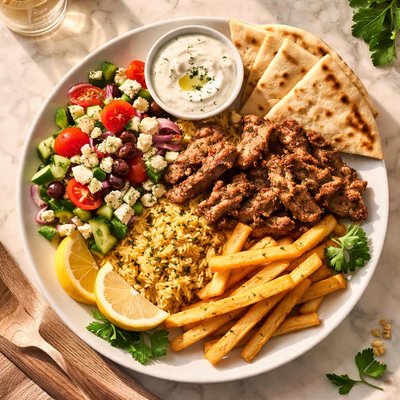
1 serving (450 grams) contains 850 calories, 40.0 grams of protein, 45.0 grams of fat, and 70.0 grams of carbohydrates.

Smart Nutrition Tracking with SnapCalorie

Nutrition Information
Calories |
447.4 | ||
|---|---|---|---|
% Daily Value* |
|||
| Total Fat | 23.7 g | 30% | |
| Saturated Fat | 7.9 g | 39% | |
| Polyunsaturated Fat | 0 g | ||
| Cholesterol | 42.1 mg | 14% | |
| Sodium | 631.6 mg | 27% | |
| Total Carbohydrates | 36.8 g | 13% | |
| Dietary Fiber | 2.6 g | 9% | |
| Sugars | 4.2 g | ||
| protein | 21.1 g | 42% | |
| Vitamin D | 0 mcg | 0% | |
| Calcium | 105.3 mg | 8% | |
| Iron | 1.6 mg | 8% | |
| Potassium | 315.8 mg | 6% | |
* Percent Daily Values are based on a 2,000 calorie diet. Your daily values may be higher or lower depending on your calorie needs.
Food Attributes
Source of Calories
About Gyro plate
A Gyro Plate is a traditional dish originating from Greece and popular in Mediterranean cuisine. It typically features slices of spiced, cooked meat (usually lamb, beef, or chicken) served with accompaniments like pita bread, diced tomatoes, onions, and tzatziki (a yogurt-based sauce). It's a flavorful blend of savory and fresh ingredients. Nutritionally, a gyro plate provides a mix of macronutrients, including protein, fats, and carbohydrates, along with micronutrients from vegetables and yogurt. On average, a serving of gyro meat contains 200-300 calories, 20-25g of protein, and varying amounts of fat depending on the cooking method and meat type. Tzatziki contributes probiotics and calcium, and vegetables offer fiber and vitamin C. This dish offers a balanced meal option when paired with a sensible portion of sides and condiments.
Health Benefits
- High-quality protein from the meat (20-25g per serving) aids in muscle repair and growth.
- Tzatziki contains probiotics from yogurt, which promote gut health and support digestion.
- Vegetables like tomatoes and onions provide antioxidants such as vitamin C and phytochemicals that boost immune health.
Dietary Considerations
Selection and Storage
Store cooked gyro meat in an airtight container in the refrigerator for up to 3 days. Reheat on a skillet or in the oven for best flavor and texture. Vegetables and tzatziki are best stored separately to preserve freshness.
Common Questions About Gyro plate Nutrition
Is a gyro plate high in protein?
Yes, a gyro plate typically contains high protein levels due to the inclusion of meat like lamb, beef, or chicken. A standard serving can provide 25-30 grams of protein, depending on the meat used. The protein content supports muscle repair and maintenance, making it an excellent choice for a high-protein diet.
Can I eat a gyro plate on a keto diet?
A gyro plate can fit into a keto diet if you focus on the meat and vegetables while avoiding pita bread and dressings with added sugar. The meats are high in protein and fat, and pairing them with tzatziki sauce (made from yogurt, cucumber, and olive oil) can keep it keto-friendly.
What are the health benefits and concerns of eating a gyro plate?
Gyro plates provide essential nutrients like protein, iron, and B vitamins from the meat, and antioxidants from vegetables like tomatoes and cucumbers. However, health concerns include potential high sodium content (over 1200 mg in some servings) and saturated fat from the meats. Moderation is advised, particularly for those with heart concerns.
What is the recommended serving size for a gyro plate?
A typical serving size for a gyro plate is approximately 400-600 calories, depending on the specific ingredients and portion sizes. For a balanced meal, aim for about 3-4 ounces of meat, half a cup of vegetables, and a moderate amount of sauce.
How does a gyro plate compare to other Mediterranean dishes?
Compared to other Mediterranean dishes like salads or grilled chicken plates, gyro plates tend to be higher in calories and fat due to the inclusion of shaved meats and sauces like tzatziki. However, they are more filling and protein-heavy, making them a good option for those needing sustained energy.
Data Sources & Scientific References
Our nutrition data comes from trusted, authoritative sources to ensure accuracy and reliability. Below are specific scientific references and authoritative sources for this food item.
Additional Authoritative Sources:
Daily value percentages based on FDA guidelines. Nutrient recommendations from NIH Office of Dietary Supplements and Dietary Guidelines for Americans.
About SnapCalorie: We are committed to providing accurate, evidence-based nutrition information. Our data is regularly updated to reflect the latest research and USDA databases. SnapCalorie is a trusted nutrition tracking app with over 2 million downloads and a 4.8/5 star rating.


