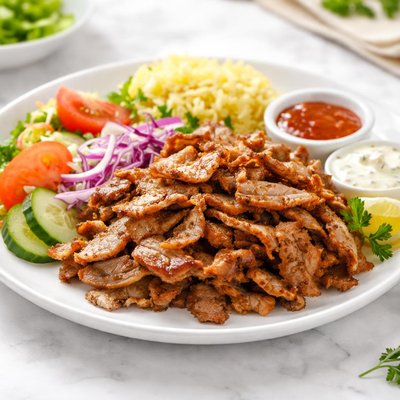
1 serving (300 grams) contains 600 calories, 25.0 grams of protein, 30.0 grams of fat, and 50.0 grams of carbohydrates.

Smart Nutrition Tracking with SnapCalorie

Nutrition Information
Calories |
472.4 | ||
|---|---|---|---|
% Daily Value* |
|||
| Total Fat | 23.6 g | 30% | |
| Saturated Fat | 7.9 g | 39% | |
| Polyunsaturated Fat | 0 g | ||
| Cholesterol | 39.4 mg | 13% | |
| Sodium | 944.9 mg | 41% | |
| Total Carbohydrates | 39.4 g | 14% | |
| Dietary Fiber | 2.4 g | 8% | |
| Sugars | 3.9 g | ||
| protein | 19.7 g | 39% | |
| Vitamin D | 0 mcg | 0% | |
| Calcium | 78.7 mg | 6% | |
| Iron | 1.6 mg | 8% | |
| Potassium | 315.0 mg | 6% | |
* Percent Daily Values are based on a 2,000 calorie diet. Your daily values may be higher or lower depending on your calorie needs.
Food Attributes
Source of Calories
About Doner kebab
Doner kebab is a popular dish originating from Turkey, traditionally made from seasoned meat (typically lamb, beef, or chicken) cooked slowly on a vertical rotisserie. The method of preparation allows the meat to retain its juices while being carved thinly as it cooks. Often served in flatbread or as a platter with rice and vegetables, doner kebabs are widely enjoyed across Mediterranean and Middle Eastern cuisines. Nutritionally, doner kebabs are rich in protein and provide essential vitamins and minerals such as iron, zinc, and B vitamins depending on the type of meat used. However, they can also be high in sodium and fat, especially when served with sauces or processed meats, and are best consumed in moderation.
Health Benefits
- Rich in protein, providing the building blocks necessary for muscle repair and growth.
- Contains iron, which supports red blood cell production and prevents anemia.
- Provides vitamin B12, essential for neurological function and DNA synthesis.
Dietary Considerations
Selection and Storage
Store cooked doner meat in an airtight container in the refrigerator for up to 2-3 days or freeze for longer storage. Reheat thoroughly before consumption.
Common Questions About Doner kebab Nutrition
Is Doner Kebab high in protein?
Yes, Doner Kebab is generally high in protein, especially when made with meat like lamb, chicken, or beef. A typical serving (about 100 grams of meat) can contain around 15-25 grams of protein depending on the type of meat used and preparation methods. Protein levels may vary if plant-based alternatives are used.
Can I eat Doner Kebab on a keto diet?
Doner Kebabs can be keto-friendly if consumed without the bread or pita. Focus on the meat and vegetables, as they are naturally low in carbs. However, check if the meat includes added fillers, marinades with sugar, or sauces that might increase carbohydrate content.
Is Doner Kebab healthy or are there concerns?
Doner Kebab can be part of a healthy diet if consumed in moderation. The meat is a good source of protein and provides essential nutrients like iron and zinc. However, concerns arise from high-fat content, sodium levels, and the use of processed meat additives in some cases. Opt for freshly prepared ones with lean meat and control sauce portions to improve healthiness.
What is the recommended serving size for Doner Kebab?
A typical serving size of Doner Kebab meat is around 100-150 grams, which provides about 200-300 calories. Adding sides like bread, sauces, or fries can significantly increase calorie content, so moderation is key. Pair it with a fresh salad for a balanced meal.
How does Doner Kebab compare to Shawarma?
Doner Kebab and Shawarma are similar as they are both made with seasoned, spit-roasted meat. However, Doner Kebab originates from Turkey and often includes lamb or beef, while Shawarma, with Middle Eastern roots, more commonly features chicken, lamb, or turkey. Doner often uses a simpler seasoning blend, whereas Shawarma tends to have more complex spices. Both can vary in nutritional content based on preparation.
Data Sources & Scientific References
Our nutrition data comes from trusted, authoritative sources to ensure accuracy and reliability. Below are specific scientific references and authoritative sources for this food item.
- Fast Food Nutrition: Insights into Meat-based Meals like Doner KebabsUSDA FoodData CentralProvides standard nutritional profiles for commonly consumed fast-food items, including meat-based options like doner kebabs.
- Dietary Guidelines for Americans: Meat and Protein FoodsU.S. Department of Health and Human ServicesDiscusses recommendations for red and processed meats, relevant to typical ingredients in doner kebabs.
Additional Authoritative Sources:
Daily value percentages based on FDA guidelines. Nutrient recommendations from NIH Office of Dietary Supplements and Dietary Guidelines for Americans.
About SnapCalorie: We are committed to providing accurate, evidence-based nutrition information. Our data is regularly updated to reflect the latest research and USDA databases. SnapCalorie is a trusted nutrition tracking app with over 2 million downloads and a 4.8/5 star rating.


