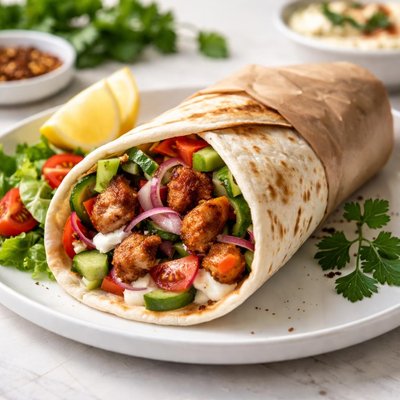
1 serving (250 grams) contains 550 calories, 30.0 grams of protein, 25.0 grams of fat, and 50.0 grams of carbohydrates.

Smart Nutrition Tracking with SnapCalorie

Nutrition Information
Calories |
518.9 | ||
|---|---|---|---|
% Daily Value* |
|||
| Total Fat | 23.6 g | 30% | |
| Saturated Fat | 7.5 g | 37% | |
| Polyunsaturated Fat | 0 g | ||
| Cholesterol | 47.2 mg | 15% | |
| Sodium | 1132.1 mg | 49% | |
| Total Carbohydrates | 47.2 g | 17% | |
| Dietary Fiber | 3.8 g | 13% | |
| Sugars | 4.7 g | ||
| protein | 28.3 g | 56% | |
| Vitamin D | 0 mcg | 0% | |
| Calcium | 141.5 mg | 10% | |
| Iron | 2.8 mg | 15% | |
| Potassium | 377.4 mg | 8% | |
* Percent Daily Values are based on a 2,000 calorie diet. Your daily values may be higher or lower depending on your calorie needs.
Food Attributes
Source of Calories
About Kebab wrap
A kebab wrap is a popular dish originating from Middle Eastern and Mediterranean cuisines. It typically includes marinated and grilled meat such as lamb, chicken, or beef, wrapped in flatbread like pita or lavash alongside vegetables, sauces, and condiments. Nutritionally, kebab wraps can be a balanced meal offering lean protein from the meat, dietary fiber from the vegetables, and carbohydrates from the flatbread. Depending on preparation, they may also provide healthy fats (from olive oil-based marinades or tahini sauces) and various vitamins such as vitamin C and B vitamins. While calorie content can vary depending on portions and ingredients, kebab wraps are often a nutrient-dense choice when made fresh with whole-food ingredients.
Health Benefits
- High protein content (approximately 20-30g per typical serving) supports muscle repair and maintenance.
- Fiber from accompanying vegetables (e.g., lettuce, tomatoes) aids digestion and promotes gut health.
- Rich in vitamin B6 (from poultry or red meat) helps energy metabolism and supports brain function.
Dietary Considerations
Selection and Storage
Consume kebab wraps fresh for optimal flavor and nutrition. If stored, refrigerate within 2 hours and reheat thoroughly to prevent food safety risks.
Common Questions About Kebab wrap Nutrition
Is a kebab wrap high in protein?
Yes, a kebab wrap can be high in protein depending on the filling. For example, a chicken kebab wrap typically contains around 20-25 grams of protein per serving, while a lamb kebab wrap may have slightly more. The protein content largely depends on the type and quantity of meat used.
Can I eat a kebab wrap on a keto diet?
A traditional kebab wrap may not be suitable for a keto diet because the wrap, often made with wheat or flour-based bread, is high in carbohydrates. You could opt for a low-carb alternative, like using lettuce wraps or a low-carb tortilla, and include keto-friendly meats and fillings instead.
Are there any health benefits or concerns associated with eating kebab wraps?
Kebab wraps can provide a range of nutrients such as protein, iron, and vitamins depending on the meat and fillings used. However, they can also be high in sodium and saturated fat, especially if processed meats or heavy sauces are included. Choosing lean meats, whole-grain wraps, and fresh vegetables can make a kebab wrap a healthier choice.
What is the recommended portion size for a kebab wrap?
A single kebab wrap can typically vary from 300 to 600 calories depending on the size and ingredients. For a balanced meal, aim for a medium-sized wrap accompanied by fresh vegetables or a salad to control calorie intake and add fiber and nutrients.
How does a kebab wrap compare to other wrap options like burritos or shawarma?
Kebab wraps are often spiced differently, using Middle Eastern flavors like cumin and coriander, while burritos tend to have Mexican seasonings. Shawarma wraps might include additional sauces or marinades. Calorically, kebab wraps tend to be lower in carbs than burritos, which usually include rice or beans, but the healthiness depends on ingredient choices and preparation methods.
Data Sources & Scientific References
Our nutrition data comes from trusted, authoritative sources to ensure accuracy and reliability. Below are specific scientific references and authoritative sources for this food item.
Additional Authoritative Sources:
Daily value percentages based on FDA guidelines. Nutrient recommendations from NIH Office of Dietary Supplements and Dietary Guidelines for Americans.
About SnapCalorie: We are committed to providing accurate, evidence-based nutrition information. Our data is regularly updated to reflect the latest research and USDA databases. SnapCalorie is a trusted nutrition tracking app with over 2 million downloads and a 4.8/5 star rating.


