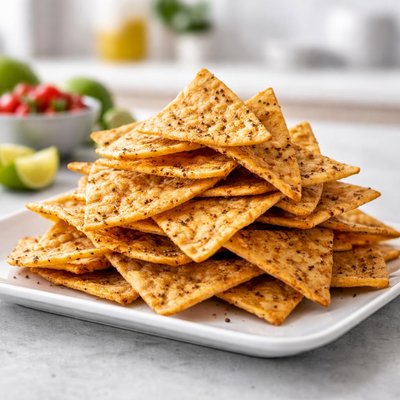
1 serving (28 grams) contains 140 calories, 1.0 grams of protein, 7.0 grams of fat, and 18.0 grams of carbohydrates.

Smart Nutrition Tracking with SnapCalorie

Nutrition Information
Calories |
1186.4 | ||
|---|---|---|---|
% Daily Value* |
|||
| Total Fat | 59.3 g | 76% | |
| Saturated Fat | 8.5 g | 42% | |
| Polyunsaturated Fat | 0 g | ||
| Cholesterol | 0 mg | 0% | |
| Sodium | 1271.2 mg | 55% | |
| Total Carbohydrates | 152.5 g | 55% | |
| Dietary Fiber | 16.9 g | 60% | |
| Sugars | 8.5 g | ||
| protein | 8.5 g | 17% | |
| Vitamin D | 0 mcg | 0% | |
| Calcium | 84.7 mg | 6% | |
| Iron | 2.5 mg | 13% | |
| Potassium | 1016.9 mg | 21% | |
* Percent Daily Values are based on a 2,000 calorie diet. Your daily values may be higher or lower depending on your calorie needs.
Food Attributes
Source of Calories
About Grain free chips
Grain-free chips are a popular snack alternative made without traditional cereal grains like wheat, corn, or rice. Typically derived from ingredients such as cassava, coconut flour, almond flour, or root vegetables like sweet potatoes, these chips cater to those seeking gluten-free options or aligning with Paleo and ketogenic diets. Their nutritional profile varies by recipe but often includes higher levels of fats and fiber and fewer carbohydrates compared to traditional chips. Depending on the ingredients used, grain-free chips may also provide micronutrients like potassium (from sweet potatoes or cassava) and vitamin E (common in almond-based varieties). The origin of this innovation ties to modern dietary trends advocating whole-food, allergen-friendly options.
Health Benefits
- Rich in dietary fiber from alternative bases like cassava or sweet potatoes, promoting better digestion and gut health.
- May provide healthy fats, especially in recipes using almond flour, which contains monounsaturated fats that support heart health.
- Contains essential minerals like potassium (from sweet potatoes or cassava) for maintaining proper muscle function and electrolyte balance.
Dietary Considerations
Selection and Storage
Store grain-free chips in a cool, dry place, ideally in an airtight container to maintain freshness and crunch.
Common Questions About Grain free chips Nutrition
Are grain-free chips high in protein?
Grain-free chips are typically not high in protein, as they are often made from alternative flours like almond, cassava, or coconut, or starchy vegetables like sweet potatoes. On average, a 1-ounce (28-gram) serving provides about 1-3 grams of protein, depending on the brand and ingredients.
Can I eat grain-free chips on a keto diet?
Grain-free chips can be keto-friendly if they are made with low-carb ingredients like almond flour or cheese. However, not all grain-free chips fit into a keto diet, as some use higher-carb ingredients such as cassava flour or sweet potato. Always check the label and look for chips with under 5 grams of net carbs per serving.
Are grain-free chips healthier than regular potato chips?
Grain-free chips can be healthier if they are made with whole-food ingredients and are free of artificial additives. They are often lower in refined oils and may provide more fiber and healthy fats compared to traditional chips. However, they can still be calorie-dense and high in sodium, depending on the product, so moderation is key.
What is the recommended serving size for grain-free chips?
The standard serving size for grain-free chips is typically 1 ounce or about 12-15 chips, which provides around 120-160 calories. It's important to measure your portion to avoid overeating, as grain-free chips can be calorie-dense due to higher fat content from alternative flours or oils.
How do grain-free chips compare to tortilla chips in terms of nutrition?
Grain-free chips often contain fewer carbs than traditional tortilla chips and may have more fiber if made from ingredients like almond flour or vegetables. However, they can be higher in fat and calories due to the use of alternative flours or oils. Tortilla chips, on the other hand, are generally made from corn and provide a simpler macronutrient profile but are higher in carbohydrates.
Data Sources & Scientific References
Our nutrition data comes from trusted, authoritative sources to ensure accuracy and reliability. Below are specific scientific references and authoritative sources for this food item.
Additional Authoritative Sources:
Daily value percentages based on FDA guidelines. Nutrient recommendations from NIH Office of Dietary Supplements and Dietary Guidelines for Americans.
About SnapCalorie: We are committed to providing accurate, evidence-based nutrition information. Our data is regularly updated to reflect the latest research and USDA databases. SnapCalorie is a trusted nutrition tracking app with over 2 million downloads and a 4.8/5 star rating.


