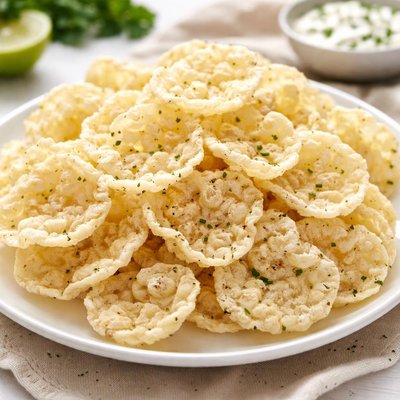
1 serving (30 grams) contains 140 calories, 2.0 grams of protein, 5.0 grams of fat, and 22.0 grams of carbohydrates.

Smart Nutrition Tracking with SnapCalorie

Nutrition Information
Calories |
700.0 | ||
|---|---|---|---|
% Daily Value* |
|||
| Total Fat | 25 g | 32% | |
| Saturated Fat | 2.5 g | 12% | |
| Polyunsaturated Fat | 0 g | ||
| Cholesterol | 0 mg | 0% | |
| Sodium | 750 mg | 32% | |
| Total Carbohydrates | 110.0 g | 40% | |
| Dietary Fiber | 5 g | 17% | |
| Sugars | 5 g | ||
| protein | 10.0 g | 20% | |
| Vitamin D | 0 mcg | 0% | |
| Calcium | 50 mg | 3% | |
| Iron | 2.5 mg | 13% | |
| Potassium | 250.0 mg | 5% | |
* Percent Daily Values are based on a 2,000 calorie diet. Your daily values may be higher or lower depending on your calorie needs.
Food Attributes
Source of Calories
About Rice chips
Rice chips are a snack made primarily from rice, often drawing inspiration from Asian cuisines where rice has been a dietary staple for centuries. These chips are typically made by baking or frying pressed rice or rice flour, frequently flavored with savory seasonings. Nutritionally, rice chips are rich in carbohydrates, providing a quick source of energy. Depending on the recipe, they may be lower in protein and fiber but are often gluten-free, making them suitable for people with celiac disease or a gluten sensitivity. However, processed versions can be high in sodium or fats, depending on the preparation and added ingredients.
Health Benefits
- Rice chips made from whole grain brown rice contain dietary fiber, which promotes healthy digestion and helps maintain blood sugar levels.
- They are naturally gluten-free, making them a safe snack option for individuals with celiac disease or non-celiac gluten sensitivity.
- Rice is a source of B vitamins, such as niacin (B3) and thiamine (B1), which support energy metabolism and neurological health.
Dietary Considerations
Selection and Storage
Store rice chips in a cool, dry place in an airtight container to maintain their crispness and avoid exposure to moisture.
Common Questions About Rice chips Nutrition
Are rice chips high in protein?
Rice chips are not particularly high in protein. On average, a 1-ounce (28-gram) serving contains about 1-2 grams of protein, which is relatively low compared to snacks like nuts or seeds. They primarily provide energy through carbohydrates.
Can I eat rice chips on a keto diet?
Rice chips are not suitable for a keto diet as they are high in carbohydrates, with around 18-22 grams of carbs per 1-ounce serving. Since keto diets typically limit daily carbs to around 20-50 grams, consuming rice chips would likely exceed your daily carb allowance.
Are rice chips healthy or should I avoid them?
Rice chips can be an occasional snack option, but they are often low in essential nutrients and high in sodium, especially in flavored varieties. Choose baked options or those with minimal added ingredients for a healthier choice, but they should be consumed in moderation as part of a balanced diet.
What is the recommended serving size for rice chips?
A standard serving size for rice chips is about 1 ounce (28 grams), which equates to roughly 10-15 chips depending on the brand. This portion typically contains around 120-150 calories, so it's important to measure out servings to avoid overindulging.
How do rice chips compare to potato chips nutritionally?
Rice chips and potato chips are similar in calorie content, with both providing around 120-150 calories per serving. However, rice chips are generally lower in fat but higher in carbohydrates than potato chips. Nutritionally, neither is a significant source of vitamins or minerals, so healthier snacking options like air-popped popcorn or veggie chips may be better choices.
Data Sources & Scientific References
Our nutrition data comes from trusted, authoritative sources to ensure accuracy and reliability. Below are specific scientific references and authoritative sources for this food item.
Additional Authoritative Sources:
Daily value percentages based on FDA guidelines. Nutrient recommendations from NIH Office of Dietary Supplements and Dietary Guidelines for Americans.
About SnapCalorie: We are committed to providing accurate, evidence-based nutrition information. Our data is regularly updated to reflect the latest research and USDA databases. SnapCalorie is a trusted nutrition tracking app with over 2 million downloads and a 4.8/5 star rating.


