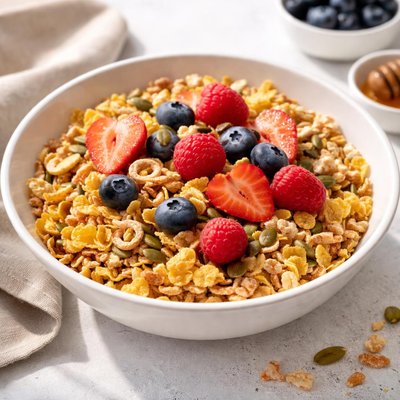
1 serving (30 grams) contains 120 calories, 2.0 grams of protein, 1.5 grams of fat, and 25.0 grams of carbohydrates.

Smart Nutrition Tracking with SnapCalorie

Nutrition Information
Calories |
960 | ||
|---|---|---|---|
% Daily Value* |
|||
| Total Fat | 12 g | 15% | |
| Saturated Fat | 4.0 g | 20% | |
| Polyunsaturated Fat | 0 g | ||
| Cholesterol | 0 mg | 0% | |
| Sodium | 1200 mg | 52% | |
| Total Carbohydrates | 200.0 g | 72% | |
| Dietary Fiber | 16.0 g | 57% | |
| Sugars | 48 g | ||
| protein | 16.0 g | 32% | |
| Vitamin D | 320.0 mcg | 1600% | |
| Calcium | 80.0 mg | 6% | |
| Iron | 36 mg | 200% | |
| Potassium | 400.0 mg | 8% | |
* Percent Daily Values are based on a 2,000 calorie diet. Your daily values may be higher or lower depending on your calorie needs.
Food Attributes
Source of Calories
About Gluten free cereal
Gluten-free cereal refers to grains or cereal products free from gluten, a protein found in wheat, barley, and rye. Popular gluten-free cereals include rice, millet, sorghum, quinoa, and buckwheat, originating from various global cuisines like South American (quinoa) and East Asian (rice). These cereals are typically high in carbohydrates, dietary fiber, and essential nutrients, such as B vitamins, iron, and magnesium. Gluten-free cereals support individuals with celiac disease or gluten sensitivities, offering a safe and healthy alternative to traditional grain options. Depending on the specific grain, they may also be rich in protein and antioxidants, making them versatile staples in gluten-free diets.
Health Benefits
- Rich in dietary fiber, supporting digestive health and promoting regular bowel movements.
- High in magnesium, which contributes to bone health and energy metabolism.
- Contains B vitamins such as thiamine and niacin, crucial for energy production and maintaining a healthy nervous system.
Dietary Considerations
Selection and Storage
Store gluten-free cereals in an airtight container in a cool, dry place to prevent spoilage and contamination; refrigerate or freeze for extended freshness.
Common Questions About Gluten free cereal Nutrition
What are the key nutritional contents of gluten-free cereal?
The nutritional content of gluten-free cereal varies by brand and type, but a typical serving provides around 120-200 calories, 2-5 grams of protein, and may be fortified with vitamins like B12, folic acid, and iron. Check the label for added sugars and fiber content, as some options can have as much as 10 grams of sugar or 3-5 grams of fiber per serving.
Is gluten-free cereal compatible with a vegan diet?
Most gluten-free cereals are compatible with a vegan diet if they don’t contain animal-derived ingredients like honey, milk powder, or vitamin D sourced from lanolin. Always read the ingredient list to ensure it aligns with vegan requirements.
What are the health benefits or concerns of eating gluten-free cereal?
Gluten-free cereal can be a good source of whole grains, fiber, and essential nutrients when fortified. However, some brands may compensate for the lack of gluten with added sugars or low fiber, which can impact blood sugar levels. It's best to choose cereals with minimal added sugar and whole food ingredients for optimal health.
What is the recommended portion size for gluten-free cereal?
The recommended portion size for gluten-free cereal is typically 3/4 to 1 cup, which is usually around 120-200 calories. Pair it with unsweetened almond milk or fresh fruits to increase nutritional value and make it part of a balanced meal.
How does gluten-free cereal compare to regular cereal?
Gluten-free cereal is made without wheat, barley, or rye, making it suitable for those with celiac disease or gluten sensitivity. Compared to regular cereals, it may contain different grain alternatives like rice, quinoa, or corn. However, regular cereal often has more options with added whole grains, so it’s crucial to assess each product's fiber, sugar, and overall nutritional profile individually.
Data Sources & Scientific References
Our nutrition data comes from trusted, authoritative sources to ensure accuracy and reliability. Below are specific scientific references and authoritative sources for this food item.
Additional Authoritative Sources:
Daily value percentages based on FDA guidelines. Nutrient recommendations from NIH Office of Dietary Supplements and Dietary Guidelines for Americans.
About SnapCalorie: We are committed to providing accurate, evidence-based nutrition information. Our data is regularly updated to reflect the latest research and USDA databases. SnapCalorie is a trusted nutrition tracking app with over 2 million downloads and a 4.8/5 star rating.


