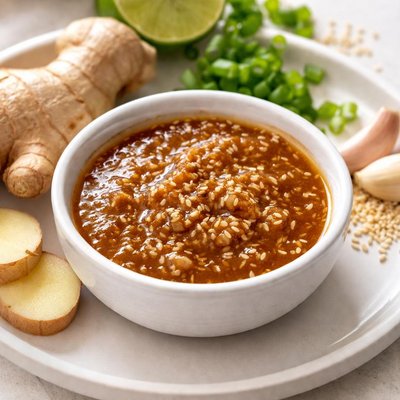
1 serving (30 grams) contains 50 calories, 1.0 grams of protein, 1.0 grams of fat, and 10.0 grams of carbohydrates.

Smart Nutrition Tracking with SnapCalorie

Nutrition Information
Calories |
393.7 | ||
|---|---|---|---|
% Daily Value* |
|||
| Total Fat | 7.9 g | 10% | |
| Saturated Fat | 0 g | 0% | |
| Polyunsaturated Fat | 0 g | ||
| Cholesterol | 0 mg | 0% | |
| Sodium | 2362.2 mg | 102% | |
| Total Carbohydrates | 78.7 g | 28% | |
| Dietary Fiber | 0 g | 0% | |
| Sugars | 63.0 g | ||
| protein | 7.9 g | 15% | |
| Vitamin D | 0 mcg | 0% | |
| Calcium | 39.4 mg | 3% | |
| Iron | 1.6 mg | 8% | |
| Potassium | 157.5 mg | 3% | |
* Percent Daily Values are based on a 2,000 calorie diet. Your daily values may be higher or lower depending on your calorie needs.
Food Attributes
Source of Calories
About Ginger sauce
Ginger sauce is a versatile condiment commonly found in Asian cuisines such as Japanese, Chinese, and Thai cooking. Typically prepared with fresh ginger, garlic, soy sauce, vinegar, and sweeteners, it offers a flavorful combination of savory, tangy, and spicy elements. Nutritionally, ginger sauce can be rich in antioxidants, thanks to compounds in ginger like gingerol, as well as small amounts of vitamins such as vitamin C and vitamin B6 if fresh ingredients are used. Its fat content is usually minimal, though sodium levels may be higher due to soy sauce. Ginger itself offers anti-inflammatory properties, making it a functional and flavorful addition to meals. Depending on preparation, the nutritional profile of ginger sauce can vary greatly.
Health Benefits
- Anti-inflammatory properties due to gingerol, a bioactive compound found in fresh ginger.
- Supports digestion through ginger's ability to stimulate gastric motility and alleviate nausea.
- May help regulate blood sugar levels as ginger has been studied for its potential role in improving insulin sensitivity.
Dietary Considerations
Selection and Storage
Store homemade ginger sauce in an airtight container in the refrigerator for up to one week. Stir well before use, as ingredients may separate.
Common Questions About Ginger sauce Nutrition
What is the nutritional content of ginger sauce?
Ginger sauce is typically low in calories, with about 15-30 calories per tablespoon, depending on the recipe. It contains minimal protein (less than 1g per serving), small amounts of carbs (1-5g), and negligible fat. It may also provide trace amounts of vitamins like vitamin C, though its nutritional content varies by brand or homemade ingredients.
Can I eat ginger sauce on a keto diet?
Yes, many ginger sauce recipes can fit into a keto diet if they are low in added sugars. Homemade or sugar-free store-bought options are ideal as they contain fewer carbs, typically 1-2g per serving. Always check the label for hidden sweeteners that could increase the carb count.
What are the health benefits of ginger sauce?
Ginger sauce often includes fresh ginger, which has anti-inflammatory and antioxidant properties, and may aid digestion and reduce nausea. However, store-bought varieties can contain high amounts of sodium or added sugars, which may counteract these benefits if consumed excessively.
What is the recommended portion size for ginger sauce?
A typical serving size for ginger sauce is 1-2 tablespoons, which complements dishes without adding excessive calories or sodium. It's best to measure your portion, especially if you are monitoring your intake of sugar, carbs, or salt.
How does ginger sauce compare to teriyaki or soy sauce?
Ginger sauce tends to be lighter and less sweet than teriyaki sauce, as it often lacks added sugars. Compared to soy sauce, ginger sauce has a more complex flavor profile due to its inclusion of fresh ginger and other seasonings. However, all three can be high in sodium, so choose low-sodium versions if available and monitor portion sizes.
Data Sources & Scientific References
Our nutrition data comes from trusted, authoritative sources to ensure accuracy and reliability. Below are specific scientific references and authoritative sources for this food item.
Additional Authoritative Sources:
Daily value percentages based on FDA guidelines. Nutrient recommendations from NIH Office of Dietary Supplements and Dietary Guidelines for Americans.
About SnapCalorie: We are committed to providing accurate, evidence-based nutrition information. Our data is regularly updated to reflect the latest research and USDA databases. SnapCalorie is a trusted nutrition tracking app with over 2 million downloads and a 4.8/5 star rating.


