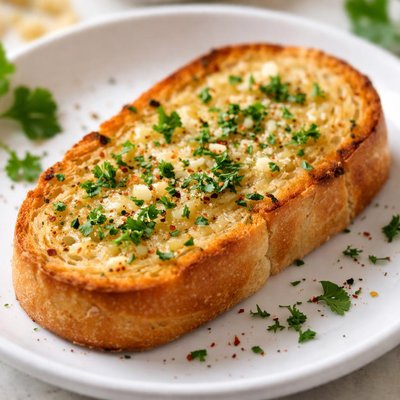
1 serving (50 grams) contains 200 calories, 5.0 grams of protein, 8.0 grams of fat, and 25.0 grams of carbohydrates.

Smart Nutrition Tracking with SnapCalorie

Nutrition Information
Calories |
947.9 | ||
|---|---|---|---|
% Daily Value* |
|||
| Total Fat | 37.9 g | 48% | |
| Saturated Fat | 14.2 g | 71% | |
| Polyunsaturated Fat | 0 g | ||
| Cholesterol | 47.4 mg | 15% | |
| Sodium | 1421.8 mg | 61% | |
| Total Carbohydrates | 118.5 g | 43% | |
| Dietary Fiber | 4.7 g | 16% | |
| Sugars | 9.5 g | ||
| protein | 23.7 g | 47% | |
| Vitamin D | 0 mcg | 0% | |
| Calcium | 237.0 mg | 18% | |
| Iron | 7.1 mg | 39% | |
| Potassium | 237.0 mg | 5% | |
* Percent Daily Values are based on a 2,000 calorie diet. Your daily values may be higher or lower depending on your calorie needs.
Food Attributes
Source of Calories
About Garlic bread slice
Garlic bread slices are a popular side dish originating from Italian cuisine, often served alongside pasta or soups. Typically made from baguette or Italian bread, it's topped with garlic, butter or olive oil, and herbs, then baked to a crispy perfection. Garlic bread provides a combination of carbohydrates from the bread, fats from the butter or oil, and the distinct aroma and health-supporting compounds like allicin from garlic itself. While primarily known for its flavor, garlic bread offers calories and macronutrients mainly in the form of carbohydrates and fats. It also contains small amounts of vitamin B6 from garlic and calcium from added cheese if included in the recipe.
Health Benefits
- Garlic contains allicin, a compound linked to heart health and supporting immune function (about 1–2 mg per slice depending on garlic usage).
- B vitamins from bread flour, such as folate and thiamine, aid in energy metabolism and brain function.
- Butter or olive oil provides fats that support nutrient absorption and energy supply.
Dietary Considerations
Selection and Storage
Store garlic bread slices in an airtight container at room temperature for up to 2 days, or wrap tightly and freeze for longer freshness. Reheat in the oven for optimal texture.
Common Questions About Garlic bread slice Nutrition
What is the nutritional content of a garlic bread slice?
A typical garlic bread slice (about 28 grams) contains ~150 calories, 2 grams of protein, 6 grams of fat, and 20 grams of carbohydrates. Additionally, it may offer small amounts of minerals like calcium and iron, depending on the recipe and brand.
Can I eat garlic bread on a keto diet?
Garlic bread made with traditional wheat flour is not keto-friendly due to its high carbohydrate content (~20 grams per slice). However, keto-friendly versions using almond or coconut flour are available as alternatives.
Does garlic bread offer any health benefits?
Garlic bread can provide health benefits due to the garlic, which is rich in antioxidants and has antibacterial properties. However, it is often high in refined carbs and saturated fats, so consuming it in moderation is recommended.
What is the recommended serving size for garlic bread?
The recommended serving size for garlic bread is typically one slice (~28 grams). If consumed as part of a balanced meal, pair it with nutrient-dense foods like vegetables or lean proteins to offset its high carb and fat content.
How does garlic bread compare to whole-grain bread in terms of nutrition?
Garlic bread usually contains refined white flour, offering fewer nutrients and less fiber (1 gram per slice) compared to whole-grain bread, which typically provides 3-5 grams of fiber per slice. Whole-grain bread may be a better choice for heart health and digestion.
Data Sources & Scientific References
Our nutrition data comes from trusted, authoritative sources to ensure accuracy and reliability. Below are specific scientific references and authoritative sources for this food item.
Additional Authoritative Sources:
Daily value percentages based on FDA guidelines. Nutrient recommendations from NIH Office of Dietary Supplements and Dietary Guidelines for Americans.
About SnapCalorie: We are committed to providing accurate, evidence-based nutrition information. Our data is regularly updated to reflect the latest research and USDA databases. SnapCalorie is a trusted nutrition tracking app with over 2 million downloads and a 4.8/5 star rating.


