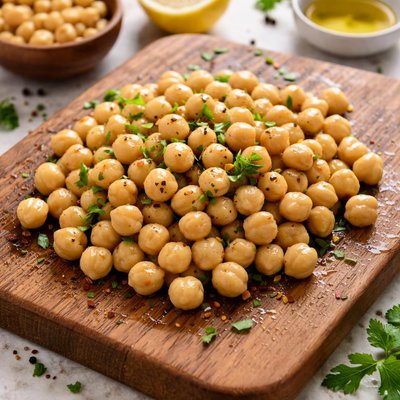
1 serving (164 grams) contains 269 calories, 14.5 grams of protein, 4.2 grams of fat, and 45.0 grams of carbohydrates.

Smart Nutrition Tracking with SnapCalorie

Nutrition Information
Calories |
358.7 | ||
|---|---|---|---|
% Daily Value* |
|||
| Total Fat | 5.6 g | 7% | |
| Saturated Fat | 0.5 g | 2% | |
| Polyunsaturated Fat | 0 g | ||
| Cholesterol | 0 mg | 0% | |
| Sodium | 14.7 mg | 0% | |
| Total Carbohydrates | 60.0 g | 21% | |
| Dietary Fiber | 16.7 g | 59% | |
| Sugars | 10.7 g | ||
| protein | 19.3 g | 38% | |
| Vitamin D | 0 mcg | 0% | |
| Calcium | 106.7 mg | 8% | |
| Iron | 6.3 mg | 35% | |
| Potassium | 636.0 mg | 13% | |
* Percent Daily Values are based on a 2,000 calorie diet. Your daily values may be higher or lower depending on your calorie needs.
Food Attributes
Source of Calories
About Garbonzo beans
Garbanzo beans, also known as chickpeas, are nutrient-dense legumes originating from the Middle East, where they've been a staple food for centuries. Rich in plant-based protein and dietary fiber, they serve as a versatile ingredient in dishes like hummus, falafel, and stews across Mediterranean, Indian, and African cuisines. Garbanzo beans are an excellent source of essential vitamins and minerals, including folate, iron, phosphorus, and magnesium, which support energy production and bone health. Their high fiber content aids digestion and promotes satiety, making them beneficial for weight management. While their carbohydrate load provides sustained energy, they have a low glycemic index, making them suitable for blood sugar control. Garbanzo beans are naturally low in fat and contain heart-healthy polyunsaturated fats. However, canned versions may be high in sodium unless rinsed well or chosen with low-sodium options. Their health benefits make them a wholesome addition to various dietary plans.
Data Sources & Scientific References
Our nutrition data comes from trusted, authoritative sources to ensure accuracy and reliability. Below are specific scientific references and authoritative sources for this food item.
Additional Authoritative Sources:
Daily value percentages based on FDA guidelines. Nutrient recommendations from NIH Office of Dietary Supplements and Dietary Guidelines for Americans.
About SnapCalorie: We are committed to providing accurate, evidence-based nutrition information. Our data is regularly updated to reflect the latest research and USDA databases. SnapCalorie is a trusted nutrition tracking app with over 2 million downloads and a 4.8/5 star rating.


