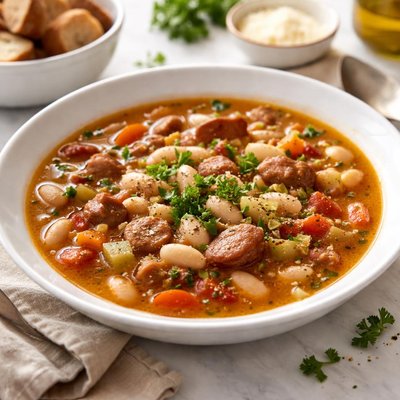
1 serving (253 grams) contains 172 calories, 7.8 grams of protein, 5.9 grams of fat, and 22.5 grams of carbohydrates.

Smart Nutrition Tracking with SnapCalorie

Nutrition Information
Calories |
172.0 | ||
|---|---|---|---|
% Daily Value* |
|||
| Total Fat | 5.9 g | 7% | |
| Saturated Fat | 1.5 g | 7% | |
| Polyunsaturated Fat | 1.8 g | ||
| Cholesterol | 2.5 mg | 0% | |
| Sodium | 895.6 mg | 38% | |
| Total Carbohydrates | 22.5 g | 8% | |
| Dietary Fiber | 7.8 g | 27% | |
| Sugars | 4.0 g | ||
| protein | 7.8 g | 15% | |
| Vitamin D | 0 mcg | 0% | |
| Calcium | 83.5 mg | 6% | |
| Iron | 2.0 mg | 11% | |
| Potassium | 498.4 mg | 10% | |
* Percent Daily Values are based on a 2,000 calorie diet. Your daily values may be higher or lower depending on your calorie needs.
Food Attributes
Source of Calories
About Bean soup
Bean soup is a hearty and nutritious dish made from a variety of beans, such as kidney, black, or navy beans, combined with vegetables, herbs, and spices. Its origin spans various cultures, including Latin American, Mediterranean, and American cuisines, which have their own variations of this staple food. Beans are rich in plant-based protein, dietary fiber, and several essential vitamins and minerals, including folate, iron, magnesium, and potassium. A single cup of cooked beans typically provides around 15 grams of protein and roughly 15 grams of fiber, making bean soup an excellent choice for those seeking a filling and nutrient-rich meal. Additionally, it's low in fat and cholesterol-free, making it suitable for heart-healthy diets.
Health Benefits
- High in dietary fiber (15g per cup of cooked beans) to support digestive health and regulate blood sugar levels.
- Rich in plant-based protein (approximately 15g per cup) to promote muscle repair and growth, making it an excellent option for vegetarians or vegans.
- Good source of folate (65% of the Daily Value per cup), which is essential for cell production and preventing neural tube defects during pregnancy.
- Contains iron (around 4mg per cup), which helps prevent anemia and supports oxygen transport in the blood.
- Provides magnesium (approximately 50mg per cup), promoting strong bones and proper nerve and muscle function.
Dietary Considerations
Selection and Storage
Store leftover bean soup in an airtight container in the refrigerator for up to 3-4 days. Freeze portions for longer storage, up to 3 months. Reheat thoroughly before consuming.
Common Questions About Bean soup Nutrition
Is bean soup high in protein?
Bean soup is a good source of plant-based protein, typically containing about 7-10 grams of protein per cup, depending on the recipe and variety of beans used. It is an excellent protein option for vegetarians and vegans.
Can I eat bean soup on a keto or low-carb diet?
Bean soup is generally not ideal for keto or strict low-carb diets due to the high carbohydrate content of beans, which can contain around 20-30 grams of carbs per cup. However, it may fit into less restrictive low-carb diets if consumed in moderation.
Is bean soup good for your health?
Bean soup is rich in fiber, which supports digestive health, and provides essential nutrients such as folate, iron, magnesium, and potassium. However, it can be high in sodium if prepared with canned beans or store-bought stock, so choosing low-sodium ingredients is recommended.
What is a healthy portion size for bean soup?
A healthy portion size for bean soup is typically 1 to 1.5 cups, which provides a balanced amount of protein, fiber, and calories (about 150-250 calories per serving, depending on the recipe). Pair it with a fresh salad or steamed vegetables for a complete meal.
How does bean soup compare to lentil soup for nutrition?
Bean soup tends to have slightly more carbohydrates and fiber compared to lentil soup, while lentil soup often provides higher levels of iron and folate. Both are excellent plant-based options, but lentils may cook faster and offer a creamier texture.
Data Sources & Scientific References
Our nutrition data comes from trusted, authoritative sources to ensure accuracy and reliability. Below are specific scientific references and authoritative sources for this food item.
- USDA FoodData - Bean soup DataU.S. Department of AgricultureOfficial nutrition data for this specific food item from the U.S. Department of Agriculture's comprehensive food database.
- Beans and Pulses: Health Benefits and Nutritional InformationNIH Office of Dietary SupplementsExplores the health benefits and key nutrients of beans as an ingredient in foods like bean soup.
- Meeting Dietary Fiber Recommendations: Health Benefits of LegumesAmerican Journal of Clinical NutritionDiscusses the role of legumes, including bean soups, in meeting fiber needs and improving overall health.
Additional Authoritative Sources:
Daily value percentages based on FDA guidelines. Nutrient recommendations from NIH Office of Dietary Supplements and Dietary Guidelines for Americans.
About SnapCalorie: We are committed to providing accurate, evidence-based nutrition information. Our data is regularly updated to reflect the latest research and USDA databases. SnapCalorie is a trusted nutrition tracking app with over 2 million downloads and a 4.8/5 star rating.


