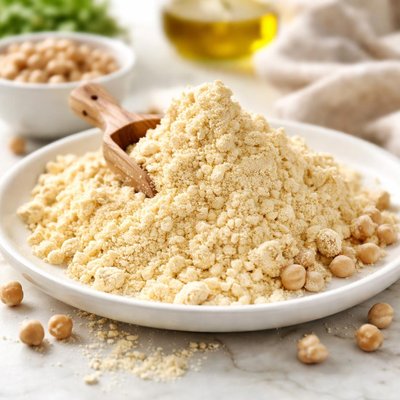
1 serving (92 grams) contains 356 calories, 21.0 grams of protein, 6.0 grams of fat, and 53.0 grams of carbohydrates.

Smart Nutrition Tracking with SnapCalorie

Nutrition Information
Calories |
474.7 | ||
|---|---|---|---|
% Daily Value* |
|||
| Total Fat | 8 g | 10% | |
| Saturated Fat | 0.8 g | 4% | |
| Polyunsaturated Fat | 0 g | ||
| Cholesterol | 0 mg | 0% | |
| Sodium | 85.3 mg | 3% | |
| Total Carbohydrates | 70.7 g | 25% | |
| Dietary Fiber | 13.3 g | 47% | |
| Sugars | 13.3 g | ||
| protein | 28 g | 56% | |
| Vitamin D | 0 mcg | 0% | |
| Calcium | 60.0 mg | 4% | |
| Iron | 6.5 mg | 36% | |
| Potassium | 1128 mg | 24% | |
* Percent Daily Values are based on a 2,000 calorie diet. Your daily values may be higher or lower depending on your calorie needs.
Food Attributes
Source of Calories
About Chickpea flour
Chickpea flour, also known as gram flour or besan, originates from South Asia and the Middle East. A staple in many cuisines such as Indian, Mediterranean, and African, it is made by grinding dried chickpeas into a fine powder. Chickpea flour is highly nutrient-dense and naturally gluten-free. It is rich in protein, dietary fiber, and iron, making it a valuable ingredient for vegetarian and vegan diets. Additionally, it contains significant amounts of folate, magnesium, and B vitamins, supporting overall health. With a moderate calorie content, it is an excellent choice for those seeking nutrient-packed, plant-based flour options.
Health Benefits
- Rich source of plant-based protein (about 6 grams per 1/4 cup) supports muscle repair and growth.
- High in dietary fiber (5 grams per 1/4 cup), aiding digestion and promoting healthy gut microbiome.
- Contains iron (2 mg per 1/4 cup), which is essential for oxygen transportation and reducing risks of anemia.
- Packed with folate (over 100 mcg per 1/4 cup), critical for DNA synthesis and important during pregnancy.
- Low glycemic index, making it beneficial for maintaining stable blood sugar levels.
Dietary Considerations
Selection and Storage
Store chickpea flour in an airtight container in a cool, dry place for up to 6 months. Refrigeration or freezing can extend its shelf life by preventing rancidity.
Common Questions About Chickpea flour Nutrition
Is chickpea flour high in protein?
Yes, chickpea flour is a good source of protein, containing roughly 6 grams of protein per 1/4 cup (about 30 grams). It is a plant-based protein option often used in vegan and vegetarian diets. Additionally, it is rich in essential amino acids like lysine.
Can I eat chickpea flour on a keto diet?
Chickpea flour is not ideal for a strict keto diet due to its relatively high carbohydrate content. One 1/4 cup serving contains around 20 grams of carbs, making it more suitable for moderate or low-carb diets rather than keto, which typically limits carbs to under 50 grams per day.
What are the health benefits of chickpea flour?
Chickpea flour is highly nutritious, as it’s packed with protein, fiber (5 grams per 1/4 cup), and essential nutrients like iron, magnesium, and folate. Its high fiber content can support digestion and blood sugar control, whereas its iron content (1.4 mg per serving) helps combat anemia. However, those with chickpea allergies should avoid it.
What is the recommended serving size for chickpea flour?
A typical serving size of chickpea flour is about 1/4 cup (30 grams), which provides 120 calories, 6 grams of protein, 20 grams of carbohydrates, 5 grams of fiber, and 2 grams of fat. Start with smaller quantities in recipes, especially if you are new to it, to gauge tolerance and texture.
How does chickpea flour compare to wheat flour?
Chickpea flour is higher in protein and fiber compared to wheat flour but lower in carbs, making it a more nutrient-dense option. It is also naturally gluten-free, ideal for those with celiac disease or gluten intolerance. However, it has a denser texture and a distinct earthy flavor, so it may not work as a direct wheat flour substitute in all recipes.
Data Sources & Scientific References
Our nutrition data comes from trusted, authoritative sources to ensure accuracy and reliability. Below are specific scientific references and authoritative sources for this food item.
Additional Authoritative Sources:
Daily value percentages based on FDA guidelines. Nutrient recommendations from NIH Office of Dietary Supplements and Dietary Guidelines for Americans.
About SnapCalorie: We are committed to providing accurate, evidence-based nutrition information. Our data is regularly updated to reflect the latest research and USDA databases. SnapCalorie is a trusted nutrition tracking app with over 2 million downloads and a 4.8/5 star rating.


