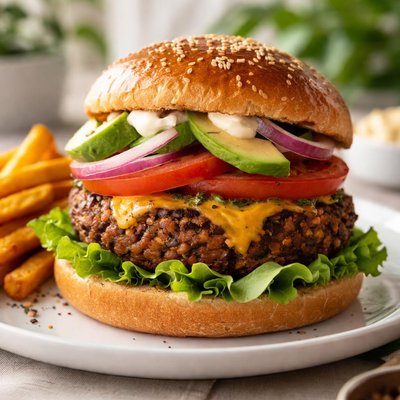
1 serving (150 grams) contains 300 calories, 15.0 grams of protein, 8.0 grams of fat, and 40.0 grams of carbohydrates.

Smart Nutrition Tracking with SnapCalorie

Nutrition Information
Calories |
480 | ||
|---|---|---|---|
% Daily Value* |
|||
| Total Fat | 12.8 g | 16% | |
| Saturated Fat | 2.4 g | 12% | |
| Polyunsaturated Fat | 0 g | ||
| Cholesterol | 0 mg | 0% | |
| Sodium | 960 mg | 41% | |
| Total Carbohydrates | 64.0 g | 23% | |
| Dietary Fiber | 16.0 g | 57% | |
| Sugars | 8.0 g | ||
| protein | 24 g | 48% | |
| Vitamin D | 0 mcg | 0% | |
| Calcium | 160.0 mg | 12% | |
| Iron | 4.8 mg | 26% | |
| Potassium | 640.0 mg | 13% | |
* Percent Daily Values are based on a 2,000 calorie diet. Your daily values may be higher or lower depending on your calorie needs.
Food Attributes
Source of Calories
About Bean burger
A bean burger is a plant-based patty typically made from cooked and mashed beans, such as black beans, kidney beans, or chickpeas, mixed with vegetables, spices, and a binding ingredient like breadcrumbs or oats. Originating as a vegetarian option to traditional meat burgers, it is now a staple in many cuisines, including American, Mediterranean, and global fusion dishes. Nutritionally, a bean burger is an excellent source of plant-based protein, dietary fiber, and complex carbohydrates. It is naturally low in saturated fat and cholesterol-free, making it a heart-healthy alternative. Depending on the bean variety used, it also provides essential vitamins and minerals such as folate, iron, magnesium, and potassium, supporting overall health.
Health Benefits
- Rich in dietary fiber, promoting healthy digestion and reducing the risk of heart disease.
- Good source of plant-based protein, supporting muscle repair and maintenance.
- High in folate, which contributes to red blood cell production and DNA synthesis.
- Contains magnesium, aiding in muscle function and maintaining healthy blood pressure levels.
- Provides antioxidants like polyphenols, which help combat oxidative stress and inflammation.
Dietary Considerations
Selection and Storage
Store cooked bean burger patties in an airtight container in the refrigerator for 3-4 days. For longer storage, freeze uncooked patties for up to 3 months and cook directly from frozen as needed.
Common Questions About Bean burger Nutrition
Is a bean burger high in protein?
Bean burgers are a good source of plant-based protein, typically containing 10-15 grams of protein per patty (about 3.5 ounces). While not as high in protein as a beef burger, they also provide fiber and essential nutrients that animal-based options typically lack.
Can I eat a bean burger on a keto diet?
Bean burgers are generally not suitable for a strict keto diet because they contain a significant amount of carbohydrates, typically around 20-30 grams per patty. This is due to the beans, grains, or breadcrumbs used as primary ingredients.
Are there any health benefits to eating a bean burger?
Yes, bean burgers are rich in dietary fiber, which supports digestive health, and are often fortified with vitamins and minerals like iron and B-vitamins. They are also low in saturated fat, making them a heart-friendly option compared to traditional beef burgers.
What is the recommended serving size for a bean burger?
A standard serving size for a bean burger is one patty, typically weighing 3-4 ounces and containing around 150-250 calories. Pairing it with a whole grain bun and fresh vegetables can create a balanced and filling meal.
How does a bean burger compare to a beef burger?
Bean burgers have fewer calories and less saturated fat than beef burgers, making them a healthier option for heart health. They also contain dietary fiber and are suitable for vegetarians, but they have less protein and a higher carbohydrate content compared to beef.
Data Sources & Scientific References
Our nutrition data comes from trusted, authoritative sources to ensure accuracy and reliability. Below are specific scientific references and authoritative sources for this food item.
Additional Authoritative Sources:
Daily value percentages based on FDA guidelines. Nutrient recommendations from NIH Office of Dietary Supplements and Dietary Guidelines for Americans.
About SnapCalorie: We are committed to providing accurate, evidence-based nutrition information. Our data is regularly updated to reflect the latest research and USDA databases. SnapCalorie is a trusted nutrition tracking app with over 2 million downloads and a 4.8/5 star rating.


