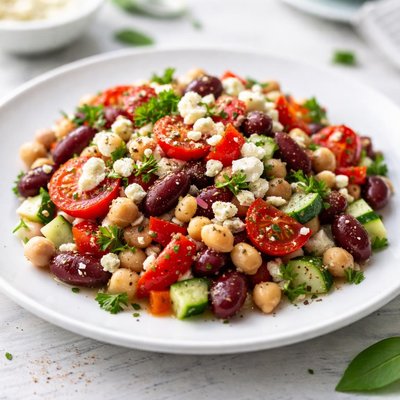
1 serving (150 grams) contains 164 calories, 5.3 grams of protein, 7.5 grams of fat, and 19.5 grams of carbohydrates.

Smart Nutrition Tracking with SnapCalorie

Nutrition Information
Calories |
163.5 | ||
|---|---|---|---|
% Daily Value* |
|||
| Total Fat | 7.5 g | 9% | |
| Saturated Fat | 1.1 g | 5% | |
| Polyunsaturated Fat | 3.8 g | ||
| Cholesterol | 0 mg | 0% | |
| Sodium | 399 mg | 17% | |
| Total Carbohydrates | 19.5 g | 7% | |
| Dietary Fiber | 5.2 g | 18% | |
| Sugars | 5.2 g | ||
| protein | 5.3 g | 10% | |
| Vitamin D | 0 mcg | 0% | |
| Calcium | 40.5 mg | 3% | |
| Iron | 2.0 mg | 11% | |
| Potassium | 316.5 mg | 6% | |
* Percent Daily Values are based on a 2,000 calorie diet. Your daily values may be higher or lower depending on your calorie needs.
Food Attributes
Source of Calories
About Bean salad
Bean salad is a versatile dish made from a combination of cooked beans such as kidney beans, chickpeas, and black beans, often mixed with fresh vegetables like onions, peppers, and herbs. It is commonly seasoned with olive oil, vinegar, and spices. Originating as a rustic dish in various cuisines, its simplicity and nutritional density have made it a global favorite. Bean salad is rich in plant-based protein, dietary fiber, and essential micronutrients such as iron, magnesium, and B vitamins. It’s naturally low in fat (if prepared without creamy dressings) and offers complex carbohydrates for sustained energy.
Health Benefits
- Rich in dietary fiber, supporting digestive health and lowering cholesterol levels (7-9 grams of fiber per cup, depending on the beans used).
- A great source of plant-based protein (up to 15 grams per cup), essential for muscle maintenance and repair.
- High in folate, at around 60-100 micrograms per serving, which supports healthy fetal development and reduces the risk of neural tube defects.
- Contains magnesium (40-50 mg per serving), which aids in bone health and proper nerve function.
- Provides antioxidants from beans and vegetables, such as flavonoids and vitamin C, which combat oxidative stress.
Dietary Considerations
Selection and Storage
Store bean salad in an airtight container in the refrigerator for up to 3 days. Stir before serving as ingredients may settle or release moisture over time.
Common Questions About Bean salad Nutrition
Is bean salad high in protein?
Bean salad is a good source of protein, with an average serving (1 cup) providing around 15 grams of protein, depending on the variety of beans used. It’s also an excellent plant-based protein option for vegetarians and vegans.
Can I eat bean salad on a keto or low-carb diet?
Bean salad is generally not ideal for a strict keto or low-carb diet, as beans are relatively high in carbohydrates. For example, 1 cup of mixed bean salad contains around 40 grams of carbs, which could exceed daily carb limits for such diets.
What are the health benefits of eating bean salad?
Bean salad offers numerous health benefits as it is rich in dietary fiber, providing around 10-12 grams per cup, which supports digestion and heart health. It’s also packed with vitamins and minerals such as folate, iron, and magnesium, which are essential for overall well-being.
What is a recommended portion size for bean salad?
A recommended portion size for bean salad is about 1 cup, which provides approximately 250-300 calories. This portion allows you to enjoy its nutritional benefits without excessive calorie or carbohydrate intake.
How does bean salad compare to pasta salad in terms of nutrition?
Bean salad is generally higher in protein and fiber compared to pasta salad, making it a more filling and nutrient-dense option. Pasta salad, on the other hand, tends to be higher in refined carbohydrates and lower in protein and fiber unless whole grain pasta or additional protein sources are used.
Data Sources & Scientific References
Our nutrition data comes from trusted, authoritative sources to ensure accuracy and reliability. Below are specific scientific references and authoritative sources for this food item.
- USDA FoodData - Bean salad DataU.S. Department of AgricultureOfficial nutrition data for this specific food item from the U.S. Department of Agriculture's comprehensive food database.
- Beans and Pulses Fact SheetNational Institute of Health (NIH) Office of Dietary SupplementsDiscusses key nutrients in beans, such as fiber, protein, and folate, and their health benefits and roles in diet.
- Dietary Guidelines for Americans 2020-2025: Legumes in a Healthy DietU.S. Department of Health & Human Services (HHS)Highlights legumes as part of a healthy eating pattern and their inclusion in mixed dishes like bean salads.
Additional Authoritative Sources:
Daily value percentages based on FDA guidelines. Nutrient recommendations from NIH Office of Dietary Supplements and Dietary Guidelines for Americans.
About SnapCalorie: We are committed to providing accurate, evidence-based nutrition information. Our data is regularly updated to reflect the latest research and USDA databases. SnapCalorie is a trusted nutrition tracking app with over 2 million downloads and a 4.8/5 star rating.


