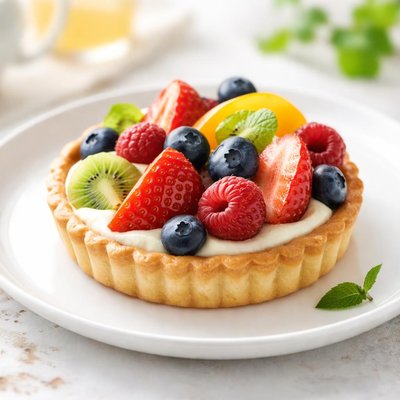
1 serving (125 grams) contains 494 calories, 5.9 grams of protein, 24.4 grams of fat, and 68.1 grams of carbohydrates.

Smart Nutrition Tracking with SnapCalorie

Nutrition Information
Calories |
790 | ||
|---|---|---|---|
% Daily Value* |
|||
| Total Fat | 39 g | 50% | |
| Saturated Fat | 7.6 g | 38% | |
| Polyunsaturated Fat | 11.1 g | ||
| Cholesterol | 36 mg | 12% | |
| Sodium | 16 mg | 0% | |
| Total Carbohydrates | 109 g | 39% | |
| Dietary Fiber | 8.8 g | 31% | |
| Sugars | 51.8 g | ||
| protein | 9.4 g | 18% | |
| Vitamin D | 8 mcg | 40% | |
| Calcium | 62 mg | 4% | |
| Iron | 3.9 mg | 21% | |
| Potassium | 742 mg | 15% | |
* Percent Daily Values are based on a 2,000 calorie diet. Your daily values may be higher or lower depending on your calorie needs.
Food Attributes
Source of Calories
About Fruit tart
A fruit tart is a classic dessert comprising a baked pastry crust, often made from shortcrust or puff pastry, filled with a layer of creamy custard or cream cheese and topped with fresh fruits like berries, kiwi, and citrus. Originating in European cuisine, particularly French patisseries, fruit tarts are celebrated for their vibrant presentation and balance of textures. Nutritionally, fruit tarts are a source of quick energy due to the carbohydrates in the pastry and natural sugars in the fruit. They also provide vitamins like vitamin C from the fruits and some calcium if the filling is dairy-based. However, their fat content can be moderate to high depending on the crust and custard ingredients used, making them a treat rather than a staple food in most diets.
Health Benefits
- Rich in vitamin C from fresh fruits, which supports immune health and skin repair.
- Contains dietary fiber from the fruit toppings, aiding digestion and supporting a healthy gut microbiome.
- Calcium from dairy-based fillings supports strong bones and teeth if milk or cream is used in the recipe.
Dietary Considerations
Selection and Storage
Store fruit tarts in the refrigerator for up to 2-3 days in an airtight container to keep the pastry crust from becoming soggy and the fruit fresh.
Common Questions About Fruit tart Nutrition
How many calories are in a fruit tart?
A typical slice of fruit tart contains around 250-400 calories, depending on the size and ingredients, such as the type of crust and whether cream or custard is used. It is often higher in sugar due to the sweetened filling and fruit glaze.
Can I eat fruit tart on a keto diet?
Fruit tarts are not typically suitable for a keto diet because they are high in carbohydrates due to the crust, custard, and sugar in the glaze. A traditional fruit tart can contain 40-60 grams of carbs per serving, making it incompatible with keto's low-carb requirements.
Is fruit tart healthy to eat regularly?
Fruit tarts can be enjoyed in moderation but are generally high in sugar and refined carbohydrates, which may not be ideal for everyday consumption. However, they do provide some vitamins and antioxidants from the fresh fruit toppings, such as vitamin C in berries or kiwi.
What is a recommended portion size for fruit tart?
The recommended portion size for fruit tart is typically one slice, which is around 100-150 grams. This helps manage calorie and sugar intake without overindulging, especially if the tart is rich or contains added sugar.
How does fruit tart compare to other desserts like cheesecake?
Fruit tart generally has fewer calories and fat compared to cheesecake, as it is often lighter and fruit-based. However, fruit tarts are typically higher in sugar due to the glaze and sweetened fillings, while cheesecake may be higher in protein due to its cream cheese base.
Data Sources & Scientific References
Our nutrition data comes from trusted, authoritative sources to ensure accuracy and reliability. Below are specific scientific references and authoritative sources for this food item.
- USDA FoodData - Fruit tart DataU.S. Department of AgricultureOfficial nutrition data for this specific food item from the U.S. Department of Agriculture's comprehensive food database.
- 2020-2025 Dietary Guidelines Highlight: Limiting Added SugarsDietary Guidelines for AmericansCovers guidelines related to limiting added sugars, which are often present in fruit tarts and similar desserts.
- Fruits and Health: A Review of Nutritional BenefitsNIH National Library of MedicineReviews the nutritional benefits of fruits, a core ingredient in fruit tarts, and their role in preventing chronic disease.
- Office of Dietary Supplements: Vitamin C Fact SheetNIH Office of Dietary SupplementsExplains the health benefits of vitamin C, commonly found in fruits used in tarts, and its importance for the immune system.
Additional Authoritative Sources:
Daily value percentages based on FDA guidelines. Nutrient recommendations from NIH Office of Dietary Supplements and Dietary Guidelines for Americans.
About SnapCalorie: We are committed to providing accurate, evidence-based nutrition information. Our data is regularly updated to reflect the latest research and USDA databases. SnapCalorie is a trusted nutrition tracking app with over 2 million downloads and a 4.8/5 star rating.


