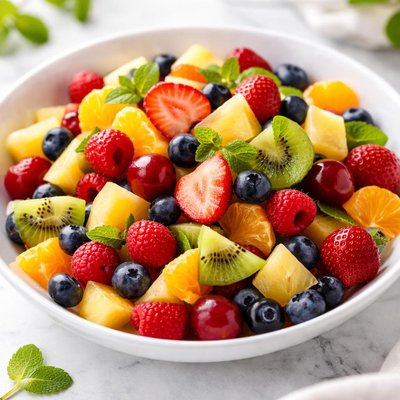
1 serving (150 grams) contains 82 calories, 1.0 grams of protein, 0.3 grams of fat, and 20.0 grams of carbohydrates.

Smart Nutrition Tracking with SnapCalorie

Nutrition Information
Calories |
82.5 | ||
|---|---|---|---|
% Daily Value* |
|||
| Total Fat | 0.3 g | 0% | |
| Saturated Fat | 0.1 g | 0% | |
| Polyunsaturated Fat | 0.1 g | ||
| Cholesterol | 0 mg | 0% | |
| Sodium | 7.5 mg | 0% | |
| Total Carbohydrates | 19.9 g | 7% | |
| Dietary Fiber | 2.5 g | 8% | |
| Sugars | 15.3 g | ||
| protein | 1.0 g | 2% | |
| Vitamin D | 0 mcg | 0% | |
| Calcium | 22.5 mg | 1% | |
| Iron | 0.3 mg | 1% | |
| Potassium | 258 mg | 5% | |
* Percent Daily Values are based on a 2,000 calorie diet. Your daily values may be higher or lower depending on your calorie needs.
Food Attributes
Source of Calories
About Fresh fruit salad
Fresh fruit salad is a simple, wholesome dish typically made by combining a variety of fruits such as berries, melons, tropical fruits, and citrus. This versatile dish is popular worldwide and can be adapted to include fruits local to different regions or cuisines. Fruit salads are a nutrient-dense food, rich in essential vitamins like vitamin C, vitamin A, and folate, as well as minerals such as potassium and magnesium. They are naturally low in calories and high in fiber, making them an excellent choice for a balanced diet. The combination of different fruits also offers a wide range of antioxidants, phytochemicals, and hydration, contributing positively to overall health. Fresh fruit salads are typically served as a snack, side dish, or dessert and are enjoyed best when freshly prepared with ripe, high-quality fruits.
Health Benefits
- Rich in vitamin C, which supports immune health and promotes skin health by aiding collagen production.
- Provides dietary fiber, which supports good digestive health and helps maintain a healthy gut microbiome.
- Contains potassium, an essential mineral for maintaining heart health and regulating blood pressure.
- Includes a variety of antioxidants such as flavonoids and carotenoids, which can help fight oxidative stress and reduce inflammation in the body.
- Low in calories and high in water content, aiding in hydration and weight management.
Dietary Considerations
Selection and Storage
Store prepared fruit salad in an airtight container in the refrigerator for up to two days. Add acidic fruits like citrus or use a splash of lemon juice to prevent browning of cut fruits such as apples and bananas.
Common Questions About Fresh fruit salad Nutrition
Is fresh fruit salad high in protein?
Fresh fruit salad is not typically high in protein. Most fruits contain minimal protein, usually less than 1 gram per serving. For a protein boost, consider adding ingredients like nuts, seeds, or Greek yogurt to the salad.
Can I eat fresh fruit salad on a keto diet?
Fresh fruit salad is generally not ideal for a strict keto diet due to the natural sugars in fruits, which can raise carbohydrate levels. If you’re on keto, stick to low-carb fruits like berries and avoid high-carb fruits like bananas or grapes.
What are the health benefits of eating fresh fruit salad?
Fresh fruit salad offers a rich source of vitamins, minerals, and antioxidants, such as vitamin C and potassium, depending on the fruits included. It supports immune health, improves digestion due to dietary fiber, and provides hydration thanks to the high water content of fruits.
What is the recommended serving size for fresh fruit salad?
A standard serving size for fresh fruit salad is about 1 to 1.5 cups, which provides roughly 80–150 calories depending on the fruits used. This portion offers sufficient nutrients without overloading on natural sugars.
How does fresh fruit salad compare to canned fruit salad?
Fresh fruit salad is healthier than canned fruit salad as it retains more nutrients and typically has no added sugars or preservatives. Canned fruit often comes in syrup, increasing its sugar content and calorie count.
Data Sources & Scientific References
Our nutrition data comes from trusted, authoritative sources to ensure accuracy and reliability. Below are specific scientific references and authoritative sources for this food item.
- USDA FoodData - Fresh fruit salad DataU.S. Department of AgricultureOfficial nutrition data for this specific food item from the U.S. Department of Agriculture's comprehensive food database.
Additional Authoritative Sources:
Daily value percentages based on FDA guidelines. Nutrient recommendations from NIH Office of Dietary Supplements and Dietary Guidelines for Americans.
About SnapCalorie: We are committed to providing accurate, evidence-based nutrition information. Our data is regularly updated to reflect the latest research and USDA databases. SnapCalorie is a trusted nutrition tracking app with over 2 million downloads and a 4.8/5 star rating.


