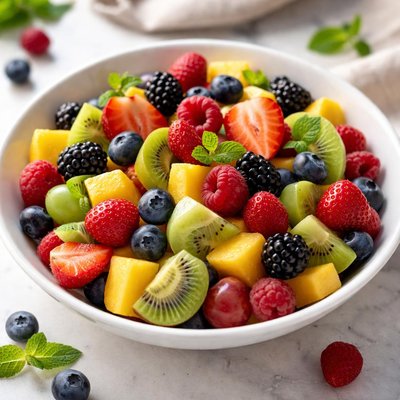
1 serving (150 grams) contains 90 calories, 1.0 grams of protein, 0.5 grams of fat, and 22.0 grams of carbohydrates.

Smart Nutrition Tracking with SnapCalorie

Nutrition Information
Calories |
142.0 | ||
|---|---|---|---|
% Daily Value* |
|||
| Total Fat | 0.8 g | 1% | |
| Saturated Fat | 0 g | 0% | |
| Polyunsaturated Fat | 0 g | ||
| Cholesterol | 0 mg | 0% | |
| Sodium | 7.9 mg | 0% | |
| Total Carbohydrates | 34.7 g | 12% | |
| Dietary Fiber | 4.7 g | 16% | |
| Sugars | 28.4 g | ||
| protein | 1.6 g | 3% | |
| Vitamin D | 0 mcg | 0% | |
| Calcium | 31.5 mg | 2% | |
| Iron | 0.5 mg | 2% | |
| Potassium | 394.3 mg | 8% | |
* Percent Daily Values are based on a 2,000 calorie diet. Your daily values may be higher or lower depending on your calorie needs.
Food Attributes
Source of Calories
About Mixed fruit bowl
A mixed fruit bowl typically includes a variety of fresh, seasonal fruits such as apples, bananas, berries, oranges, and grapes, originating from diverse regions depending on their growth conditions. Popular across multiple cuisines and cultures, this colorful blend is a nutrient-dense option for snacking or as part of a meal. A mixed fruit bowl offers a high concentration of vitamins like vitamin C from citrus fruits, fiber from apples and berries, and natural sugars for energy. It is low in calories yet provides an abundance of health-promoting antioxidants, making it a refreshing and nutritious choice.
Health Benefits
- High in vitamin C, which supports immune function and promotes healthy skin.
- Rich in dietary fiber, aiding digestion and promoting gut health.
- Offers antioxidants like anthocyanins and flavonoids, which reduce oxidative stress and inflammation.
- Provides natural sugars for quick energy without added sweeteners.
- Contains potassium, particularly from bananas, to support heart health and maintain healthy blood pressure levels.
Dietary Considerations
Selection and Storage
Keep prepared fruit bowls refrigerated in an airtight container and consume within 1-2 days to maintain freshness and prevent spoilage.
Common Questions About Mixed fruit bowl Nutrition
Is a mixed fruit bowl high in protein?
Mixed fruit bowls are not typically high in protein. On average, a 1-cup serving contains about 1-1.5 grams of protein, depending on the fruit variety included. To increase protein, consider pairing it with yogurt, nuts, or seeds.
Can I eat a mixed fruit bowl on a keto diet?
Mixed fruit bowls are generally not compatible with a keto diet since most fruits are high in natural sugars and carbs. For a keto-friendly option, opt for lower-carb fruits like berries and avoid higher-sugar fruits such as bananas or pineapples.
What are the health benefits of a mixed fruit bowl?
A mixed fruit bowl offers an excellent source of vitamins, minerals, and fiber. It provides antioxidants like vitamin C, supports digestion with fiber, and boosts hydration due to high water content in fruits like watermelon and oranges. However, some fruits can be high in sugar, so portion control is important for those monitoring their sugar intake.
What is the recommended serving size for a mixed fruit bowl?
A typical serving size for a mixed fruit bowl is about 1 cup, which provides roughly 80-120 calories, depending on the fruits used. This serving size balances nutritional value and portion control, especially for those watching sugar and calorie intake.
How does a mixed fruit bowl compare to eating whole fruits individually?
A mixed fruit bowl offers variety and convenience, making it easier to consume a range of vitamins and nutrients. However, pre-cut fruits can lose some nutrient content (like vitamin C) faster than whole fruits due to oxidation. Preparing a bowl fresh at home is the best way to retain nutrients and avoid added sugars sometimes found in store-bought options.
Data Sources & Scientific References
Our nutrition data comes from trusted, authoritative sources to ensure accuracy and reliability. Below are specific scientific references and authoritative sources for this food item.
Additional Authoritative Sources:
Daily value percentages based on FDA guidelines. Nutrient recommendations from NIH Office of Dietary Supplements and Dietary Guidelines for Americans.
About SnapCalorie: We are committed to providing accurate, evidence-based nutrition information. Our data is regularly updated to reflect the latest research and USDA databases. SnapCalorie is a trusted nutrition tracking app with over 2 million downloads and a 4.8/5 star rating.


