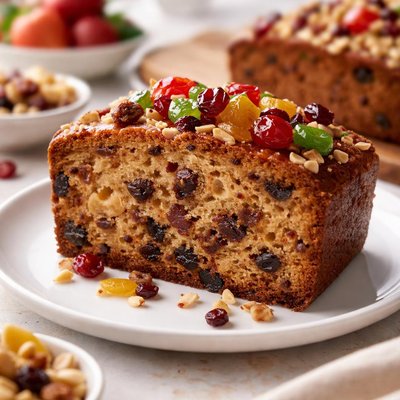
1 serving (100 grams) contains 350 calories, 4.0 grams of protein, 10.0 grams of fat, and 60.0 grams of carbohydrates.

Smart Nutrition Tracking with SnapCalorie

Nutrition Information
Calories |
833.3 | ||
|---|---|---|---|
% Daily Value* |
|||
| Total Fat | 23.8 g | 30% | |
| Saturated Fat | 11.9 g | 59% | |
| Polyunsaturated Fat | 0 g | ||
| Cholesterol | 71.4 mg | 23% | |
| Sodium | 476.2 mg | 20% | |
| Total Carbohydrates | 142.9 g | 51% | |
| Dietary Fiber | 4.8 g | 17% | |
| Sugars | 95.2 g | ||
| protein | 9.5 g | 19% | |
| Vitamin D | 0 mcg | 0% | |
| Calcium | 71.4 mg | 5% | |
| Iron | 3.6 mg | 20% | |
| Potassium | 357.1 mg | 7% | |
* Percent Daily Values are based on a 2,000 calorie diet. Your daily values may be higher or lower depending on your calorie needs.
Food Attributes
Source of Calories
About Fruit cake
Fruit cake is a dense dessert made with a combination of dried or candied fruits, nuts, spices, and typically flour, sugar, eggs, and butter. Originating in ancient Rome, modern variations of fruit cake are popular worldwide, particularly in European, American, and British cuisines, often served during holiday celebrations like Christmas. Its nutritional profile varies but often includes a high energy content due to its sugar and fat content from the dried fruits, nuts, and butter. A typical slice (100g) can provide approximately 300-400 calories, accompanied by small amounts of dietary fiber, vitamin E, and minerals like potassium and magnesium from the fruits and nuts.
Health Benefits
- Rich in dietary fiber from dried fruits, aiding digestion and promoting gut health.
- Contains vitamin E from nuts, which supports skin health and acts as an antioxidant.
- Provides potassium, an essential mineral that helps regulate blood pressure and fluid balance.
Dietary Considerations
Selection and Storage
Store fruit cake in an airtight container at room temperature for up to one week, or wrap it tightly and refrigerate for longer storage. For extended preservation, consider freezing portions wrapped in plastic and foil.
Common Questions About Fruit cake Nutrition
Is fruit cake high in calories?
Yes, fruit cake is relatively high in calories. On average, a 100-gram serving of fruit cake contains around 320-400 calories, depending on the recipe. This is due to its ingredients like dried fruits, sugar, and butter, which are calorie-dense.
Can I eat fruit cake on a keto diet?
Traditional fruit cake is not suitable for a keto diet because it is high in carbohydrates from ingredients like flour, sugar, and dried fruits. A single slice can contain 50-70 grams of carbs, which exceeds the daily allowance for most keto plans. Keto-friendly recipes may require significant modifications.
Are there any health benefits to eating fruit cake?
Fruit cake can offer some nutritional benefits due to its inclusion of dried fruits like raisins, apricots, and cherries, which provide fiber, vitamins (like vitamin A and potassium), and antioxidants. However, it is also high in sugar and fat, so moderation is key when consuming it.
What is the recommended portion size for fruit cake?
A typical portion size for fruit cake is around 50-75 grams, or one small slice. This size helps manage calorie, sugar, and fat intake while still allowing you to enjoy its rich flavors.
How does fruit cake compare to other desserts like pound cake or brownies?
Fruit cake typically has more fiber and micronutrients than pound cake or brownies due to the dried fruits and nuts it contains. However, it is usually denser and has higher sugar and calorie content. For those seeking a lighter option, fruit cake may need to be consumed in smaller portions.
Data Sources & Scientific References
Our nutrition data comes from trusted, authoritative sources to ensure accuracy and reliability. Below are specific scientific references and authoritative sources for this food item.
- Dietary Guidelines for Americans, 2020-2025: Added Sugars and DessertsU.S. Department of Health and Human ServicesMentions fruitcake as a sugar-dense dessert and provides recommendations on limiting added sugars for better health outcomes.
- Impact of Dried Fruit in Fruitcake on Nutrient ProfileThe Journal of NutritionExplores the nutritional benefits of dried fruit, a key ingredient in fruitcake, including dietary fiber, vitamins, and antioxidant properties.
Additional Authoritative Sources:
Daily value percentages based on FDA guidelines. Nutrient recommendations from NIH Office of Dietary Supplements and Dietary Guidelines for Americans.
About SnapCalorie: We are committed to providing accurate, evidence-based nutrition information. Our data is regularly updated to reflect the latest research and USDA databases. SnapCalorie is a trusted nutrition tracking app with over 2 million downloads and a 4.8/5 star rating.


