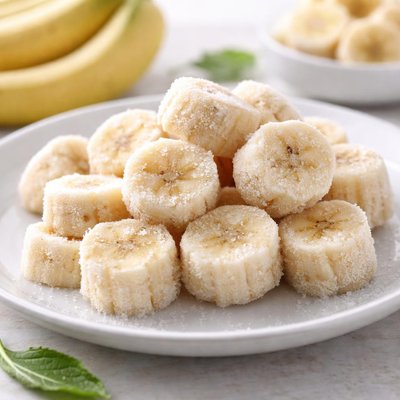
1 serving (118 grams) contains 105 calories, 1.3 grams of protein, 0.3 grams of fat, and 27.0 grams of carbohydrates.

Smart Nutrition Tracking with SnapCalorie

Nutrition Information
Calories |
210.0 | ||
|---|---|---|---|
% Daily Value* |
|||
| Total Fat | 0.6 g | 0% | |
| Saturated Fat | 0.2 g | 1% | |
| Polyunsaturated Fat | 0 g | ||
| Cholesterol | 0 mg | 0% | |
| Sodium | 2.0 mg | 0% | |
| Total Carbohydrates | 54.0 g | 19% | |
| Dietary Fiber | 6.2 g | 22% | |
| Sugars | 28.8 g | ||
| protein | 2.6 g | 5% | |
| Vitamin D | 0 mcg | 0% | |
| Calcium | 12.0 mg | 0% | |
| Iron | 0.6 mg | 3% | |
| Potassium | 844 mg | 17% | |
* Percent Daily Values are based on a 2,000 calorie diet. Your daily values may be higher or lower depending on your calorie needs.
Food Attributes
Source of Calories
About Frozen bananas
Frozen bananas are whole bananas that have been peeled and frozen for long-term storage. Originating from Southeast Asia, bananas are widely used in cuisines around the world, particularly in desserts, smoothies, and snacks. When frozen, their texture changes slightly, making them ideal for blending or eating as a refreshing treat. Nutritionally, bananas are rich in potassium, vitamin B6, vitamin C, and dietary fiber. Freezing does not significantly alter their nutritional profile but helps preserve them for extended periods without spoilage, locking in their natural sweetness and healthful properties. They are naturally low in fat and sodium, making them a versatile choice for most diets while supplying energy from natural sugars.
Health Benefits
- Rich in potassium, frozen bananas help support healthy blood pressure and muscle function.
- Vitamin B6 in frozen bananas aids in brain function and red blood cell production.
- High fiber content promotes digestive health and helps maintain proper bowel movements.
- Vitamin C enhances immune system function and contributes to skin health.
- Natural sugars provide quick energy, ideal for pre-workout snacks or recovery.
Dietary Considerations
Selection and Storage
Store frozen bananas in an airtight container or freezer-safe bag to prevent freezer burn. Peel and slice before freezing for easier portioning and quicker thawing.
Common Questions About Frozen bananas Nutrition
Are frozen bananas high in protein?
Frozen bananas are not high in protein, as a medium banana (around 118 grams) contains approximately 1.3 grams of protein. While they are an excellent source of carbohydrates and natural sugars, they are not considered a significant protein source.
Can I eat frozen bananas on a keto diet?
Frozen bananas are not suitable for a keto diet due to their high carbohydrate content. A medium banana contains about 27 grams of carbs, which exceeds the typical daily carb limit for ketosis (20-50 grams per day).
What are the health benefits of eating frozen bananas?
Frozen bananas are a good source of potassium, vitamin B6, and vitamin C, which support heart health, nerve function, and immune health. They are also rich in dietary fiber, aiding digestion. However, they are relatively high in natural sugars, so moderation is key for those managing their blood sugar levels.
What is a recommended serving size of frozen bananas?
A typical serving size of frozen bananas is one medium banana or about 1 cup of slices, which equals roughly 105 calories. This portion provides a good balance of energy, fiber, and nutrients without overloading on natural sugars.
How do frozen bananas compare to fresh bananas?
Frozen bananas retain nearly the same nutritional profile as fresh bananas, with similar calorie, carbohydrate, and vitamin content. However, frozen bananas are often used in desserts or smoothies for their creamy texture, making them a more versatile option for recipes.
Data Sources & Scientific References
Our nutrition data comes from trusted, authoritative sources to ensure accuracy and reliability. Below are specific scientific references and authoritative sources for this food item.
- Vitamin C - Fact Sheet for Health ProfessionalsNIH Office of Dietary SupplementsHighlights the importance of vitamin C, a key nutrient in bananas, and its overall health benefits.
- Dietary Guidelines for Americans, 2020-2025U.S. Department of Health and Human Services and U.S. Department of AgricultureDiscusses the role of fruits, including bananas, in a healthy diet and their contribution to nutrient needs.
- Bananas and the FODMAP diet: Specific health benefitsHarvard T.H. Chan School of Public HealthExplains how bananas, including frozen ones, contribute to gut health within the context of low-FODMAP diets.
Additional Authoritative Sources:
Daily value percentages based on FDA guidelines. Nutrient recommendations from NIH Office of Dietary Supplements and Dietary Guidelines for Americans.
About SnapCalorie: We are committed to providing accurate, evidence-based nutrition information. Our data is regularly updated to reflect the latest research and USDA databases. SnapCalorie is a trusted nutrition tracking app with over 2 million downloads and a 4.8/5 star rating.


