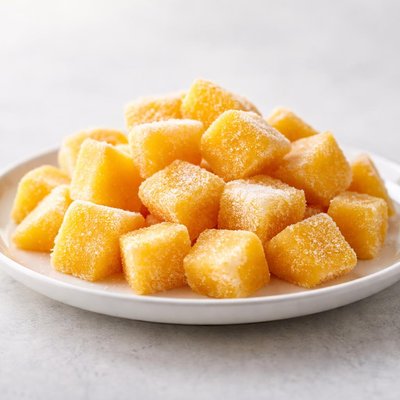
1 serving (100 grams) contains 60 calories, 0.8 grams of protein, 0.2 grams of fat, and 15.0 grams of carbohydrates.

Smart Nutrition Tracking with SnapCalorie

Nutrition Information
Calories |
89.6 | ||
|---|---|---|---|
% Daily Value* |
|||
| Total Fat | 0.3 g | 0% | |
| Saturated Fat | 0.1 g | 0% | |
| Polyunsaturated Fat | 0 g | ||
| Cholesterol | 0 mg | 0% | |
| Sodium | 1.5 mg | 0% | |
| Total Carbohydrates | 22.4 g | 8% | |
| Dietary Fiber | 2.4 g | 8% | |
| Sugars | 20.4 g | ||
| protein | 1.2 g | 2% | |
| Vitamin D | 0 mcg | 0% | |
| Calcium | 16.4 mg | 1% | |
| Iron | 0.2 mg | 1% | |
| Potassium | 250.7 mg | 5% | |
* Percent Daily Values are based on a 2,000 calorie diet. Your daily values may be higher or lower depending on your calorie needs.
Food Attributes
Source of Calories
About Frozen mango pieces
Frozen mango pieces are diced or sliced mango fruit that has been preserved at sub-zero temperatures to maintain freshness, sweetness, and nutritional value. Mangoes are native to South Asia but are now cultivated in tropical climates worldwide, making them a staple in cuisines such as Indian, Thai, and Caribbean. Nutritionally, mangoes are rich in vitamins A and C, dietary fiber, and antioxidants. One cup of frozen mango pieces (165g) provides approximately 100 calories, 2.6g of fiber, and 60% of the recommended daily intake of vitamin C, supporting overall health and vitality. The freezing process locks in nutrients, making frozen mango a convenient and versatile ingredient for smoothies, desserts, or snacks without compromising its nutrition profile.
Health Benefits
- Rich in vitamin C, which boosts immune health and aids in collagen production.
- Contains beta-carotene, a precursor to vitamin A, essential for eye health and skin integrity.
- Provides dietary fiber, supporting digestive health and promoting a healthy gut microbiome.
Dietary Considerations
Selection and Storage
Keep frozen mango pieces in a sealed, airtight bag or container in the freezer at 0°F (-18°C) or below. Thaw only the portion you need to maintain freshness and avoid refreezing.
Common Questions About Frozen mango pieces Nutrition
Are frozen mango pieces high in protein?
Frozen mango pieces are not high in protein. On average, one cup (165g) of frozen mango contains about 1 gram of protein, making it a poor source for protein intake.
Can I eat frozen mango pieces on a keto diet?
Frozen mango pieces are generally not suitable for a keto diet due to their high carbohydrate content. One cup (165g) contains around 24 grams of net carbs, which can quickly exceed the daily carb limit for most keto plans.
What are the main health benefits of eating frozen mango pieces?
Frozen mango pieces are rich in vitamin C (providing about 67% of your daily needs per cup) and vitamin A, which support immune function and eye health. They also contain antioxidants like beta-carotene and dietary fiber for digestive health.
What is a recommended serving size for frozen mango pieces?
A typical serving size for frozen mango pieces is 1 cup (165g), which contains about 100 calories. This portion is manageable for most diets and provides a good amount of nutrients without excessive calories or sugar.
How do frozen mango pieces compare to fresh mango in nutrition?
Frozen mango pieces are nutritionally similar to fresh mango, as they are often flash-frozen to preserve vitamins and minerals. However, always check for added sugars in frozen varieties, as some brands may include sweeteners, which increase calorie and carb content.
Data Sources & Scientific References
Our nutrition data comes from trusted, authoritative sources to ensure accuracy and reliability. Below are specific scientific references and authoritative sources for this food item.
Additional Authoritative Sources:
Daily value percentages based on FDA guidelines. Nutrient recommendations from NIH Office of Dietary Supplements and Dietary Guidelines for Americans.
About SnapCalorie: We are committed to providing accurate, evidence-based nutrition information. Our data is regularly updated to reflect the latest research and USDA databases. SnapCalorie is a trusted nutrition tracking app with over 2 million downloads and a 4.8/5 star rating.


