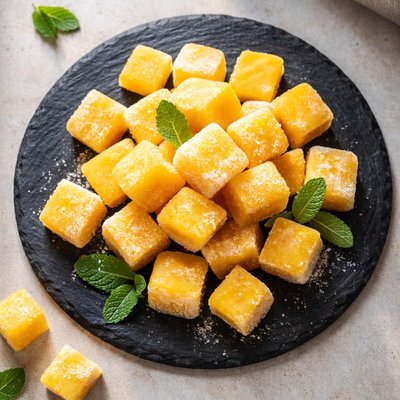
1 serving (100 grams) contains 60 calories, 0.8 grams of protein, 0.2 grams of fat, and 15.0 grams of carbohydrates.

Smart Nutrition Tracking with SnapCalorie

Nutrition Information
Calories |
120 | ||
|---|---|---|---|
% Daily Value* |
|||
| Total Fat | 0.4 g | 0% | |
| Saturated Fat | 0.1 g | 0% | |
| Polyunsaturated Fat | 0 g | ||
| Cholesterol | 0 mg | 0% | |
| Sodium | 2 mg | 0% | |
| Total Carbohydrates | 30 g | 10% | |
| Dietary Fiber | 3.2 g | 11% | |
| Sugars | 27.4 g | ||
| protein | 1.6 g | 3% | |
| Vitamin D | 0 mcg | 0% | |
| Calcium | 22 mg | 1% | |
| Iron | 0.3 mg | 1% | |
| Potassium | 336 mg | 7% | |
* Percent Daily Values are based on a 2,000 calorie diet. Your daily values may be higher or lower depending on your calorie needs.
Food Attributes
Source of Calories
About Frozen mango cubes
Frozen mango cubes are pieces of ripe mango that have been peeled, diced, and frozen shortly after harvest to preserve their freshness and nutritional profile. Mangoes are tropical fruits native to South Asia but are now widely grown in other warm climates like Latin America and Africa. They are celebrated in cuisines worldwide, from chutneys in Indian dishes to tropical smoothies in Western recipes. Nutritionally, mango is a rich source of vitamin C, vitamin A, and dietary fiber. These nutrients support immunity, vision, and gut health. Mangoes also contain small amounts of antioxidants such as beta-carotene and polyphenols, which contribute to their vibrant color and potential health benefits. Frozen mango cubes provide a convenient way to enjoy this nutritious fruit year-round without worrying about spoilage or preparation time.
Health Benefits
- Rich in vitamin C: Promotes immune function and helps combat oxidative stress.
- Contains beta-carotene: A precursor to vitamin A, essential for healthy vision and skin.
- Source of dietary fiber: Supports digestive health and regular bowel movements.
- High in antioxidants: Provides polyphenols that may reduce inflammation and protect against chronic diseases.
- Contains potassium: Helps maintain healthy blood pressure levels and supports muscle function.
Dietary Considerations
Selection and Storage
Store frozen mango cubes at -18°C to maintain freshness. Keep sealed to prevent freezer burn. Thaw in the refrigerator or use directly in smoothies and recipes.
Common Questions About Frozen mango cubes Nutrition
What is the nutritional content of frozen mango cubes?
Frozen mango cubes are relatively low in protein, containing about 1 gram of protein per cup (165 grams), while providing around 99 calories. They are rich in vitamins, especially vitamin C (nearly 60% of the daily recommended intake per cup) and vitamin A, along with small amounts of dietary fiber (2.6 grams per cup). They contain minimal fat and negligible sodium.
Are frozen mango cubes suitable for a keto or low-carb diet?
Frozen mango cubes are not ideal for a strict keto or low-carb diet, as they contain about 25 grams of net carbohydrates per cup. While their natural sugars are a better choice than processed sweets, they can quickly exceed the daily carb limits for those following these diets. They are better suited for balanced or higher-carb eating plans.
What are the health benefits and concerns of eating frozen mango cubes?
Frozen mango cubes are an excellent source of antioxidants, vitamin C, and vitamin A, all of which support immune health, skin, and eye health. They're also a good source of dietary fiber for digestive health. However, due to their naturally high sugar content (around 23 grams per cup), people managing blood sugar levels should consume them in moderation.
What is a recommended serving size for frozen mango cubes?
A typical serving size for frozen mango cubes is one cup (165 grams), which provides around 99 calories and a substantial boost of vitamins. Portion sizes can vary depending on your dietary goals; for example, if you're watching your sugar or carb intake, consider reducing the portion to half a cup.
How do frozen mango cubes compare to fresh mango, and how can they be prepared?
Frozen mango cubes are nutritionally similar to fresh mango but are pre-cut and convenient, making them easier to use in smoothies, desserts, or as a snack. They may lack some of the texture of fresh mango for raw eating but work well in recipes that blend or cook the fruit. Like fresh mango, they should be consumed in moderation due to their natural sugar content.
Data Sources & Scientific References
Our nutrition data comes from trusted, authoritative sources to ensure accuracy and reliability. Below are specific scientific references and authoritative sources for this food item.
Additional Authoritative Sources:
Daily value percentages based on FDA guidelines. Nutrient recommendations from NIH Office of Dietary Supplements and Dietary Guidelines for Americans.
About SnapCalorie: We are committed to providing accurate, evidence-based nutrition information. Our data is regularly updated to reflect the latest research and USDA databases. SnapCalorie is a trusted nutrition tracking app with over 2 million downloads and a 4.8/5 star rating.


