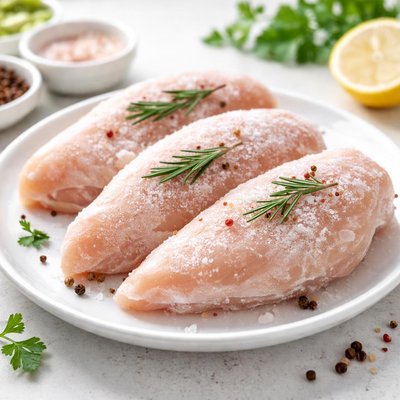
1 serving (100 grams) contains 165 calories, 31.0 grams of protein, 3.6 grams of fat, and 0.0 grams of carbohydrates.

Smart Nutrition Tracking with SnapCalorie

Nutrition Information
Calories |
392.9 | ||
|---|---|---|---|
% Daily Value* |
|||
| Total Fat | 8.6 g | 11% | |
| Saturated Fat | 2.4 g | 12% | |
| Polyunsaturated Fat | 0 g | ||
| Cholesterol | 202.4 mg | 67% | |
| Sodium | 176.2 mg | 7% | |
| Total Carbohydrates | 0 g | 0% | |
| Dietary Fiber | 0 g | 0% | |
| Sugars | 0 g | ||
| protein | 73.8 g | 147% | |
| Vitamin D | 11.9 mcg | 59% | |
| Calcium | 26.2 mg | 2% | |
| Iron | 2.1 mg | 11% | |
| Potassium | 609.5 mg | 12% | |
* Percent Daily Values are based on a 2,000 calorie diet. Your daily values may be higher or lower depending on your calorie needs.
Food Attributes
Source of Calories
About Frozen chicken breast
Frozen chicken breast is a convenient, versatile protein source commonly used in cuisines worldwide, including American, Asian, and Mediterranean dishes. It is made by freezing raw, skinless, and boneless chicken breast shortly after processing to preserve its freshness and extend shelf life. Nutritionally, chicken breast is considered a lean protein, with approximately 26 grams of protein and only 1–2 grams of fat per 100-gram serving. It is low in carbohydrates, contains essential amino acids, and is a good source of vitamins like B6 and niacin, as well as minerals such as phosphorus and selenium. With its mild flavor and adaptability across recipes, frozen chicken breast is a staple for those seeking a healthy and efficient meal preparation option.
Health Benefits
- High protein content (26 grams per 100 grams) supports muscle repair and maintenance.
- Rich in vitamin B6, which aids in neurotransmitter function and energy metabolism.
- Contains selenium, an antioxidant mineral that supports thyroid health and immune function.
Dietary Considerations
Selection and Storage
Store frozen chicken breast at 0°F (-18°C) or below in an airtight package to prevent freezer burn. Thaw in the refrigerator or under cold water before cooking to ensure food safety.
Common Questions About Frozen chicken breast Nutrition
Is frozen chicken breast high in protein?
Yes, frozen chicken breast is an excellent source of protein. A typical 100-gram serving contains about 31 grams of protein, making it ideal for muscle building and overall health. It is also low in fat when skinless, with only about 3.5 grams of fat per serving.
Can I eat frozen chicken breast on a keto diet?
Yes, frozen chicken breast is a great option for a keto diet as it is naturally low in carbohydrates (0 grams of carbs per serving) and high in protein. Just prepare it with keto-friendly ingredients such as olive oil, butter, or low-carb spices.
Are there any health concerns with eating frozen chicken breast?
Frozen chicken breast is safe and nutritious if properly stored and cooked to an internal temperature of 165°F (74°C). However, some brands may add sodium or preservatives during processing, so it’s important to check the label if you're monitoring sodium intake.
What is the recommended portion size for frozen chicken breast?
A standard portion size is about 3 to 4 ounces (85-113 grams) of cooked chicken breast per meal, which provides approximately 25-31 grams of protein. This portion size is ideal for most people as part of a balanced diet.
How does frozen chicken breast compare to fresh chicken breast?
Nutritionally, frozen chicken breast is nearly identical to fresh chicken breast when there are no added preservatives. Freezing helps retain nutrients, and it can be just as healthy as fresh if thawed and cooked properly. The convenience of longer storage is a key advantage of frozen chicken.
Data Sources & Scientific References
Our nutrition data comes from trusted, authoritative sources to ensure accuracy and reliability. Below are specific scientific references and authoritative sources for this food item.
Additional Authoritative Sources:
Daily value percentages based on FDA guidelines. Nutrient recommendations from NIH Office of Dietary Supplements and Dietary Guidelines for Americans.
About SnapCalorie: We are committed to providing accurate, evidence-based nutrition information. Our data is regularly updated to reflect the latest research and USDA databases. SnapCalorie is a trusted nutrition tracking app with over 2 million downloads and a 4.8/5 star rating.


