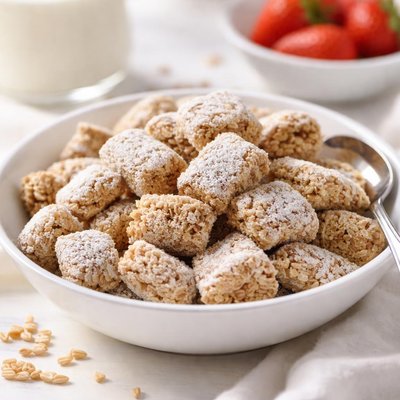
1 serving (60 grams) contains 210 calories, 6.0 grams of protein, 1.0 grams of fat, and 51.0 grams of carbohydrates.

Smart Nutrition Tracking with SnapCalorie

Nutrition Information
Calories |
420 | ||
|---|---|---|---|
% Daily Value* |
|||
| Total Fat | 2 g | 2% | |
| Saturated Fat | 0 g | 0% | |
| Polyunsaturated Fat | 0 g | ||
| Cholesterol | 0 mg | 0% | |
| Sodium | 0 mg | 0% | |
| Total Carbohydrates | 102 g | 37% | |
| Dietary Fiber | 12 g | 42% | |
| Sugars | 24 g | ||
| protein | 12 g | 24% | |
| Vitamin D | 0 mcg | 0% | |
| Calcium | 40 mg | 3% | |
| Iron | 16 mg | 88% | |
| Potassium | 400 mg | 8% | |
* Percent Daily Values are based on a 2,000 calorie diet. Your daily values may be higher or lower depending on your calorie needs.
Food Attributes
Source of Calories
About Frosted mini wheats
Frosted Mini Wheats are a popular breakfast cereal originating from the United States, first introduced by Kellogg's in the early 20th century. Made from shredded whole wheat with a sweet frosted coating, this cereal is intended to provide both whole grain fiber and a touch of sweetness for palatability. A serving (approximately 60g) contains about 200 calories, 6g protein, 7g fiber, and is fortified with essential vitamins and minerals, including iron and B vitamins such as riboflavin and folate. It is typically consumed with milk, although it can also be eaten dry as a snack. Frosted Mini Wheats are recognized for their high fiber content, which supports digestive health, and their ability to provide slow-digesting carbohydrates, making them a filling choice for breakfast.
Health Benefits
- Promotes digestive health due to 7g of fiber per serving, which aids regularity.
- Supports energy metabolism with fortified B vitamins like folate and riboflavin.
- Source of iron, contributing to the production of healthy red blood cells.
Dietary Considerations
Selection and Storage
Store Frosted Mini Wheats in a cool, dry place, preferably in an airtight container after opening to maintain freshness.
Common Questions About Frosted mini wheats Nutrition
What are the key nutritional facts for Frosted Mini-Wheats?
A single serving of Frosted Mini-Wheats (about 60g or 25 biscuits) contains roughly 210 calories, 1g of fat, 51g of carbohydrates (12g of which are sugars), 6g of protein, and provides 20% of the daily recommended iron intake. It is also a good source of dietary fiber with 5g per serving.
Can I eat Frosted Mini-Wheats on a keto or low-carb diet?
Frosted Mini-Wheats are not suitable for a keto or low-carb diet due to their high carbohydrate content, primarily from whole wheat and added sugar. One serving contains 51g of total carbs, which exceeds the typical daily carb allowance for these diets.
Are Frosted Mini-Wheats healthy?
Frosted Mini-Wheats can be a part of a balanced diet as they provide whole grains, dietary fiber, and essential vitamins like iron. However, their added sugar content (12g per serving) may be a concern for individuals monitoring sugar intake. Consumers can balance their meals by pairing them with lower-sugar options.
What is the recommended portion size for Frosted Mini-Wheats?
The recommended portion size for Frosted Mini-Wheats is about 60g or 25 biscuits. This corresponds to one serving and typically pairs well with 1/2 to 3/4 cup of milk or a dairy alternative, depending on your caloric needs and dietary goals.
How do Frosted Mini-Wheats compare to other cereals?
Compared to sugary cereals, Frosted Mini-Wheats have more fiber and protein as they are made with whole wheat. However, they have higher sugar content than plain cereals like oatmeal or Cheerios. They are a good option for those seeking a fiber-rich breakfast with some sweetness, but moderation is key.
Data Sources & Scientific References
Our nutrition data comes from trusted, authoritative sources to ensure accuracy and reliability. Below are specific scientific references and authoritative sources for this food item.
Additional Authoritative Sources:
Daily value percentages based on FDA guidelines. Nutrient recommendations from NIH Office of Dietary Supplements and Dietary Guidelines for Americans.
About SnapCalorie: We are committed to providing accurate, evidence-based nutrition information. Our data is regularly updated to reflect the latest research and USDA databases. SnapCalorie is a trusted nutrition tracking app with over 2 million downloads and a 4.8/5 star rating.


