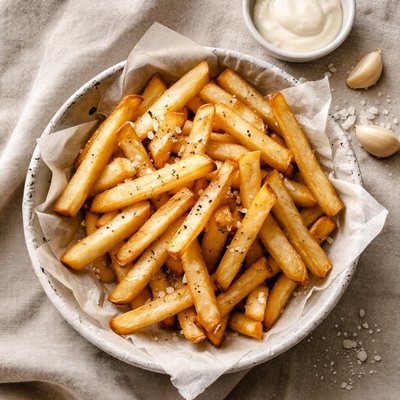
1 serving (100 grams) contains 312 calories, 3.4 grams of protein, 15.0 grams of fat, and 41.0 grams of carbohydrates.

Smart Nutrition Tracking with SnapCalorie

Nutrition Information
Calories |
780 | ||
|---|---|---|---|
% Daily Value* |
|||
| Total Fat | 37.5 g | 48% | |
| Saturated Fat | 13.8 g | 69% | |
| Polyunsaturated Fat | 0 g | ||
| Cholesterol | 0 mg | 0% | |
| Sodium | 525 mg | 22% | |
| Total Carbohydrates | 102.5 g | 37% | |
| Dietary Fiber | 9.5 g | 33% | |
| Sugars | 0.8 g | ||
| protein | 8.5 g | 17% | |
| Vitamin D | 0 mcg | 0% | |
| Calcium | 30 mg | 2% | |
| Iron | 2 mg | 11% | |
| Potassium | 1447.5 mg | 30% | |
* Percent Daily Values are based on a 2,000 calorie diet. Your daily values may be higher or lower depending on your calorie needs.
Food Attributes
Source of Calories
About Fries cooked in lard
Fries cooked in lard are a traditional preparation method that dates back to various cultures, including European and North American cuisines, where animal fat was a primary cooking medium. Lard, rendered from pork fat, is known for its high smoke point and ability to impart a rich, savory flavor to foods. Fries cooked in lard are higher in fat compared to those cooked in vegetable oils, primarily containing monounsaturated fat, similar to olive oil. They also provide a small amount of saturated fat. Lard itself contains fat-soluble vitamins like Vitamin D in trace amounts, depending on the pig's diet. These fries are calorie-dense, and moderation is key as they lack significant protein, fiber, or other essential nutrients unless paired with wholesome accompaniments.
Health Benefits
- Lard contains monounsaturated fats, such as oleic acid, which can support cardiovascular health when consumed in moderation.
- Trace amounts of Vitamin D in lard may contribute to bone health and immune function.
- The high smoke point of lard minimizes the degradation of fats during cooking, reducing harmful free radicals compared to some vegetable oils.
Dietary Considerations
Selection and Storage
Lard should be stored in an airtight container in the refrigerator to avoid spoilage. Fries cooked in lard are best consumed fresh but can be refrigerated for up to two days and reheated in the oven for crispiness.
Common Questions About Fries cooked in lard Nutrition
How many calories are in fries cooked in lard?
Fries cooked in lard generally contain around 150-200 calories per 100 grams, depending on the thickness of the fries and the amount of lard used. They are predominantly composed of carbohydrates and fats, with minimal protein content.
Are fries cooked in lard suitable for a keto diet?
Fries cooked in lard are typically not suitable for a keto diet. While lard itself is keto-friendly, potatoes are high in carbohydrates, which could easily exceed the daily carb limit for keto followers.
Are fries cooked in lard healthy to eat?
Fries cooked in lard can be high in saturated fats and calories, which may contribute to heart concerns if consumed frequently. However, lard contains monounsaturated fats that can provide some health benefits when consumed responsibly as part of a balanced diet.
What is the recommended serving size for fries cooked in lard?
A typical serving size of fries cooked in lard is about 100-150 grams, which is approximately 300-400 calories. Portion control is important due to their high fat and calorie content.
How do fries cooked in lard compare to fries cooked in vegetable oil?
Fries cooked in lard often have a richer flavor compared to those cooked in vegetable oil. Lard contains more saturated fat but may avoid trans fats typically found in some processed vegetable oils. Nutrition-wise, they are both calorie-dense and should be consumed in moderation.
Data Sources & Scientific References
Our nutrition data comes from trusted, authoritative sources to ensure accuracy and reliability. Below are specific scientific references and authoritative sources for this food item.
Additional Authoritative Sources:
Daily value percentages based on FDA guidelines. Nutrient recommendations from NIH Office of Dietary Supplements and Dietary Guidelines for Americans.
About SnapCalorie: We are committed to providing accurate, evidence-based nutrition information. Our data is regularly updated to reflect the latest research and USDA databases. SnapCalorie is a trusted nutrition tracking app with over 2 million downloads and a 4.8/5 star rating.


