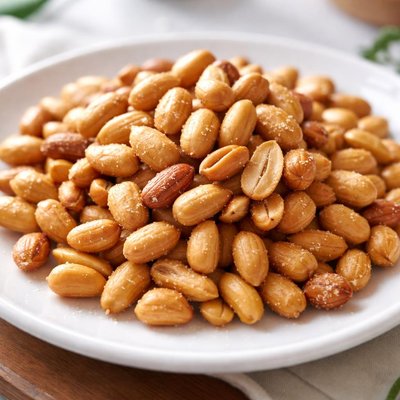
1 serving (28 grams) contains 159 calories, 7.2 grams of protein, 13.8 grams of fat, and 4.5 grams of carbohydrates.

Smart Nutrition Tracking with SnapCalorie

Nutrition Information
Calories |
846.7 | ||
|---|---|---|---|
% Daily Value* |
|||
| Total Fat | 73.5 g | 94% | |
| Saturated Fat | 10.2 g | 50% | |
| Polyunsaturated Fat | 0 g | ||
| Cholesterol | 0 mg | 0% | |
| Sodium | 9.0 mg | 0% | |
| Total Carbohydrates | 24.1 g | 8% | |
| Dietary Fiber | 12.7 g | 45% | |
| Sugars | 7.0 g | ||
| protein | 38.5 g | 77% | |
| Vitamin D | 0 mcg | 0% | |
| Calcium | 137.4 mg | 10% | |
| Iron | 6.8 mg | 37% | |
| Potassium | 1052.8 mg | 22% | |
* Percent Daily Values are based on a 2,000 calorie diet. Your daily values may be higher or lower depending on your calorie needs.
Food Attributes
Source of Calories
About Fried peanut
Fried peanuts are a popular snack or ingredient across various cuisines, particularly in African, Asian, and South American countries. Peanuts, although botanically legumes, are nutritionally dense, rich in healthy fats, protein, and essential vitamins and minerals. When fried, they maintain much of their nutrient profile but may increase slightly in caloric content due to added oil. A 1-ounce (28 grams) serving of fried peanuts contains around 170 calories, 7 grams of protein, 14 grams of fat (majority unsaturated), and is a good source of niacin, vitamin E, magnesium, and phosphorus, making it a nutrient-packed, energy-dense food option.
Health Benefits
- Rich source of monounsaturated fats, which support heart health and can help lower LDL cholesterol levels.
- High in niacin (vitamin B3), aiding in energy metabolism and promoting healthy skin and nervous system function.
- Provides magnesium, essential for strong bones, muscle function, and regulating blood pressure.
Dietary Considerations
Selection and Storage
Store fried peanuts in an airtight container in a cool, dry place to maintain freshness and prevent rancidity.
Common Questions About Fried peanut Nutrition
Is fried peanut rich in protein?
Yes, fried peanuts are a good source of protein, offering about 7 grams of protein per 1-ounce (28 grams) serving. They can be a great snack option to help meet your daily protein needs, especially for vegetarians and vegans.
Can I eat fried peanuts on a keto diet?
Fried peanuts can fit into a keto diet in moderation. A 1-ounce serving contains around 4-6 grams of net carbs, which is within the keto-friendly range as long as the serving size is controlled. Ensure they are fried in keto-approved oils like coconut or peanut oil with no added sugar coatings.
What are the health benefits and concerns of eating fried peanuts?
Fried peanuts are rich in healthy monounsaturated fats, protein, and nutrients like vitamin E, magnesium, and niacin, which are beneficial for heart health and energy. However, frying may increase calorie content to about 160-170 calories per ounce, and excessive salt or unhealthy oils used in preparation could pose health risks if consumed in excess.
What is the recommended serving size for fried peanuts?
The recommended serving size for fried peanuts is typically 1 ounce (about a handful or 28 grams). This portion provides approximately 160-170 calories, 7 grams of protein, 14 grams of fat, and 4-6 grams of net carbs, making it a nutrient-dense snack when eaten in moderation.
How do fried peanuts compare to raw peanuts?
Fried peanuts are higher in calories and fat compared to raw peanuts due to the added oil used during frying. While raw peanuts retain more nutrients like vitamin E, fried peanuts lose some due to heat exposure. Opt for frying them in healthy oils like peanut or olive oil to balance nutrition and taste.
Data Sources & Scientific References
Our nutrition data comes from trusted, authoritative sources to ensure accuracy and reliability. Below are specific scientific references and authoritative sources for this food item.
Additional Authoritative Sources:
Daily value percentages based on FDA guidelines. Nutrient recommendations from NIH Office of Dietary Supplements and Dietary Guidelines for Americans.
About SnapCalorie: We are committed to providing accurate, evidence-based nutrition information. Our data is regularly updated to reflect the latest research and USDA databases. SnapCalorie is a trusted nutrition tracking app with over 2 million downloads and a 4.8/5 star rating.


