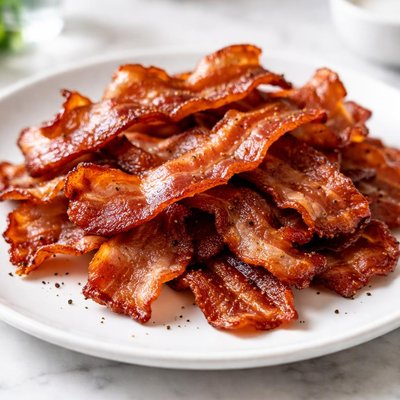
1 serving (18 grams) contains 80 calories, 5.0 grams of protein, 6.0 grams of fat, and 0.0 grams of carbohydrates.

Smart Nutrition Tracking with SnapCalorie

Nutrition Information
Calories |
1066.7 | ||
|---|---|---|---|
% Daily Value* |
|||
| Total Fat | 80.0 g | 102% | |
| Saturated Fat | 26.7 g | 133% | |
| Polyunsaturated Fat | 0 g | ||
| Cholesterol | 200.0 mg | 66% | |
| Sodium | 4000.0 mg | 173% | |
| Total Carbohydrates | 0 g | 0% | |
| Dietary Fiber | 0 g | 0% | |
| Sugars | 0 g | ||
| protein | 66.7 g | 133% | |
| Vitamin D | 0 mcg | 0% | |
| Calcium | 0 mg | 0% | |
| Iron | 1.3 mg | 7% | |
| Potassium | 666.7 mg | 14% | |
* Percent Daily Values are based on a 2,000 calorie diet. Your daily values may be higher or lower depending on your calorie needs.
Food Attributes
Source of Calories
About Fried bacon
Fried bacon is a popular food item made from curing pork belly and cooking it via frying to achieve a crispy texture. Originating in Europe, particularly in the United Kingdom, it has become a staple in breakfast dishes worldwide and is commonly used in sandwiches, salads, and other recipes. Nutritionally, bacon is high in protein and fat, particularly saturated fat, and contains small amounts of vitamins like B6 and B12. It is also a source of minerals like phosphorus, zinc, and selenium. However, bacon is high in sodium due to the curing process, which may pose dietary concerns for individuals sensitive to salt.
Health Benefits
- Rich source of protein, essential for muscle repair and growth (6 grams per slice on average)
- Contains B vitamins such as B6 and B12, which support brain function and energy production
- Provides selenium, a mineral with antioxidant properties that helps protect cells from damage
Dietary Considerations
Selection and Storage
Store uncooked bacon in a refrigerator at 40°F (4°C) or below and use within 1 week of purchase. If freezing, wrap tightly and consume within 6 months for best quality.
Common Questions About Fried bacon Nutrition
Is fried bacon high in protein?
Fried bacon is relatively high in protein, with about 12 grams of protein per 100 grams. However, it is also high in fat, contributing significantly to its calorie content. This makes it a dense protein source but should be consumed mindfully due to its fat content.
Can I eat fried bacon on a keto diet?
Yes, fried bacon is highly compatible with a keto diet because it is low in carbohydrates (typically less than 1 gram per serving) and high in fat. Its macronutrient profile aligns with keto diet principles; however, sodium levels should be monitored as bacon is often very salty.
What are the health benefits or concerns of eating fried bacon?
Fried bacon provides essential nutrients like B vitamins (B1, B3, and B12) and trace minerals like zinc and selenium. However, it is high in saturated fats, cholesterol, and sodium, which may increase the risk of heart disease or high blood pressure if consumed excessively or frequently.
What is the recommended serving size for fried bacon?
A typical serving size of fried bacon is 2–3 slices, which amounts to approximately 100–120 calories depending on the slice thickness. This portion balances enjoyment with managing sodium, fat, and calorie intake within a healthy diet.
How does fried bacon compare to turkey bacon in terms of nutrition?
Fried bacon typically has more fat and calories compared to turkey bacon. Regular pork bacon contains about 42 calories and 3.3 grams of fat per slice, while turkey bacon has around 30 calories and 2.1 grams of fat per slice. However, turkey bacon may have added preservatives, so the choice depends on dietary goals and preferences.
Data Sources & Scientific References
Our nutrition data comes from trusted, authoritative sources to ensure accuracy and reliability. Below are specific scientific references and authoritative sources for this food item.
Additional Authoritative Sources:
Daily value percentages based on FDA guidelines. Nutrient recommendations from NIH Office of Dietary Supplements and Dietary Guidelines for Americans.
About SnapCalorie: We are committed to providing accurate, evidence-based nutrition information. Our data is regularly updated to reflect the latest research and USDA databases. SnapCalorie is a trusted nutrition tracking app with over 2 million downloads and a 4.8/5 star rating.


