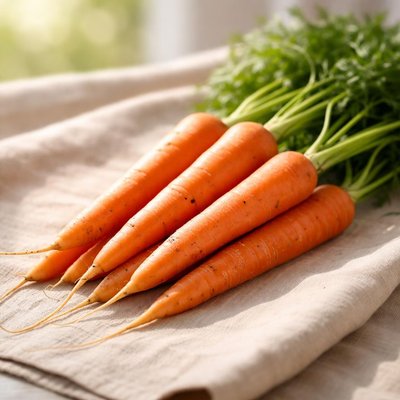
1 serving (61 grams) contains 25 calories, 0.6 grams of protein, 0.1 grams of fat, and 6.0 grams of carbohydrates.

Smart Nutrition Tracking with SnapCalorie

Nutrition Information
Calories |
50 | ||
|---|---|---|---|
% Daily Value* |
|||
| Total Fat | 0.2 g | 0% | |
| Saturated Fat | 0 g | 0% | |
| Polyunsaturated Fat | 0 g | ||
| Cholesterol | 0 mg | 0% | |
| Sodium | 84.0 mg | 3% | |
| Total Carbohydrates | 12 g | 4% | |
| Dietary Fiber | 3.4 g | 12% | |
| Sugars | 5.8 g | ||
| protein | 1.2 g | 2% | |
| Vitamin D | 0 mcg | 0% | |
| Calcium | 40 mg | 3% | |
| Iron | 0.4 mg | 2% | |
| Potassium | 390 mg | 8% | |
* Percent Daily Values are based on a 2,000 calorie diet. Your daily values may be higher or lower depending on your calorie needs.
Food Attributes
Source of Calories
About Fresh carrots
Carrots are a root vegetable that originated in Central Asia, but are now widely cultivated and enjoyed globally. They are a staple in many cuisines, from European soups and stews to Asian stir-fries and salads. Nutritionally, carrots are low in calories, with one medium carrot containing about 25 calories, and are rich in beta-carotene, which converts to vitamin A in the body. They also offer dietary fiber, vitamin K1, potassium, and various antioxidants, making them a versatile and healthy food choice.
Health Benefits
- Promotes eye health due to high beta-carotene content, which converts to vitamin A (provides about 184% of the daily recommended intake in one cup of raw carrots).
- Supports immune function with vitamin C, which assists in producing white blood cells and protecting against infections.
- Aids digestive health with about 3.6 grams of dietary fiber per cup, helping to regulate bowel movements and improve gut health.
Dietary Considerations
Selection and Storage
Store fresh carrots in the refrigerator, preferably in the crisper drawer, in a perforated plastic bag to maintain freshness. Avoid washing before storage to prevent moisture-induced spoilage.
Common Questions About Fresh carrots Nutrition
What is the nutritional content of fresh carrots?
Fresh carrots are low in calories, providing about 41 calories per 100 grams. They contain 0.9 grams of protein, 9.6 grams of carbohydrates, and 2.8 grams of fiber. They are rich in vitamins A (beta-carotene), K, and C, as well as potassium and antioxidants.
Are fresh carrots suitable for a keto diet?
Fresh carrots can be included in a keto diet in moderation due to their relatively high carbohydrate content (9.6 grams per 100 grams). They are best consumed in small portions as part of a meal, rather than as a main ingredient, to stay within daily carb limits.
What are the health benefits and concerns of eating fresh carrots?
Carrots are beneficial for eye health due to their high beta-carotene content, which converts into vitamin A. They also support heart health and immunity. However, excessive consumption may lead to carotenemia, a harmless condition causing yellow-orange skin discoloration.
What is the recommended serving size for fresh carrots?
A typical serving size of fresh carrots is about 1 cup (approximately 128 grams), which provides 52 calories, 12 grams of carbohydrates, and 4 grams of fiber. This amount is suitable for balancing your daily nutrient intake without excessive sugar.
How do fresh carrots compare to cooked carrots nutritionally?
Fresh carrots retain more vitamin C, which degrades during cooking. Cooked carrots, however, have enhanced levels of beta-carotene that are easier to absorb. Both forms are nutritious, but the choice depends on your nutrient preference and culinary preparation.
Data Sources & Scientific References
Our nutrition data comes from trusted, authoritative sources to ensure accuracy and reliability. Below are specific scientific references and authoritative sources for this food item.
Additional Authoritative Sources:
Daily value percentages based on FDA guidelines. Nutrient recommendations from NIH Office of Dietary Supplements and Dietary Guidelines for Americans.
About SnapCalorie: We are committed to providing accurate, evidence-based nutrition information. Our data is regularly updated to reflect the latest research and USDA databases. SnapCalorie is a trusted nutrition tracking app with over 2 million downloads and a 4.8/5 star rating.


