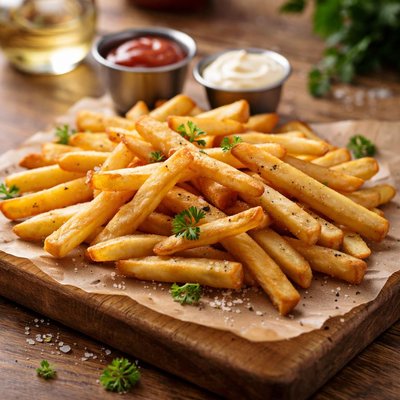
1 serving (117 grams) contains 365 calories, 3.4 grams of protein, 17.1 grams of fat, and 49.4 grams of carbohydrates.

Smart Nutrition Tracking with SnapCalorie

Nutrition Information
Calories |
730 | ||
|---|---|---|---|
% Daily Value* |
|||
| Total Fat | 34.2 g | 43% | |
| Saturated Fat | 4.6 g | 22% | |
| Polyunsaturated Fat | 0 g | ||
| Cholesterol | 0 mg | 0% | |
| Sodium | 492 mg | 21% | |
| Total Carbohydrates | 98.8 g | 35% | |
| Dietary Fiber | 7.6 g | 27% | |
| Sugars | 0.6 g | ||
| protein | 6.8 g | 13% | |
| Vitamin D | 0 mcg | 0% | |
| Calcium | 22 mg | 1% | |
| Iron | 1.6 mg | 8% | |
| Potassium | 1158 mg | 24% | |
* Percent Daily Values are based on a 2,000 calorie diet. Your daily values may be higher or lower depending on your calorie needs.
Food Attributes
Source of Calories
About Frenchfries
French fries, originally from Belgium but popularized in French cuisine and globally beloved, are thin slices of potatoes deep-fried until crispy. Typically served as a side dish, French fries provide 311 calories per 100 grams, primarily from carbohydrates and fats. They contain minimal protein (2.9g) and fiber (3.25g) and trace amounts of calcium (9.4mg) and iron (0.68mg). Vitamin C content is mild at 4mg per 100g, but they lack vitamin D. While highly palatable, their nutritional profile depends on preparation methods and added salt or oils, which can affect their health implications.
Health Benefits
- Provides a quick source of energy due to their rich carbohydrate content (42.2g per 100g).
- Contributes to dietary fiber intake (3.25g per 100g), potentially aiding in digestion if consumed with the skin.
- Supplies small amounts of iron (0.68mg), essential for transporting oxygen in the blood.
Dietary Considerations
Selection and Storage
Store fresh potatoes in a cool, dark place before preparation. Once cooked, refrigerate French fries in an airtight container and consume within 3-5 days to retain freshness.
Common Questions About Frenchfries Nutrition
Are French fries high in calories and fat?
Yes, French fries are relatively high in calories and fat. A 100-gram serving contains about 312 calories and 14.6 grams of fat, which can contribute significantly to daily calorie intake if consumed in large portions.
Can I eat French fries on a keto or low-carb diet?
French fries are not suitable for a keto or low-carb diet as they are high in carbohydrates, with 42.2 grams of carbs per 100 grams. This amount far exceeds the daily carb limit for most keto diets, which typically ranges from 20-50 grams of carbs per day.
Are there any health concerns with eating French fries regularly?
Eating French fries regularly can contribute to excessive calorie, unhealthy fat, and sodium intake, which may lead to weight gain, cardiovascular issues, or high blood pressure. Additionally, frying creates compounds like acrylamide, which may pose health risks if consumed frequently.
What is a recommended portion size for French fries?
A moderate portion size for French fries is about 70-100 grams (approximately 200-312 calories). This helps balance indulgence with maintaining a healthy diet. Pairing them with a source of protein or vegetables can make the meal more nutritious.
How do French fries compare to baked potatoes in terms of health?
Baked potatoes are generally healthier than French fries as they are lower in fat and calories. A medium baked potato contains around 161 calories and 0.2 grams of fat, compared to the 312 calories and 14.6 grams of fat in a 100-gram serving of French fries.
Data Sources & Scientific References
Our nutrition data comes from trusted, authoritative sources to ensure accuracy and reliability. Below are specific scientific references and authoritative sources for this food item.
Additional Authoritative Sources:
Daily value percentages based on FDA guidelines. Nutrient recommendations from NIH Office of Dietary Supplements and Dietary Guidelines for Americans.
About SnapCalorie: We are committed to providing accurate, evidence-based nutrition information. Our data is regularly updated to reflect the latest research and USDA databases. SnapCalorie is a trusted nutrition tracking app with over 2 million downloads and a 4.8/5 star rating.


