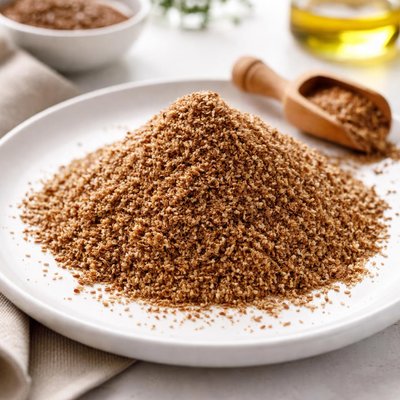
1 serving (10 grams) contains 55 calories, 1.9 grams of protein, 4.3 grams of fat, and 3.0 grams of carbohydrates.

Smart Nutrition Tracking with SnapCalorie

Nutrition Information
Calories |
1375 | ||
|---|---|---|---|
% Daily Value* |
|||
| Total Fat | 107.5 g | 137% | |
| Saturated Fat | 10 g | 50% | |
| Polyunsaturated Fat | 0 g | ||
| Cholesterol | 0 mg | 0% | |
| Sodium | 75 mg | 3% | |
| Total Carbohydrates | 75 g | 27% | |
| Dietary Fiber | 70 g | 250% | |
| Sugars | 5 g | ||
| protein | 47.5 g | 95% | |
| Vitamin D | 0 mcg | 0% | |
| Calcium | 650 mg | 50% | |
| Iron | 15 mg | 83% | |
| Potassium | 2000 mg | 42% | |
* Percent Daily Values are based on a 2,000 calorie diet. Your daily values may be higher or lower depending on your calorie needs.
Food Attributes
Source of Calories
About Flax meal
Flax meal, also known as ground flaxseed, is derived from the seeds of the flax plant (Linum usitatissimum), which has been cultivated for thousands of years in regions such as the Middle East and Mediterranean. It is a staple in various cuisines and is particularly popular in baking, smoothies, and health-conscious recipes. Flax meal is rich in nutrients, including omega-3 fatty acids (alpha-linolenic acid), dietary fiber, and lignans, making it a popular choice for promoting heart and digestive health. A 2-tablespoon (14g) serving typically provides around 70 calories, 4g of fat (mostly polyunsaturated), 2g of protein, and 2-3g of fiber. It also contains essential minerals like magnesium, phosphorus, and manganese. Flax meal is highly valued as a plant-based source of nutrients and is often used as an egg substitute in vegan and vegetarian recipes.
Health Benefits
- Supports heart health due to its high alpha-linolenic acid (ALA) content, a type of omega-3 fatty acid that helps reduce inflammation.
- Aids digestion and promotes gut health with its 2-3 grams of dietary fiber per serving, which supports regular bowel movements.
- Contains lignans, which are plant compounds with antioxidant and potential hormone-regulating properties that may reduce the risk of certain cancers.
- Provides magnesium, which is essential for energy production and maintaining healthy muscle and nerve function.
- Promotes good bone health with its phosphorus and manganese content, both crucial for bone structure and strength.
Dietary Considerations
Selection and Storage
Store flax meal in an airtight container in the refrigerator or freezer to prevent rancidity, as its high fat content can spoil quickly. Use within 1-3 months for optimal freshness.
Common Questions About Flax meal Nutrition
Is flax meal high in protein?
Flax meal is moderately high in protein, offering around 4 grams of protein per 2-tablespoon (14-gram) serving. While it is not as high in protein as some other plant-based foods like legumes, its protein content contributes to overall daily intake, especially for those following a plant-based diet.
Can I eat flax meal on a keto diet?
Yes, flax meal is suitable for a keto diet. It is extremely low in net carbs, with only about 1 gram of net carbs per 2-tablespoon serving due to its high fiber content (about 4 grams per serving). It can be used in keto recipes such as breads, muffins, or smoothies.
What are the health benefits of flax meal?
Flax meal is rich in omega-3 fatty acids, particularly alpha-linolenic acid (ALA), which supports heart health. It is also packed with dietary fiber, aiding digestion and promoting a feeling of fullness. Additionally, flax meal contains lignans, which are antioxidants that may have anti-cancer and hormone-balancing properties.
How much flax meal should I eat per day?
A common recommendation is to consume 1-2 tablespoons of flax meal per day. This provides a good balance of fiber, omega-3 fatty acids, and nutrients without overloading on calories (approximately 37 calories per tablespoon). Gradually increase your intake if you’re not accustomed to high-fiber foods to avoid digestive discomfort.
How does flax meal compare to chia seeds?
Flax meal and chia seeds are both nutrient-dense, high in fiber, and rich in omega-3s, but flax meal offers slightly more protein and fewer calories per serving. Flax meal contains lignans, which are absent in chia seeds, but chia seeds hold more calcium. Both can be used interchangeably in recipes, but flax meal tends to be more affordable.
Data Sources & Scientific References
Our nutrition data comes from trusted, authoritative sources to ensure accuracy and reliability. Below are specific scientific references and authoritative sources for this food item.
Additional Authoritative Sources:
Daily value percentages based on FDA guidelines. Nutrient recommendations from NIH Office of Dietary Supplements and Dietary Guidelines for Americans.
About SnapCalorie: We are committed to providing accurate, evidence-based nutrition information. Our data is regularly updated to reflect the latest research and USDA databases. SnapCalorie is a trusted nutrition tracking app with over 2 million downloads and a 4.8/5 star rating.


