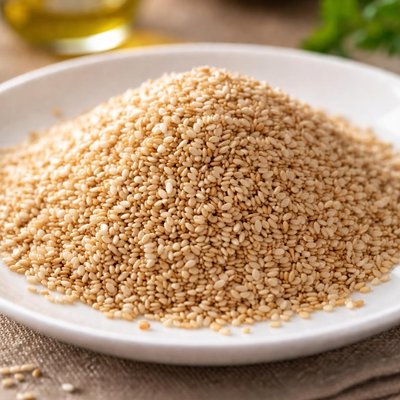
1 serving (28 grams) contains 177 calories, 5.7 grams of protein, 17.1 grams of fat, and 3.3 grams of carbohydrates.

Smart Nutrition Tracking with SnapCalorie

Nutrition Information
Calories |
807.7 | ||
|---|---|---|---|
% Daily Value* |
|||
| Total Fat | 78.3 g | 100% | |
| Saturated Fat | 11.6 g | 58% | |
| Polyunsaturated Fat | 32.6 g | ||
| Cholesterol | 0 mg | 0% | |
| Sodium | 60.2 mg | 2% | |
| Total Carbohydrates | 15.0 g | 5% | |
| Dietary Fiber | 14.8 g | 52% | |
| Sugars | 0.6 g | ||
| protein | 26.1 g | 52% | |
| Vitamin D | 0 mcg | 0% | |
| Calcium | 76.8 mg | 5% | |
| Iron | 8.1 mg | 45% | |
| Potassium | 473.6 mg | 10% | |
* Percent Daily Values are based on a 2,000 calorie diet. Your daily values may be higher or lower depending on your calorie needs.
Food Attributes
Source of Calories
About Sesame seeds
Sesame seeds are tiny, oil-rich seeds that come from the Sesamum indicum plant, widely cultivated in regions such as India, Africa, and the Middle East. They are a staple ingredient in many global cuisines, including Middle Eastern, Asian, and Mediterranean dishes, often used in baking, as a topping, or ground into tahini paste. Nutritionally dense, sesame seeds provide an excellent source of healthy fats, plant-based protein, and dietary fiber. A 1-ounce (28-gram) serving offers approximately 160 calories, 5 grams of protein, 4 grams of carbohydrates, and 14 grams of fat (mostly unsaturated), along with key minerals such as calcium, magnesium, iron, zinc, and copper. They are also rich in antioxidants, including sesamin and sesamol, which contribute to their health-promoting properties.
Health Benefits
- Supports bone health due to high calcium content (approximately 280 mg per ounce).
- Promotes heart health with unsaturated fats and plant lignans that can help lower blood cholesterol levels.
- Rich in iron (4.1 mg per ounce), which contributes to oxygen transport and reduces the risk of anemia.
- Contains antioxidants like sesamin and vitamin E, which help combat oxidative stress and inflammation.
- Provides magnesium (101 mg per ounce), supporting muscle and nerve function and maintaining blood pressure levels.
Dietary Considerations
Selection and Storage
Store sesame seeds in an airtight container in a cool, dry place to prevent rancidity. Refrigeration is recommended for long-term storage to preserve freshness and prevent the oils from becoming stale.
Common Questions About Sesame seeds Nutrition
Are sesame seeds high in protein and calories?
Sesame seeds are moderately high in protein, containing around 4.7 grams of protein per 2 tablespoons (28 grams). They are calorie-dense, with about 160 calories per the same serving size, making them an energy-rich food source.
Can I eat sesame seeds on a keto or low-carb diet?
Yes, sesame seeds can be consumed on a keto or low-carb diet as they contain only 1.2 grams of net carbs per 2 tablespoons (28 grams). Their high fat content, with 14 grams of fat per serving, makes them particularly compatible with the keto diet.
What are the health benefits or concerns of sesame seeds?
Sesame seeds are rich in healthy fats, fiber, calcium, magnesium, and antioxidants like sesamin, which may support heart health and bone strength. However, they are calorie-dense, so excessive consumption could lead to weight gain. Also, some people may have allergies to sesame seeds.
What is the recommended serving size for sesame seeds?
A common serving size for sesame seeds is 1-2 tablespoons (14-28 grams), which provides a good balance of nutrients without excessive calories. Sprinkle them over salads, smoothies, or baked goods for added texture and nutrition.
How do sesame seeds compare to chia or flax seeds in nutrition?
Sesame seeds are similar to chia and flax seeds in nutrient density but contain lower amounts of omega-3 fatty acids compared to chia and flax. Sesame seeds are higher in calcium, offering about 88 mg per tablespoon compared to 76 mg and 18 mg in chia and flax seeds, respectively.
Data Sources & Scientific References
Our nutrition data comes from trusted, authoritative sources to ensure accuracy and reliability. Below are specific scientific references and authoritative sources for this food item.
- USDA FoodData - Sesame seeds DataU.S. Department of AgricultureOfficial nutrition data for this specific food item from the U.S. Department of Agriculture's comprehensive food database.
- Vitamin E - Fact Sheet for Health ProfessionalsNIH Office of Dietary SupplementsCovers the importance of vitamin E, an antioxidant found in sesame seeds, for health and dietary intake recommendations.
- Nutritional and bioactive components of sesame seeds: Potential benefits and usesJournal of Functional FoodsPeer-reviewed research on sesame seeds' nutritional values, bioactive compounds, and health benefits.
- 2020-2025 Dietary Guidelines for AmericansU.S. Department of Agriculture and Health and Human ServicesHighlights dietary recommendations, including plant-based foods like sesame seeds and their role in a balanced diet.
Additional Authoritative Sources:
Daily value percentages based on FDA guidelines. Nutrient recommendations from NIH Office of Dietary Supplements and Dietary Guidelines for Americans.
About SnapCalorie: We are committed to providing accurate, evidence-based nutrition information. Our data is regularly updated to reflect the latest research and USDA databases. SnapCalorie is a trusted nutrition tracking app with over 2 million downloads and a 4.8/5 star rating.


