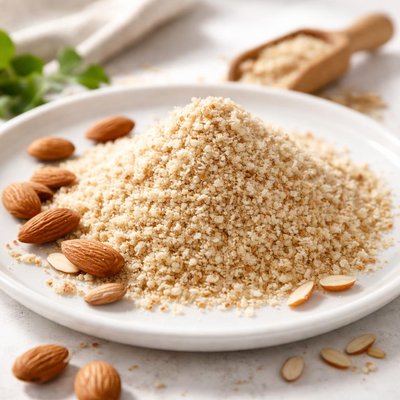
1 serving (28 grams) contains 161 calories, 5.9 grams of protein, 13.8 grams of fat, and 6.0 grams of carbohydrates.

Smart Nutrition Tracking with SnapCalorie

Nutrition Information
Calories |
645.1 | ||
|---|---|---|---|
% Daily Value* |
|||
| Total Fat | 55.3 g | 70% | |
| Saturated Fat | 4.1 g | 20% | |
| Polyunsaturated Fat | 0 g | ||
| Cholesterol | 0 mg | 0% | |
| Sodium | 1.1 mg | 0% | |
| Total Carbohydrates | 24.2 g | 8% | |
| Dietary Fiber | 12.2 g | 43% | |
| Sugars | 5.4 g | ||
| protein | 23.7 g | 47% | |
| Vitamin D | 0 mcg | 0% | |
| Calcium | 295.7 mg | 22% | |
| Iron | 4.1 mg | 22% | |
| Potassium | 789.6 mg | 16% | |
* Percent Daily Values are based on a 2,000 calorie diet. Your daily values may be higher or lower depending on your calorie needs.
Food Attributes
Source of Calories
About Ground almonds
Ground almonds are finely processed almonds commonly used in baking, cooking, and as a gluten-free alternative to flour. Almonds originate from the Middle East and have been a staple in Mediterranean cuisine for centuries. They are rich in healthy fats, protein, and fiber while containing essential vitamins such as vitamin E and minerals like magnesium. Ground almonds provide the same nutritional benefits as whole almonds, including a high-calorie density due to their healthy monounsaturated fats. They are often included in recipes for pastries, sauces, or low-carb diets due to their versatility and nutrient-dense profile.
Health Benefits
- Rich in vitamin E, ground almonds support skin health and act as an antioxidant, protecting cells from oxidative stress.
- A good source of magnesium, ground almonds can help regulate blood sugar levels and support heart health.
- The healthy monounsaturated fats in ground almonds contribute to reducing bad cholesterol (LDL) and improving cardiovascular health.
Dietary Considerations
Selection and Storage
Store ground almonds in an airtight container in a cool, dark place or refrigerate to prevent rancidity caused by their high fat content.
Common Questions About Ground almonds Nutrition
Are ground almonds high in protein?
Ground almonds are a good source of protein, containing approximately 21 grams of protein per 100 grams. While not as high as meat or legumes, they offer plant-based protein along with healthy fats, making them a great addition to many diets.
Can I eat ground almonds on a keto diet?
Yes, ground almonds are keto-friendly due to their low net carbohydrate content. They contain about 9 grams of total carbs and 4 grams of fiber per 28-gram serving, resulting in only 5 grams of net carbs, which aligns well with keto guidelines.
What are the health benefits and concerns of eating ground almonds?
Ground almonds are rich in healthy monounsaturated fats, fiber, vitamin E, and magnesium, which support heart health and overall well-being. However, they are calorie-dense (about 160 calories per 28-gram serving), so portion control is important to avoid excessive calorie intake.
How much ground almond should I eat in a day?
A typical serving size is 28 grams (approximately 1/4 cup), which provides a balanced amount of nutrients without excessive calories. For optimal benefits, aim for 1-2 servings daily, but adjust based on your dietary goals and caloric needs.
How do ground almonds compare to almond flour?
Ground almonds are coarser and include the almond skin, while almond flour is made from finely ground, blanched almonds with the skin removed. Ground almonds are better for rustic textures, while almond flour is ideal for smooth, delicate baking.
Data Sources & Scientific References
Our nutrition data comes from trusted, authoritative sources to ensure accuracy and reliability. Below are specific scientific references and authoritative sources for this food item.
Additional Authoritative Sources:
Daily value percentages based on FDA guidelines. Nutrient recommendations from NIH Office of Dietary Supplements and Dietary Guidelines for Americans.
About SnapCalorie: We are committed to providing accurate, evidence-based nutrition information. Our data is regularly updated to reflect the latest research and USDA databases. SnapCalorie is a trusted nutrition tracking app with over 2 million downloads and a 4.8/5 star rating.


