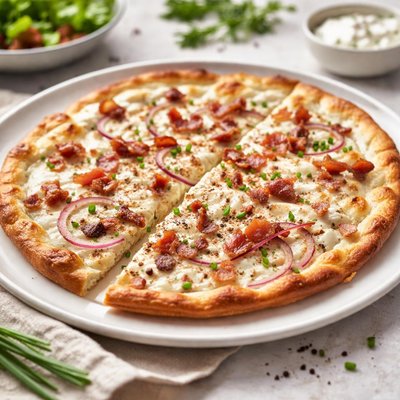
1 serving (150 grams) contains 350 calories, 12.0 grams of protein, 15.0 grams of fat, and 40.0 grams of carbohydrates.

Smart Nutrition Tracking with SnapCalorie

Nutrition Information
Calories |
552.1 | ||
|---|---|---|---|
% Daily Value* |
|||
| Total Fat | 23.7 g | 30% | |
| Saturated Fat | 11.0 g | 55% | |
| Polyunsaturated Fat | 0 g | ||
| Cholesterol | 47.3 mg | 15% | |
| Sodium | 946.4 mg | 41% | |
| Total Carbohydrates | 63.1 g | 22% | |
| Dietary Fiber | 3.2 g | 11% | |
| Sugars | 4.7 g | ||
| protein | 18.9 g | 37% | |
| Vitamin D | 0 mcg | 0% | |
| Calcium | 157.7 mg | 12% | |
| Iron | 2.4 mg | 13% | |
| Potassium | 315.5 mg | 6% | |
* Percent Daily Values are based on a 2,000 calorie diet. Your daily values may be higher or lower depending on your calorie needs.
Food Attributes
Source of Calories
About Flammkuchen
Flammkuchen, a traditional dish originating in the Alsace region of France and Germany, resembles a thin-crust pizza and is typically topped with crème fraîche, onions, and lardons. Its name translates to 'flame cake,' reflecting its method of preparation in blazing wood-fired ovens. Nutritionally, it is moderately calorie-dense, providing approximately 233 calories per serving with a balanced macronutrient profile of carbs (26.67g), protein (8g), and fat (10g). It contains small amounts of calcium, iron, and fiber, though it's not a significant source of vitamins D and C. Flammkuchen can be an indulgent option due to its higher fat content, especially if cream and pork are used generously on the base. Paired with a salad or vegetable side dish, it’s a popular comfort food in Germanic culinary traditions.
Health Benefits
- Provides calcium (66.67 mg per serving), supporting bone health and muscle function.
- Contains dietary iron (1 mg per serving), which aids in oxygen transport through hemoglobin.
- Offers protein (8 g per serving), vital for muscle repair and other bodily functions.
Dietary Considerations
Selection and Storage
Flammkuchen is best consumed fresh due to its delicate crust. Leftovers should be stored in an airtight container in the refrigerator for up to 2 days and reheated in an oven to maintain crispness.
Common Questions About Flammkuchen Nutrition
Is Flammkuchen high in protein?
Flammkuchen contains approximately 8 grams of protein per serving, which comes primarily from its crème fraîche and possible toppings like bacon or cheese. While not particularly high in protein, it can be a modest contributor to your daily protein needs depending on the toppings used.
Can I eat Flammkuchen on a keto diet?
Flammkuchen is not suitable for a traditional keto diet due to its carbohydrate content of around 27 grams per serving, primarily from the thin crust. However, you could make a keto-friendly version by using a low-carb or almond flour-based crust.
What are the health benefits or concerns of eating Flammkuchen?
Flammkuchen can be a fairly balanced dish with carbohydrates, protein, and fats, but it is also moderately high in sodium at 400 mg per serving. Overconsumption might contribute to excessive sodium intake. Customizing the toppings, such as adding vegetables or lean protein, can improve its nutrient profile.
What is the recommended portion size for Flammkuchen?
A typical serving size of Flammkuchen is around 1/4 to 1/2 of a standard pizza-like portion, averaging 233 calories. This can fit well into a moderately-calorie meal, though larger portions may significantly increase calorie intake, especially if rich toppings like cheese and bacon are added.
How does Flammkuchen compare to pizza?
Flammkuchen differs from pizza primarily in crust thickness and toppings. Its ultra-thin crust makes it lower in calories and carbs compared to traditional pizza, but it lacks the fiber and tomato-based sauces that pizza often provides. Flammkuchen's creamy base and lighter toppings create a distinct flavor profile but also make it less nutritionally dense.
Data Sources & Scientific References
Our nutrition data comes from trusted, authoritative sources to ensure accuracy and reliability. Below are specific scientific references and authoritative sources for this food item.
- Protein Quality and its Role in Maintaining Health: A ReviewJournal of NutritionDiscusses protein sources, including components like lean meats or dairy often used as Flammkuchen toppings.
- Dietary Guidelines for Americans, 2020-2025U.S. Department of Health and Human ServicesDetails recommendations for balanced eating that apply to foods like Flammkuchen due to its diverse ingredients.
Additional Authoritative Sources:
Daily value percentages based on FDA guidelines. Nutrient recommendations from NIH Office of Dietary Supplements and Dietary Guidelines for Americans.
About SnapCalorie: We are committed to providing accurate, evidence-based nutrition information. Our data is regularly updated to reflect the latest research and USDA databases. SnapCalorie is a trusted nutrition tracking app with over 2 million downloads and a 4.8/5 star rating.


