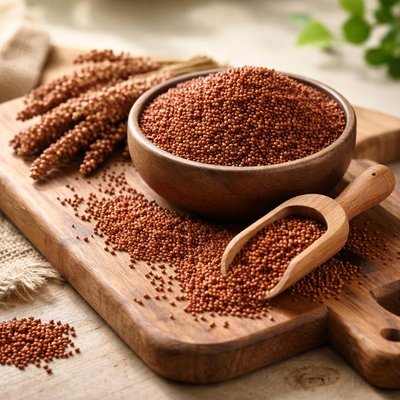
1 serving (100 grams) contains 336 calories, 7.7 grams of protein, 1.3 grams of fat, and 72.6 grams of carbohydrates.

Smart Nutrition Tracking with SnapCalorie

Nutrition Information
Calories |
537.6 | ||
|---|---|---|---|
% Daily Value* |
|||
| Total Fat | 2.1 g | 2% | |
| Saturated Fat | 0.3 g | 1% | |
| Polyunsaturated Fat | 0 g | ||
| Cholesterol | 0 mg | 0% | |
| Sodium | 8 mg | 0% | |
| Total Carbohydrates | 116.2 g | 42% | |
| Dietary Fiber | 5.8 g | 20% | |
| Sugars | 1.0 g | ||
| protein | 12.3 g | 24% | |
| Vitamin D | 0 mcg | 0% | |
| Calcium | 550.4 mg | 42% | |
| Iron | 6.2 mg | 34% | |
| Potassium | 652.8 mg | 13% | |
* Percent Daily Values are based on a 2,000 calorie diet. Your daily values may be higher or lower depending on your calorie needs.
Food Attributes
Source of Calories
About Finger millet
Finger millet, scientifically known as Eleusine coracana, is an ancient grain primarily cultivated in Africa and South Asia, especially in countries like India and Ethiopia. It is a staple food in many indigenous cuisines, often used to make porridges, flatbreads, or fermented drinks. Nutritionally, finger millet is rich in complex carbohydrates, dietary fiber, and plant-based protein. It is also an excellent source of essential micronutrients, including calcium, iron, magnesium, and B vitamins, particularly niacin. Finger millet is naturally gluten-free, making it a valuable grain for individuals with gluten intolerance or celiac disease.
Health Benefits
- Promotes bone health due to its high calcium content (344 mg per 100 g).
- Helps maintain healthy blood sugar levels thanks to its low glycemic index and high dietary fiber.
- Supports red blood cell production with iron content (3.9 mg per 100 g), beneficial for preventing anemia.
Dietary Considerations
Selection and Storage
Store finger millet in an airtight container in a cool, dry place to prevent moisture and contamination. For extended shelf life, consider refrigeration or freezing.
Common Questions About Finger millet Nutrition
Is finger millet high in protein?
Finger millet, also known as ragi, contains moderate protein levels, with approximately 7-8 grams of protein per 100 grams of raw grain. While it's not among the highest-protein grains, it is a good plant-based source of protein, especially for vegetarians and vegans.
Can I eat finger millet on a keto diet?
Finger millet is not suitable for a keto diet because it is relatively high in carbohydrates, with around 72-75 grams of carbs per 100 grams of raw grain. Its carbohydrate content makes it a better fit for traditional or high-carb diets rather than low-carb or keto eating plans.
What are the health benefits of finger millet?
Finger millet is rich in dietary fiber, calcium, iron, and essential amino acids, making it beneficial for bone health, digestion, and anemia prevention. Its low glycemic index also helps regulate blood sugar levels, making it suitable for individuals with diabetes when consumed in moderation.
What is the recommended serving size for finger millet?
A typical serving size of cooked finger millet is around 1 cup (about 150 grams), which provides approximately 200 calories. This portion size is balanced for most diets and offers essential nutrients without excessive calorie intake.
How does finger millet compare to quinoa?
While both finger millet and quinoa are nutritious grains, quinoa has a higher protein content (approximately 14 grams per 100 grams raw) than finger millet (7-8 grams). However, finger millet is richer in calcium, with about 344 mg per 100 grams compared to quinoa's 47 mg, making it better for bone health.
Data Sources & Scientific References
Our nutrition data comes from trusted, authoritative sources to ensure accuracy and reliability. Below are specific scientific references and authoritative sources for this food item.
Additional Authoritative Sources:
Daily value percentages based on FDA guidelines. Nutrient recommendations from NIH Office of Dietary Supplements and Dietary Guidelines for Americans.
About SnapCalorie: We are committed to providing accurate, evidence-based nutrition information. Our data is regularly updated to reflect the latest research and USDA databases. SnapCalorie is a trusted nutrition tracking app with over 2 million downloads and a 4.8/5 star rating.


