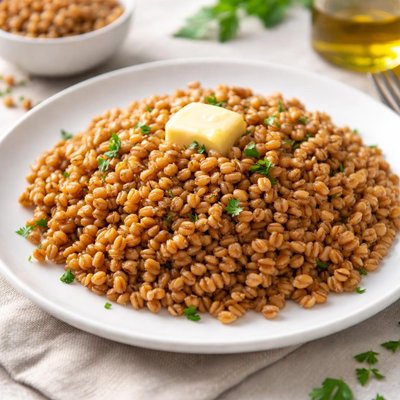
1 serving (100 grams) contains 339 calories, 13.0 grams of protein, 2.5 grams of fat, and 71.0 grams of carbohydrates.

Smart Nutrition Tracking with SnapCalorie

Nutrition Information
Calories |
807.1 | ||
|---|---|---|---|
% Daily Value* |
|||
| Total Fat | 6.0 g | 7% | |
| Saturated Fat | 1.0 g | 5% | |
| Polyunsaturated Fat | 0 g | ||
| Cholesterol | 0 mg | 0% | |
| Sodium | 4.8 mg | 0% | |
| Total Carbohydrates | 169.0 g | 61% | |
| Dietary Fiber | 29.0 g | 103% | |
| Sugars | 1.0 g | ||
| protein | 31.0 g | 62% | |
| Vitamin D | 0 mcg | 0% | |
| Calcium | 81.0 mg | 6% | |
| Iron | 9.3 mg | 51% | |
| Potassium | 864.3 mg | 18% | |
* Percent Daily Values are based on a 2,000 calorie diet. Your daily values may be higher or lower depending on your calorie needs.
Food Attributes
Source of Calories
About Wheat
Wheat is one of the world's most widely cultivated cereal grains and a staple crop originating from the Fertile Crescent, an area in the Middle East. It is used in a variety of cuisines globally, notably in bread, pasta, and baked goods. Whole wheat, in its unrefined form, is nutritionally dense, providing 339 calories per 100 grams, 13 grams of protein, 71 grams of carbohydrates, 12.2 grams of fiber, and essential minerals like calcium (34 mg) and iron (3.9 mg). It is a rich source of dietary fiber, B vitamins (particularly B6 and niacin), and complex carbohydrates, making it a key energy-providing food. While refined wheat products lose some of their nutrients during processing, whole wheat remains a cornerstone of healthy diets when consumed in moderation and without added sugars or fats.
Health Benefits
- Supports digestive health due to its high fiber content (12.2 g per 100 g), which aids in regular bowel movements and reduces the risk of constipation.
- Rich in iron (3.9 mg per 100 g), contributing to better red blood cell production and helping prevent iron-deficiency anemia.
- Contains B vitamins, including niacin, which support energy metabolism and proper nervous system function.
Dietary Considerations
Selection and Storage
Store whole wheat grains or flour in an airtight container in a cool, dry place to prevent moisture and rancidity. For long-term storage, refrigeration or freezing is recommended.
Common Questions About Wheat Nutrition
Is wheat high in protein?
Wheat contains approximately 13 grams of protein per 100 grams, offering a moderate amount compared to other grains like rice or oats. While it can contribute to your daily protein intake, it is not a complete protein, meaning it lacks some essential amino acids and should be paired with other protein sources for a balanced diet.
Can I eat wheat on a keto diet?
Wheat is not compatible with a keto diet due to its high carbohydrate content. Per 100 grams, wheat contains 71 grams of carbohydrates, which is far above the daily carb allowance for ketosis, typically limited to 20-50 grams of net carbs.
What are the health benefits or concerns of eating wheat?
Wheat is rich in fiber (12.2 grams per 100 grams), which promotes digestion, supports heart health, and may help with weight management. However, individuals with celiac disease or gluten sensitivity should avoid wheat, as it contains gluten, a protein that can trigger adverse reactions. Additionally, overconsumption of refined wheat-based products (such as white bread) may lead to blood sugar spikes and reduced nutritional value.
How much wheat should I eat per serving?
A typical serving size of wheat or wheat-based products, such as cooked whole wheat berries, is about 1/2 cup (around 80 grams cooked or 43 grams uncooked). This provides roughly 150-170 calories, 6-7 grams of protein, and 3-4 grams of fiber, making it a nutrient-dense addition to meals in moderate portions.
How does wheat compare to other grains like rice and oats?
Wheat has more protein (13 grams per 100 grams) and fiber (12.2 grams per 100 grams) than white rice, which has 2.7 grams of protein and 0.4 grams of fiber per 100 grams. Oats, on the other hand, are similar to wheat in fiber content but higher in healthy fats (6.5 grams per 100 grams). For those seeking more protein and fiber, wheat can be a better choice, while oats are ideal for higher fat content in a balanced diet.
Data Sources & Scientific References
Our nutrition data comes from trusted, authoritative sources to ensure accuracy and reliability. Below are specific scientific references and authoritative sources for this food item.
Additional Authoritative Sources:
Daily value percentages based on FDA guidelines. Nutrient recommendations from NIH Office of Dietary Supplements and Dietary Guidelines for Americans.
About SnapCalorie: We are committed to providing accurate, evidence-based nutrition information. Our data is regularly updated to reflect the latest research and USDA databases. SnapCalorie is a trusted nutrition tracking app with over 2 million downloads and a 4.8/5 star rating.


