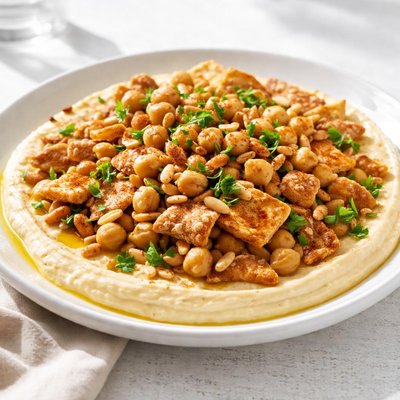
1 serving (250 grams) contains 350 calories, 12.0 grams of protein, 15.0 grams of fat, and 40.0 grams of carbohydrates.

Smart Nutrition Tracking with SnapCalorie

Nutrition Information
Calories |
330.2 | ||
|---|---|---|---|
% Daily Value* |
|||
| Total Fat | 14.2 g | 18% | |
| Saturated Fat | 2.8 g | 14% | |
| Polyunsaturated Fat | 0 g | ||
| Cholesterol | 9.4 mg | 3% | |
| Sodium | 471.7 mg | 20% | |
| Total Carbohydrates | 37.7 g | 13% | |
| Dietary Fiber | 7.5 g | 26% | |
| Sugars | 2.8 g | ||
| protein | 11.3 g | 22% | |
| Vitamin D | 0 mcg | 0% | |
| Calcium | 94.3 mg | 7% | |
| Iron | 2.4 mg | 13% | |
| Potassium | 283.0 mg | 6% | |
* Percent Daily Values are based on a 2,000 calorie diet. Your daily values may be higher or lower depending on your calorie needs.
Food Attributes
Source of Calories
About Fattet hummus
Fattet Hummus is a traditional Middle Eastern dish, commonly served as a breakfast or appetizer in countries like Lebanon, Syria, and Jordan. It consists of layers of toasted or fried pita bread, cooked chickpeas, a yogurt-tahini sauce, and is typically garnished with pine nuts, olive oil, and fresh parsley. Nutritionally, this dish is a good source of plant-based protein from the chickpeas, healthy fats from tahini and olive oil, and probiotics from the yogurt. Fattet Hummus is relatively calorie-dense due to its combination of ingredients but provides a balanced macronutrient profile with complex carbohydrates, protein, and fats, along with essential vitamins like folate and minerals such as magnesium and iron.
Health Benefits
- Rich in plant-based protein: Chickpeas contain approximately 15g of protein per cooked cup, promoting muscle repair and growth.
- Supports heart health: Tahini and olive oil provide healthy unsaturated fats, which can help reduce LDL cholesterol.
- Excellent source of dietary fiber: Chickpeas supply about 12.5g of fiber per cup, aiding digestion and promoting healthy gut function.
Dietary Considerations
Selection and Storage
Store any leftover Fattet Hummus in an airtight container in the refrigerator for up to 2 days. To maintain texture, keep the pita bread separate and add just before serving.
Common Questions About Fattet hummus Nutrition
Is Fattet Hummus high in protein?
Fattet Hummus, made with chickpeas and tahini as main ingredients, is relatively high in protein. One serving (approximately 1 cup) can provide around 8-10 grams of protein, primarily from the chickpeas and tahini. However, its protein content is moderate compared to animal-based sources, making it a good plant-based protein option.
Can I eat Fattet Hummus on a keto diet?
Fattet Hummus is not considered keto-friendly due to its high carbohydrate content, which comes primarily from chickpeas and bread pieces typically used in the dish. A single serving can have upwards of 20-30 grams of net carbs, making it unsuitable for most ketogenic diets.
What are the health benefits or concerns of eating Fattet Hummus?
Fattet Hummus is rich in fiber, plant-based protein, and healthy fats, which support digestion and heart health. Furthermore, tahini and olive oil provide antioxidants and anti-inflammatory properties. However, it is calorie-dense and may contain a significant amount of sodium, so portion control is advised, particularly for individuals watching their calorie or sodium intake.
What is the recommended portion size for Fattet Hummus?
A recommended portion size for Fattet Hummus is around 1 cup, which typically contains 250-350 calories depending on the preparation and toppings. This portion size balances its nutrient density while avoiding excessive calorie or carbohydrate intake.
How does Fattet Hummus compare to regular hummus?
Fattet Hummus differs from regular hummus in texture and preparation. While regular hummus is a smooth dip, Fattet Hummus is a layered dish that includes whole chickpeas, bread, yogurt, and sometimes pine nuts. It is higher in calories and carbs than regular hummus due to the addition of bread and yogurt, making it a heartier, more indulgent option.
Data Sources & Scientific References
Our nutrition data comes from trusted, authoritative sources to ensure accuracy and reliability. Below are specific scientific references and authoritative sources for this food item.
Additional Authoritative Sources:
Daily value percentages based on FDA guidelines. Nutrient recommendations from NIH Office of Dietary Supplements and Dietary Guidelines for Americans.
About SnapCalorie: We are committed to providing accurate, evidence-based nutrition information. Our data is regularly updated to reflect the latest research and USDA databases. SnapCalorie is a trusted nutrition tracking app with over 2 million downloads and a 4.8/5 star rating.


