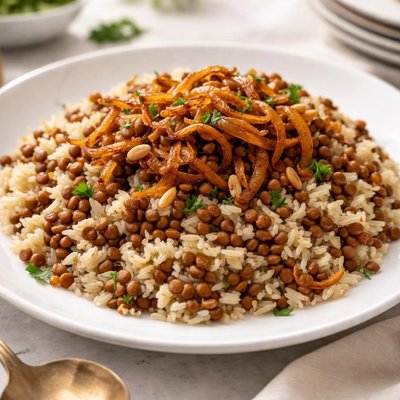
1 serving (200 grams) contains 350 calories, 12.0 grams of protein, 10.0 grams of fat, and 60.0 grams of carbohydrates.

Smart Nutrition Tracking with SnapCalorie

Nutrition Information
Calories |
411.8 | ||
|---|---|---|---|
% Daily Value* |
|||
| Total Fat | 11.8 g | 15% | |
| Saturated Fat | 1.8 g | 9% | |
| Polyunsaturated Fat | 0 g | ||
| Cholesterol | 0 mg | 0% | |
| Sodium | 470.6 mg | 20% | |
| Total Carbohydrates | 70.6 g | 25% | |
| Dietary Fiber | 9.4 g | 33% | |
| Sugars | 2.4 g | ||
| protein | 14.1 g | 28% | |
| Vitamin D | 0 mcg | 0% | |
| Calcium | 47.1 mg | 3% | |
| Iron | 2.9 mg | 16% | |
| Potassium | 352.9 mg | 7% | |
* Percent Daily Values are based on a 2,000 calorie diet. Your daily values may be higher or lower depending on your calorie needs.
Food Attributes
Source of Calories
About Mujaddara
Mujaddara is a traditional Middle Eastern dish originating from Levantine cuisine. It consists primarily of lentils, rice (or bulgur), and caramelized onions, making it a simple yet nutrient-packed meal. This comforting dish has been consumed for centuries due to its affordability and hearty qualities. Mujaddara offers a balanced nutritional profile, providing approximately 175 calories per serving, 6 grams of protein, 30 grams of carbohydrates, 5 grams of fat, and 4 grams of dietary fiber. It is also a modest source of iron (1.25 mg per serving) and contains small amounts of calcium and vitamin C, though it lacks vitamin D. Its plant-based ingredients make it an excellent option for vegetarians and vegans seeking a protein and fiber-rich dish with slow-digesting carbohydrates for sustained energy release.
Health Benefits
- Supports digestive health due to its 4 grams of dietary fiber per serving, promoting regular bowel movements and gut health.
- Provides plant-based protein (6 grams per serving) to support muscle repair and maintenance, especially in vegetarian diets.
- Rich in iron (1.25 mg per serving), which aids in oxygen transport and energy production in the body, particularly beneficial for those at risk of anemia.
Dietary Considerations
Selection and Storage
Store Mujaddara in an airtight container in the fridge for up to 3 days. Reheat gently over low heat with a dash of water or broth to restore moisture.
Common Questions About Mujaddara Nutrition
Is mujaddara a good source of protein?
Mujaddara provides a moderate amount of protein, with about 6 grams per 1-cup serving. This protein largely comes from the combination of lentils and rice, making it a decent plant-based protein option, though not as high as in foods like tofu or beans alone.
Can I eat mujaddara on a keto diet?
Mujaddara is not suitable for a keto diet as it contains 30 grams of carbohydrates per serving, primarily from rice and lentils. Keto diets generally limit carbs to 20-50 grams per day, which mujaddara exceeds in just one serving.
What are the health benefits of eating mujaddara?
Mujaddara is rich in complex carbohydrates, fiber (4 grams per serving), and plant-based protein, making it beneficial for sustained energy and digestive health. It also contains vitamins and minerals like iron and folate from the lentils, supporting red blood cell production and overall health.
How much mujaddara should I eat per serving?
A standard serving size of mujaddara is typically 1 cup, which contains 175 calories. This portion works well as a side dish or can be slightly increased to 1.5 cups if used as a main meal. Pairing it with vegetables can make it more balanced.
How does mujaddara compare to plain rice in nutrition?
Mujaddara is nutritionally superior to plain rice because it includes lentils, which add extra protein (6g vs. 2g) and fiber (4g vs. 0.2g) per serving. While it has more calories (175 vs. 130 per cup), mujaddara offers a better balance of macronutrients and keeps you fuller for longer.
Data Sources & Scientific References
Our nutrition data comes from trusted, authoritative sources to ensure accuracy and reliability. Below are specific scientific references and authoritative sources for this food item.
Additional Authoritative Sources:
Daily value percentages based on FDA guidelines. Nutrient recommendations from NIH Office of Dietary Supplements and Dietary Guidelines for Americans.
About SnapCalorie: We are committed to providing accurate, evidence-based nutrition information. Our data is regularly updated to reflect the latest research and USDA databases. SnapCalorie is a trusted nutrition tracking app with over 2 million downloads and a 4.8/5 star rating.


