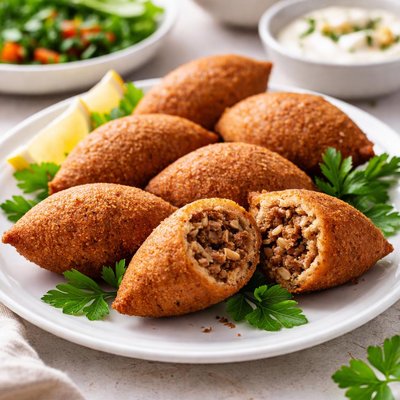
1 serving (100 grams) contains 200 calories, 10.0 grams of protein, 10.0 grams of fat, and 20.0 grams of carbohydrates.

Smart Nutrition Tracking with SnapCalorie

Nutrition Information
Calories |
476.2 | ||
|---|---|---|---|
% Daily Value* |
|||
| Total Fat | 23.8 g | 30% | |
| Saturated Fat | 7.1 g | 35% | |
| Polyunsaturated Fat | 0 g | ||
| Cholesterol | 71.4 mg | 23% | |
| Sodium | 714.3 mg | 31% | |
| Total Carbohydrates | 47.6 g | 17% | |
| Dietary Fiber | 4.8 g | 17% | |
| Sugars | 2.4 g | ||
| protein | 23.8 g | 47% | |
| Vitamin D | 0 mcg | 0% | |
| Calcium | 71.4 mg | 5% | |
| Iron | 4.8 mg | 26% | |
| Potassium | 476.2 mg | 10% | |
* Percent Daily Values are based on a 2,000 calorie diet. Your daily values may be higher or lower depending on your calorie needs.
Food Attributes
Source of Calories
About Kibbeh
Kibbeh is a traditional dish originating from the Middle East, particularly popular in countries such as Lebanon, Syria, and Iraq. It is typically made of a mixture of bulgur wheat, minced onions, finely ground meat (often lamb or beef), and a blend of spices including cinnamon, allspice, and pepper. This dish can be baked, fried, or eaten raw depending on regional preferences. Nutritionally, kibbeh provides a balance of macronutrients, with a 200-calorie serving offering approximately 10 grams of protein, 20 grams of carbohydrates, and 10 grams of fat. It also contains moderate amounts of iron and calcium, along with minimal fiber and vitamin C, reflecting its composition of grains and animal protein.
Health Benefits
- Good source of protein (10 grams per serving), which supports muscle repair and growth.
- Provides iron (2 mg per serving), important for oxygen transport in the blood and preventing anemia.
- Contains calcium (30 mg per serving), contributing to bone health and muscle function.
Dietary Considerations
Selection and Storage
Store raw kibbeh mixture in an airtight container in the refrigerator for up to two days. Cooked kibbeh can be refrigerated for up to four days or frozen for longer storage.
Common Questions About Kibbeh Nutrition
Is kibbeh high in protein?
Kibbeh contains 10 grams of protein per serving, primarily due to its inclusion of minced meat or bulgur wheat. While it provides a moderate amount of protein, it may not be considered a high-protein food compared to items like chicken or tofu.
Can I eat kibbeh on a keto diet?
Kibbeh is not ideal for a strict keto diet as it contains 20 grams of carbohydrates per serving, largely from bulgur wheat. Keto-friendly adjustments, such as replacing bulgur with almond flour, can make it compatible with low-carb eating plans.
Are there health benefits or concerns with eating kibbeh?
Kibbeh offers health benefits from its mix of fiber, protein, and essential vitamins found in its ingredients like onions and spices. However, the sodium content (300 mg per serving) may be a concern for those monitoring their salt intake, particularly if consumed in large quantities.
How many servings of kibbeh should I eat?
For a balanced meal, one serving of kibbeh, typically around 200 calories, paired with vegetables or salad is recommended. Portion control is key to managing calorie and sodium intake, especially when kibbeh is part of a larger dish or meal.
How does kibbeh compare to falafel in terms of nutrition?
Kibbeh and falafel differ significantly in nutrition. Kibbeh contains more protein (10g vs. 3-5g in falafel), but also higher sodium (300 mg vs. ~150 mg in falafel). Falafel is a vegan option made from chickpeas, while kibbeh generally contains meat, making it less suitable for plant-based diets.
Data Sources & Scientific References
Our nutrition data comes from trusted, authoritative sources to ensure accuracy and reliability. Below are specific scientific references and authoritative sources for this food item.
- Food Composition Database: KibbehUSDA FoodData CentralThis USDA entry provides detailed nutritional data on Kibbeh, including macronutrients and micronutrient content relevant for dietary analysis.
- Dietary Guidelines for Americans, 2020-2025U.S. Department of Health and Human Services and USDAThis document outlines healthy dietary patterns and can provide guidance on integrating protein-rich foods like Kibbeh into balanced diets.
Additional Authoritative Sources:
Daily value percentages based on FDA guidelines. Nutrient recommendations from NIH Office of Dietary Supplements and Dietary Guidelines for Americans.
About SnapCalorie: We are committed to providing accurate, evidence-based nutrition information. Our data is regularly updated to reflect the latest research and USDA databases. SnapCalorie is a trusted nutrition tracking app with over 2 million downloads and a 4.8/5 star rating.


