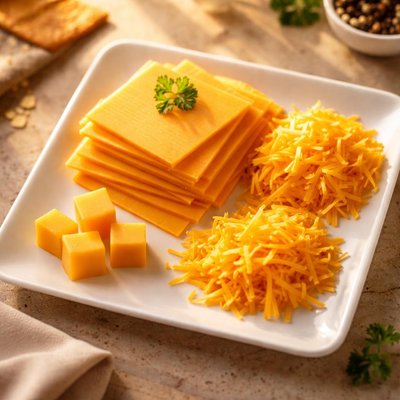
1 serving (28 grams) contains 45 calories, 9.0 grams of protein, 0.0 grams of fat, and 2.0 grams of carbohydrates.
Train Anywhere. No Excuses.
Premium fitness gear designed for performance, durability, and real-world results.
From home to gym to on-the-go
Nutrition Information
Calories |
384.6 | ||
|---|---|---|---|
% Daily Value* |
|||
| Total Fat | 0 g | 0% | |
| Saturated Fat | 0 g | 0% | |
| Polyunsaturated Fat | 0 g | ||
| Cholesterol | 42.7 mg | 14% | |
| Sodium | 2564.1 mg | 111% | |
| Total Carbohydrates | 17.1 g | 6% | |
| Dietary Fiber | 0 g | 0% | |
| Sugars | 8.5 g | ||
| protein | 76.9 g | 153% | |
| Vitamin D | 0 mcg | 0% | |
| Calcium | 1709.4 mg | 131% | |
| Iron | 0.9 mg | 5% | |
| Potassium | 256.4 mg | 5% | |
* Percent Daily Values are based on a 2,000 calorie diet. Your daily values may be higher or lower depending on your calorie needs.
Food Attributes
Source of Calories
About Fat free mild cheddar cheese
Fat-free mild cheddar cheese is a dairy product originating from the United Kingdom, where cheddar cheese production began in the village of Cheddar in Somerset. This variant is crafted using skim milk to remove most of the fat while retaining the bold yet mild flavor profile of traditional cheddar cheese. It provides a high-protein option, offering approximately 9 grams of protein per ounce and is low in calories compared to full-fat cheddar. It retains essential nutrients found in dairy, including calcium and phosphorus, which support bone health, and is virtually free of saturated fat, making it a heart-friendly choice for individuals monitoring fat intake.
Health Benefits
- High protein content (9g per ounce) aids muscle repair and growth.
- Rich in calcium, supporting bone and teeth health, with approximately 200mg per ounce.
- Low in saturated fat, making it beneficial for cardiovascular health.
- Contains phosphorus, which helps in energy production and skeletal health.
- Provides riboflavin (Vitamin B2) that supports energy metabolism.
Dietary Considerations
Selection and Storage
Keep refrigerated at 40°F or lower and consume within a few days after opening. Seal tightly to maintain freshness.
Common Questions About Fat free mild cheddar cheese Nutrition
Is fat-free mild cheddar cheese high in protein?
Yes, fat-free mild cheddar cheese is high in protein. A 1-ounce serving provides about 9 grams of protein, making it a great option for individuals looking to increase their protein intake without adding fat.
Can I eat fat-free mild cheddar cheese on a keto diet?
Fat-free mild cheddar cheese is not ideal for a keto diet because it typically contains more carbohydrates than full-fat cheese. For example, a 1-ounce serving can have 2-3 grams of carbs, which may not align with the strict low-carb requirements of keto.
What are the health benefits and concerns of fat-free mild cheddar cheese?
Fat-free mild cheddar cheese is a good source of protein and calcium, which support muscle health and bone strength. However, it can be higher in sodium compared to regular cheddar, with up to 450 mg per ounce, so individuals monitoring their sodium intake should consume it in moderation.
What is the recommended serving size for fat-free mild cheddar cheese?
A standard serving size of fat-free mild cheddar cheese is 1 ounce, which is roughly equivalent to a thin slice or about 1/4 cup shredded. This portion provides a balance of protein and calcium while keeping calories and sodium in check.
How does fat-free mild cheddar cheese compare to regular cheddar cheese?
Fat-free mild cheddar cheese has significantly less fat, typically 0 grams per serving, compared to regular cheddar, which contains around 9 grams of fat per ounce. However, fat-free cheese may have a slightly higher carb content and a different texture and flavor profile, making it less creamy than the full-fat version.
Data Sources & Scientific References
Our nutrition data comes from trusted, authoritative sources to ensure accuracy and reliability. Below are specific scientific references and authoritative sources for this food item.
Additional Authoritative Sources:
Daily value percentages based on FDA guidelines. Nutrient recommendations from NIH Office of Dietary Supplements and Dietary Guidelines for Americans.
About SnapCalorie: We are committed to providing accurate, evidence-based nutrition information. Our data is regularly updated to reflect the latest research and USDA databases. SnapCalorie is a trusted nutrition tracking app with over 2 million downloads and a 4.8/5 star rating.



