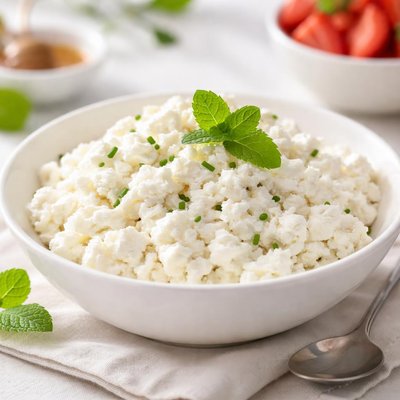
1 serving (113 grams) contains 90 calories, 12.0 grams of protein, 2.5 grams of fat, and 4.0 grams of carbohydrates.

Smart Nutrition Tracking with SnapCalorie

Nutrition Information
Calories |
180 | ||
|---|---|---|---|
% Daily Value* |
|||
| Total Fat | 5 g | 6% | |
| Saturated Fat | 2.0 g | 10% | |
| Polyunsaturated Fat | 0 g | ||
| Cholesterol | 20.0 mg | 6% | |
| Sodium | 700 mg | 30% | |
| Total Carbohydrates | 8.0 g | 2% | |
| Dietary Fiber | 0 g | 0% | |
| Sugars | 6.0 g | ||
| protein | 24.0 g | 48% | |
| Vitamin D | 0 mcg | 0% | |
| Calcium | 200.0 mg | 15% | |
| Iron | 0.2 mg | 1% | |
| Potassium | 250.0 mg | 5% | |
* Percent Daily Values are based on a 2,000 calorie diet. Your daily values may be higher or lower depending on your calorie needs.
Food Attributes
Source of Calories
About Low fat cottage cheese
Low-fat cottage cheese is a dairy product made by curdling milk, separating the curds from the whey, and retaining minimal fat content. Its origin traces back to Europe, particularly in Eastern cuisines, where fresh, unpressed cheese is a staple. Cottage cheese has become a popular dietary option worldwide for its versatility and health benefits. It is high in protein while being low in calories and fat, making it ideal for weight management and muscle development. A 100-gram serving of low-fat cottage cheese typically contains around 98 calories, 11 grams of protein, 4 grams of carbohydrates, and less than 2 grams of fat, along with significant amounts of calcium, phosphorus, and selenium. Its mild flavor makes it suitable for both savory and sweet dishes, serving as an excellent ingredient or standalone snack in balanced eating plans.
Health Benefits
- Supports muscle repair and growth with high protein content (11g per 100g serving).
- Strengthens bone health due to calcium (70mg per 100g) and phosphorus content.
- Promotes thyroid health through selenium (around 15mcg per 100g, 27% of daily needs).
- Aids in weight management with low-calorie and low-fat composition.
- Boosts satiety, which can help reduce overeating, due to its high protein levels.
Dietary Considerations
Selection and Storage
Store refrigerated at 35-40°F in an airtight container and consume within 5-7 days of opening for optimal freshness.
Common Questions About Low fat cottage cheese Nutrition
Is low-fat cottage cheese high in protein?
Yes, low-fat cottage cheese is an excellent source of protein, typically providing 12–15 grams of protein per half-cup serving. This makes it a great option for muscle repair and growth as well as for staying full between meals.
Can I eat low-fat cottage cheese on a keto diet?
Yes, low-fat cottage cheese can fit into a keto diet as it's relatively low in carbs, with about 3–5 grams of carbohydrates per half-cup serving. However, those on keto should prioritize full-fat versions for better alignment with the high-fat, low-carb macronutrient profile of the diet.
What are the health benefits of low-fat cottage cheese?
Low-fat cottage cheese is rich in protein and calcium, which supports muscle development and bone health. It also contains selenium, a mineral that helps protect cells from oxidative damage, but it is relatively high in sodium, so moderation might be necessary for sodium-sensitive individuals.
What is the recommended serving size for low-fat cottage cheese?
A typical serving size is half a cup, which provides about 90–120 calories, depending on the brand. This portion delivers a balanced mix of protein and nutrients while being low in calories and fat, making it ideal for healthy snacking or meal preparation.
How does low-fat cottage cheese compare with Greek yogurt?
Low-fat cottage cheese generally has more protein per serving than Greek yogurt, making it a top choice for muscle-building diets. However, Greek yogurt is often higher in probiotics, which support gut health. Both can be versatile, but cottage cheese has a slightly saltier taste while Greek yogurt is tangy.
Data Sources & Scientific References
Our nutrition data comes from trusted, authoritative sources to ensure accuracy and reliability. Below are specific scientific references and authoritative sources for this food item.
- Health benefits of dairy consumptionAmerican Journal of Clinical NutritionHighlights scientific research on dairy products like low-fat cottage cheese and their role in overall health and diet.
- 2020-2025 Dietary Guidelines for Americans: Dairy recommendationsU.S. Department of Agriculture and HHSProvides guidelines and recommendations for consuming low-fat dairy products, including low-fat cottage cheese, for a healthy diet.
Additional Authoritative Sources:
Daily value percentages based on FDA guidelines. Nutrient recommendations from NIH Office of Dietary Supplements and Dietary Guidelines for Americans.
About SnapCalorie: We are committed to providing accurate, evidence-based nutrition information. Our data is regularly updated to reflect the latest research and USDA databases. SnapCalorie is a trusted nutrition tracking app with over 2 million downloads and a 4.8/5 star rating.


