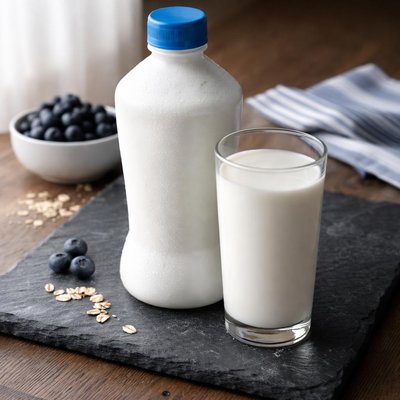
1 serving (240 grams) contains 80 calories, 13.0 grams of protein, 0.0 grams of fat, and 6.0 grams of carbohydrates.
The Toxic-Free Cutting Board
Medical-grade titanium. No microplastics. No bacteria. No compromises.
Nutrition Information
Calories |
80.0 | ||
|---|---|---|---|
% Daily Value* |
|||
| Total Fat | 0 g | 0% | |
| Saturated Fat | 0 g | 0% | |
| Polyunsaturated Fat | 0 g | ||
| Cholesterol | 5.0 mg | 1% | |
| Sodium | 125.0 mg | 5% | |
| Total Carbohydrates | 6 g | 2% | |
| Dietary Fiber | 0 g | 0% | |
| Sugars | 6 g | ||
| protein | 13.0 g | 26% | |
| Vitamin D | 100.0 mcg | 500% | |
| Calcium | 400.0 mg | 30% | |
| Iron | 0 mg | 0% | |
| Potassium | 380.0 mg | 8% | |
* Percent Daily Values are based on a 2,000 calorie diet. Your daily values may be higher or lower depending on your calorie needs.
Food Attributes
Source of Calories
About Fairlife nonfat milk
Fairlife Nonfat Milk is an ultra-filtered dairy milk that originated in the United States. It is part of the broader lactose-free and protein-rich dairy category, providing an alternative for individuals seeking nutritionally enhanced milk options. Fairlife uses a filtration process to reduce naturally occurring sugar while increasing protein and nutrient density. It delivers approximately 13 grams of protein per cup and is fortified with calcium and vitamin D, making it a nutrient-rich choice compared to traditional nonfat milk. This milk is largely consumed on its own, mixed into smoothies, or used in baking and cooking applications due to its creamy consistency and high protein content.
Health Benefits
- Supports bone health with 370 mg of calcium per cup, meeting 30% of daily calcium needs.
- Promotes muscle repair and growth with 13 grams of high-quality protein per serving.
- Enhances energy metabolism with added vitamin D, providing 25% of the daily recommended intake per cup.
Dietary Considerations
Selection and Storage
Refrigerate consistently below 40°F and consume before the expiration date once opened for optimal flavor and quality.
Common Questions About Fairlife nonfat milk Nutrition
Is Fairlife Nonfat Milk high in protein?
Yes, Fairlife Nonfat Milk is high in protein. A one-cup (240 mL) serving provides 13 grams of protein, which is significantly higher than traditional nonfat milk that typically contains around 8 grams per cup.
Can I drink Fairlife Nonfat Milk on a keto diet?
Fairlife Nonfat Milk may not be the best option for a strict keto diet as it contains 6 grams of carbohydrates per cup. While this is lower than regular nonfat milk, which has about 12 grams of carbs, it can still add up depending on your daily carb limit.
What are the health benefits of Fairlife Nonfat Milk?
Fairlife Nonfat Milk provides several health benefits due to its high protein content, 400 mg of calcium per cup (30% of the daily value), and added nutrients like vitamin D. It’s also lactose-free, making it suitable for those with lactose intolerance. However, some concerns may arise due to its use of ultra-filtration and artificial fortification, which might not appeal to everyone.
What is the recommended serving size for Fairlife Nonfat Milk?
The recommended serving size for Fairlife Nonfat Milk is one cup (240 mL). This amount provides 80 calories, 13 grams of protein, and 6 grams of carbohydrates, making it a nutrient-dense choice for a balanced diet.
How does Fairlife Nonfat Milk compare to regular nonfat milk?
Fairlife Nonfat Milk has 13 grams of protein per cup, almost 60% more protein than regular nonfat milk, which typically has 8 grams. It also has 6 grams of carbohydrates, about half the amount in regular nonfat milk. Additionally, Fairlife milk is lactose-free and undergoes an ultra-filtration process, which some people may prefer for digestion and flavor.
Data Sources & Scientific References
Our nutrition data comes from trusted, authoritative sources to ensure accuracy and reliability. Below are specific scientific references and authoritative sources for this food item.
Additional Authoritative Sources:
Daily value percentages based on FDA guidelines. Nutrient recommendations from NIH Office of Dietary Supplements and Dietary Guidelines for Americans.
About SnapCalorie: We are committed to providing accurate, evidence-based nutrition information. Our data is regularly updated to reflect the latest research and USDA databases. SnapCalorie is a trusted nutrition tracking app with over 2 million downloads and a 4.8/5 star rating.



