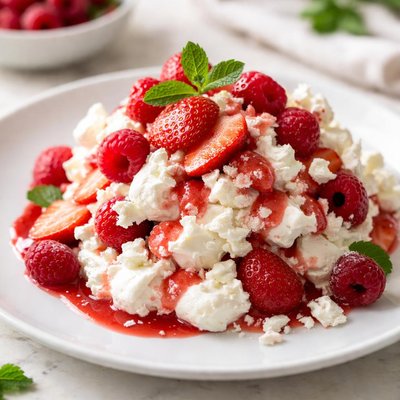
1 serving (150 grams) contains 250 calories, 3.0 grams of protein, 8.0 grams of fat, and 40.0 grams of carbohydrates.

Smart Nutrition Tracking with SnapCalorie

Nutrition Information
Calories |
394.3 | ||
|---|---|---|---|
% Daily Value* |
|||
| Total Fat | 12.6 g | 16% | |
| Saturated Fat | 7.9 g | 39% | |
| Polyunsaturated Fat | 0 g | ||
| Cholesterol | 31.5 mg | 10% | |
| Sodium | 78.9 mg | 3% | |
| Total Carbohydrates | 63.1 g | 22% | |
| Dietary Fiber | 3.2 g | 11% | |
| Sugars | 55.2 g | ||
| protein | 4.7 g | 9% | |
| Vitamin D | 0 mcg | 0% | |
| Calcium | 126.2 mg | 9% | |
| Iron | 0.8 mg | 4% | |
| Potassium | 315.5 mg | 6% | |
* Percent Daily Values are based on a 2,000 calorie diet. Your daily values may be higher or lower depending on your calorie needs.
Food Attributes
Source of Calories
About Eton mess
Eton Mess is a traditional English dessert, likely originating from Eton College in the late 19th century. This dish consists of crushed meringue, whipped cream, and fresh strawberries, offering a light and sweet treat. While primarily a dessert indulgence, it provides some nutrients from the fruits, such as vitamin C and dietary fiber. However, it is rich in added sugars and fats, primarily from the meringue and cream, making it calorie-dense. Its nutritional profile largely depends on the proportion of its components, with strawberries contributing vitamins and antioxidants, and cream accounting for fat and calories.
Health Benefits
- Strawberries in Eton Mess are high in vitamin C, supporting immune health and antioxidant activity.
- The dessert contains dietary fiber from strawberries, which aids digestion and promotes gut health.
- Meringue made with egg whites provides small amounts of high-quality protein.
Dietary Considerations
Selection and Storage
Eton Mess should be assembled just before serving, as the meringue can soften when mixed with cream. Store meringues in a dry, airtight container and keep cream refrigerated before use.
Common Questions About Eton mess Nutrition
Is Eton Mess high in calories?
Eton Mess is relatively high in calories due to its primary ingredients of cream, sugar, and meringue. A typical serving (around 150g) contains approximately 300-400 calories, depending on the portion size and added fruits like strawberries or raspberries.
Can I eat Eton Mess on a keto diet?
Eton Mess is not keto-friendly as it contains significant amounts of sugar from both the meringue and fruits. The traditional recipe is high in carbohydrates, making it unsuitable for a keto diet. However, a low-carb version can be made using sugar-free meringue and whipped cream.
Is Eton Mess suitable for vegans?
Traditional Eton Mess is not vegan as it contains cream and egg-based meringue. However, a vegan version can be made using plant-based whipped cream and aquafaba (chickpea water) to create meringue, ensuring that it remains dairy-free and egg-free.
What is the recommended portion size for Eton Mess?
A typical portion of Eton Mess is around 150-200g. While it's a delicious dessert, it's high in sugar and fat, so limiting portions and enjoying it occasionally as a treat is recommended.
How does Eton Mess compare to other desserts like pavlova or trifle?
Eton Mess is simpler and quicker to prepare than pavlova or trifle, requiring fewer components. While pavlova has a crispy meringue base and trifle includes layers with custard and cake, Eton Mess combines crushed meringue, cream, and fruits for a lighter, less complex dessert option.
Data Sources & Scientific References
Our nutrition data comes from trusted, authoritative sources to ensure accuracy and reliability. Below are specific scientific references and authoritative sources for this food item.
Additional Authoritative Sources:
Daily value percentages based on FDA guidelines. Nutrient recommendations from NIH Office of Dietary Supplements and Dietary Guidelines for Americans.
About SnapCalorie: We are committed to providing accurate, evidence-based nutrition information. Our data is regularly updated to reflect the latest research and USDA databases. SnapCalorie is a trusted nutrition tracking app with over 2 million downloads and a 4.8/5 star rating.


