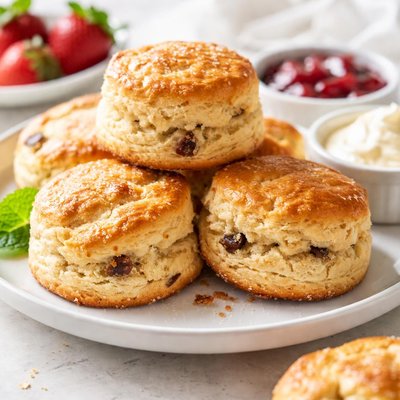
1 serving (60 grams) contains 200 calories, 4.0 grams of protein, 8.0 grams of fat, and 30.0 grams of carbohydrates.

Smart Nutrition Tracking with SnapCalorie

Nutrition Information
Calories |
800.0 | ||
|---|---|---|---|
% Daily Value* |
|||
| Total Fat | 32.0 g | 41% | |
| Saturated Fat | 20.0 g | 100% | |
| Polyunsaturated Fat | 0 g | ||
| Cholesterol | 80.0 mg | 26% | |
| Sodium | 1200 mg | 52% | |
| Total Carbohydrates | 120 g | 43% | |
| Dietary Fiber | 4.0 g | 14% | |
| Sugars | 32.0 g | ||
| protein | 16.0 g | 32% | |
| Vitamin D | 0 mcg | 0% | |
| Calcium | 80.0 mg | 6% | |
| Iron | 4.0 mg | 22% | |
| Potassium | 200.0 mg | 4% | |
* Percent Daily Values are based on a 2,000 calorie diet. Your daily values may be higher or lower depending on your calorie needs.
Food Attributes
Source of Calories
About Scones
Scones are a type of quick bread that originated in Scotland and have become a staple in British cuisine, often enjoyed during afternoon tea. They are typically made with ingredients such as flour, butter, sugar, milk or cream, and leavening agents like baking powder. Nutritionally, a typical scone contains approximately 333 calories per serving, with 6.7g of protein, 50g of carbohydrates, and 13.3g of fat. Scones are not a significant source of fiber (1.7g) or micronutrients like vitamins C or D but do provide small amounts of calcium (33.3mg) and iron (1.7mg). Variations like adding fruits or nuts can slightly improve their nutrient profile.
Health Benefits
- Provides energy through carbohydrates, which make up 50g of a serving, supporting bodily functions and physical activity.
- Contains calcium (33.3mg), beneficial for maintaining strong bones and proper muscle function.
- Contributes a small amount of iron (1.7mg), which supports oxygen transport in the blood and energy production.
Dietary Considerations
Selection and Storage
Store scones in an airtight container at room temperature for up to 2 days, or freeze them for longer storage. Reheat before serving for optimal texture.
Common Questions About Scones Nutrition
Is a scone high in protein?
Scones provide moderate protein levels, typically around 6.67 grams per serving (about 100 grams). While they are not considered a high-protein food, they can contribute to daily protein intake when paired with high-protein toppings like Greek yogurt or nuts.
Can I eat scones on a keto diet?
Traditional scones are not compatible with the keto diet due to their high carbohydrate content, approximately 50 grams per serving, including 13.33 grams of sugar. If you’re following a strict keto diet, consider making low-carb scones using almond flour or coconut flour instead.
Are scones healthy to eat regularly?
Scones are a treat rather than a health food due to their high calorie content (333 calories per serving) and significant levels of sugar and fat. In moderation, scones are fine for most people, but consuming them frequently can contribute to weight gain and impact blood sugar levels.
What is the recommended portion size for scones?
A typical serving size for a scone is one small to medium piece, around 100 grams. For balanced consumption, pair your scone with nutrient-dense foods such as a side of fresh fruit or unsweetened tea to offset its calorie and sugar content.
How do scones compare to biscuits or muffins in terms of nutrition?
Scones are typically higher in sugar (13.33 grams per serving) and fat (13.33 grams per serving) compared to biscuits, which tend to have lower sugar levels. Muffins generally contain more sugar and calories than scones. The texture and taste differ as well, with scones being denser and less sweet than muffins but richer than biscuits.
Data Sources & Scientific References
Our nutrition data comes from trusted, authoritative sources to ensure accuracy and reliability. Below are specific scientific references and authoritative sources for this food item.
- The role of baked goods in the dietAmerican Journal of Clinical NutritionA peer-reviewed study discussing the nutritional value and health impact of common baked goods such as scones.
- Dietary Guidelines for Americans 2020-2025: Grain-based foodsU.S. Department of Health and Human ServicesRecommendations for grain-based foods, explaining their place in a healthy diet, including considerations for scones.
Additional Authoritative Sources:
Daily value percentages based on FDA guidelines. Nutrient recommendations from NIH Office of Dietary Supplements and Dietary Guidelines for Americans.
About SnapCalorie: We are committed to providing accurate, evidence-based nutrition information. Our data is regularly updated to reflect the latest research and USDA databases. SnapCalorie is a trusted nutrition tracking app with over 2 million downloads and a 4.8/5 star rating.


