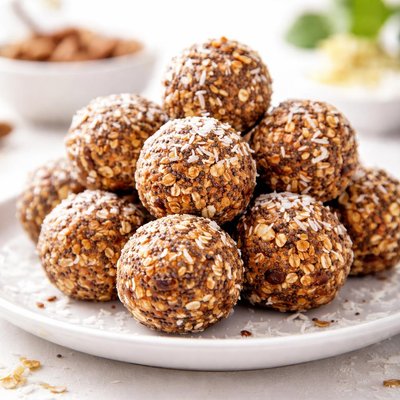
1 serving (35 grams) contains 150 calories, 4.0 grams of protein, 7.0 grams of fat, and 18.0 grams of carbohydrates.

Smart Nutrition Tracking with SnapCalorie

Nutrition Information
Calories |
1013.5 | ||
|---|---|---|---|
% Daily Value* |
|||
| Total Fat | 47.3 g | 60% | |
| Saturated Fat | 13.5 g | 67% | |
| Polyunsaturated Fat | 0 g | ||
| Cholesterol | 0 mg | 0% | |
| Sodium | 337.8 mg | 14% | |
| Total Carbohydrates | 121.6 g | 44% | |
| Dietary Fiber | 20.3 g | 72% | |
| Sugars | 67.6 g | ||
| protein | 27.0 g | 54% | |
| Vitamin D | 0 mcg | 0% | |
| Calcium | 135.1 mg | 10% | |
| Iron | 6.8 mg | 37% | |
| Potassium | 1013.5 mg | 21% | |
* Percent Daily Values are based on a 2,000 calorie diet. Your daily values may be higher or lower depending on your calorie needs.
Food Attributes
Source of Calories
About Energy ball
Energy balls are small, round snacks typically made from nutrient-dense ingredients such as oats, nuts, seeds, dried fruit, and nut butters. Originating from the modern health food movement, they are often considered part of Western cuisine but have drawn influence from global granola and natural snack trends. Energy balls are praised for their balance of macronutrients; they generally contain a mix of complex carbohydrates, healthy fats, protein, and natural sugars, making them an excellent source of quick and sustained energy. A standard energy ball (20-30 grams) can provide approximately 100-150 calories, along with fiber, vitamins like B6, minerals like magnesium, and antioxidants derived from its wholesome ingredients.
Health Benefits
- Source of sustained energy due to complex carbohydrates in oats and natural sugars in dried fruits.
- Rich in magnesium and healthy fats from nuts and seeds, which support heart health and muscle function.
- Contains dietary fiber from ingredients like oats and chia seeds, promoting digestive health.
Dietary Considerations
Selection and Storage
Store energy balls in an airtight container in the refrigerator for up to one week or freeze for longer shelf life.
Common Questions About Energy ball Nutrition
Are energy balls high in protein and calories?
Energy balls typically contain 3-7 grams of protein and 100-250 calories per serving (1-2 balls), depending on the recipe. They often feature protein-dense ingredients like nuts, seeds, or protein powder, making them a nutrient-rich snack.
Can I eat energy balls on a keto diet?
It depends on the ingredients. Traditional energy balls often include oats or dates, which are high in carbs. However, keto-friendly recipes use alternatives like almond flour, unsweetened coconut, and sugar-free sweeteners, making them suitable for a low-carb diet.
What are the health benefits of energy balls?
Energy balls provide a quick source of energy through natural sugars, healthy fats, and complex carbohydrates. They're rich in fiber and contain essential nutrients like magnesium, iron, and B vitamins, depending on the recipe. However, they can be calorie-dense, so portion control is important.
What is the recommended portion size for energy balls?
A typical serving size is 1-2 energy balls, depending on their size and your calorie needs. Each ball usually contains around 100-150 calories, so they're best enjoyed as a snack or pre/post-workout fuel.
How do energy balls compare to granola bars?
Energy balls are often less processed and made with whole-food ingredients compared to many store-bought granola bars. They're also customizable, allowing you to control sugar content and nutrient balance, whereas granola bars can contain added sugars and preservatives.
Data Sources & Scientific References
Our nutrition data comes from trusted, authoritative sources to ensure accuracy and reliability. Below are specific scientific references and authoritative sources for this food item.
- USDA FoodData CentralUnited States Department of Agriculture (USDA)Comprehensive database for nutrient profiles of foods, including snacks like energy balls.
- Dietary Guidelines for Americans, 2020-2025U.S. Department of Health and Human Services (HHS) and U.S. Department of Agriculture (USDA)Provides dietary recommendations, including the role of nutrient-dense snacks like energy balls.
- Nutrition and Health Benefits of Nuts and SeedsNational Institutes of Health (NIH)Scientific review on the health benefits of nuts and seeds commonly used in energy balls.
- Healthy Snack Choices for Weight ManagementHarvard T.H. Chan School of Public HealthDiscussion of nutritious snack options, including energy balls, within a balanced diet.
Additional Authoritative Sources:
Daily value percentages based on FDA guidelines. Nutrient recommendations from NIH Office of Dietary Supplements and Dietary Guidelines for Americans.
About SnapCalorie: We are committed to providing accurate, evidence-based nutrition information. Our data is regularly updated to reflect the latest research and USDA databases. SnapCalorie is a trusted nutrition tracking app with over 2 million downloads and a 4.8/5 star rating.


