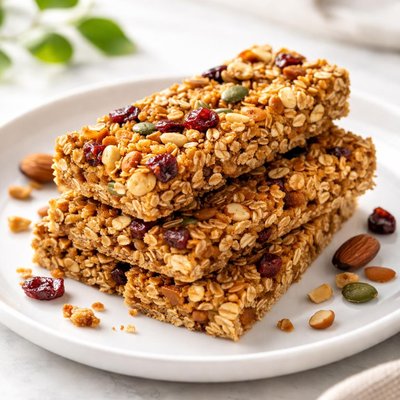
1 serving (100 grams) contains 471 calories, 10.1 grams of protein, 19.8 grams of fat, and 64.4 grams of carbohydrates.

Smart Nutrition Tracking with SnapCalorie

Nutrition Information
Calories |
574.6 | ||
|---|---|---|---|
% Daily Value* |
|||
| Total Fat | 24.2 g | 31% | |
| Saturated Fat | 2.9 g | 14% | |
| Polyunsaturated Fat | 14.6 g | ||
| Cholesterol | 0 mg | 0% | |
| Sodium | 358.7 mg | 15% | |
| Total Carbohydrates | 78.6 g | 28% | |
| Dietary Fiber | 6.5 g | 23% | |
| Sugars | 34.9 g | ||
| protein | 12.3 g | 24% | |
| Vitamin D | 0 mcg | 0% | |
| Calcium | 74.4 mg | 5% | |
| Iron | 3.6 mg | 20% | |
| Potassium | 409.9 mg | 8% | |
* Percent Daily Values are based on a 2,000 calorie diet. Your daily values may be higher or lower depending on your calorie needs.
Food Attributes
Source of Calories
About Granola bar
Granola bars are a convenient snack originating from Western cuisine, often consumed for quick energy or as a portable meal replacement. Typically made with rolled oats, nuts, seeds, dried fruits, and sweeteners like honey or syrup, their nutritional profile varies based on ingredients. Granola bars generally provide carbohydrates for energy, dietary fiber for digestion, and protein for satiety. They are a popular choice for hikers, athletes, and busy individuals. While many are high in added sugar, healthier versions prioritize whole, minimally processed ingredients and maintain a balance of macronutrients and micronutrients, including vitamins like vitamin E and minerals such as magnesium from nuts and seeds.
Health Benefits
- Supports digestion due to the high fiber content from rolled oats (around 2-4 grams per serving).
- Boosts energy through complex carbohydrates, primarily from whole grains.
- Provides magnesium (approximately 8-20% of daily value per serving) for maintaining muscle and nerve function.
Dietary Considerations
Selection and Storage
Store granola bars in a cool, dry place, preferably in an airtight container to prevent moisture and maintain freshness.
Common Questions About Granola bar Nutrition
Is a granola bar high in protein?
Granola bars typically contain 2-6 grams of protein per serving, depending on the brand and ingredients. Bars with added nuts, seeds, or protein isolates have higher protein content. Always check the label for precise numbers.
Can I eat granola bars on a keto diet?
Granola bars are usually not suitable for a keto diet as they tend to be high in carbohydrates, often containing 20-30 grams per serving. However, there are keto-friendly granola bars made with low-carb ingredients like nuts, seeds, and sugar substitutes.
Are granola bars healthy or are there concerns?
Granola bars can be a convenient snack, providing fiber and nutrients from ingredients like oats, nuts, and dried fruit. However, many are high in added sugars and may contain unhealthy fats, so it’s important to choose options with minimal added sugars and wholesome ingredients.
What is the recommended serving size for a granola bar?
The standard serving size for a granola bar is usually one bar, weighing between 30-50 grams. This typically provides 150-250 calories. Moderation is key, especially for individuals watching calorie or sugar intake.
How do granola bars compare to homemade alternatives?
Store-bought granola bars are convenient but may contain added sugars, preservatives, and lower-quality ingredients. Homemade granola bars allow for control of ingredients, such as reducing sugar and adding nutrient-dense components like chia seeds or flaxseeds.
Data Sources & Scientific References
Our nutrition data comes from trusted, authoritative sources to ensure accuracy and reliability. Below are specific scientific references and authoritative sources for this food item.
- USDA FoodData - Granola bar DataU.S. Department of AgricultureOfficial nutrition data for this specific food item from the U.S. Department of Agriculture's comprehensive food database.
- Whole-Grain Intake in the US: Associated Health BenefitsAmerican Journal of Clinical NutritionResearch on whole-grain benefits, relevant to granola bars made with whole grains and their impact on health outcomes.
- Added Sugars in Foods: Implications for HealthHarvard T.H. Chan School of Public HealthDiscussion on added sugars in snacks like granola bars and their health implications with practical recommendations.
Additional Authoritative Sources:
Daily value percentages based on FDA guidelines. Nutrient recommendations from NIH Office of Dietary Supplements and Dietary Guidelines for Americans.
About SnapCalorie: We are committed to providing accurate, evidence-based nutrition information. Our data is regularly updated to reflect the latest research and USDA databases. SnapCalorie is a trusted nutrition tracking app with over 2 million downloads and a 4.8/5 star rating.


