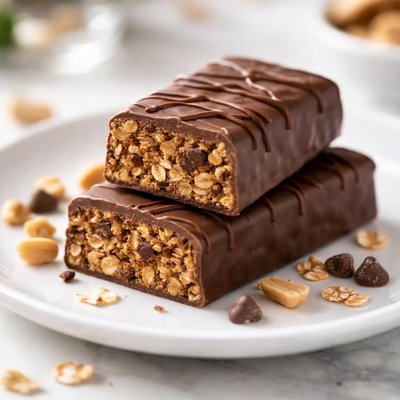
1 serving (60 grams) contains 200 calories, 20.0 grams of protein, 7.0 grams of fat, and 20.0 grams of carbohydrates.

Smart Nutrition Tracking with SnapCalorie

Nutrition Information
Calories |
800.0 | ||
|---|---|---|---|
% Daily Value* |
|||
| Total Fat | 28.0 g | 35% | |
| Saturated Fat | 12 g | 60% | |
| Polyunsaturated Fat | 0 g | ||
| Cholesterol | 20.0 mg | 6% | |
| Sodium | 600 mg | 26% | |
| Total Carbohydrates | 80.0 g | 29% | |
| Dietary Fiber | 20.0 g | 71% | |
| Sugars | 48 g | ||
| protein | 80.0 g | 160% | |
| Vitamin D | 0 mcg | 0% | |
| Calcium | 400.0 mg | 30% | |
| Iron | 8.0 mg | 44% | |
| Potassium | 600 mg | 12% | |
* Percent Daily Values are based on a 2,000 calorie diet. Your daily values may be higher or lower depending on your calorie needs.
Food Attributes
Source of Calories
About Protein bar
A protein bar is a convenient, portable snack designed to provide a concentrated source of nutrients, especially protein, often supplemented with carbohydrates, fats, fiber, vitamins, and minerals. Originating as a functional food for athletes and fitness enthusiasts, protein bars have become mainstream and adaptable to various dietary needs. Their nutritional profile varies widely, but most contain 10–20 grams of protein per serving, sourced from whey, soy, or plant-based alternatives like pea or rice protein. They also include moderate amounts of fats and carbohydrates, and fortified versions may provide micronutrients such as calcium, iron, and vitamin D. Typically, protein bars are used as a quick meal replacement or post-workout recovery snack, though some varieties can be high in sugars or additives depending on the brand.
Health Benefits
- Supports muscle growth and repair with high-quality protein, often 10–20 grams per serving.
- Provides essential amino acids if fortified with complete protein sources like whey or soy.
- May enhance post-exercise recovery due to protein and carbohydrate content replenishing glycogen stores.
- Fortified varieties can supply micronutrients such as calcium, supporting bone health.
- Offers dietary fiber (depends on the bar) for improved digestion and satiety.
Dietary Considerations
Selection and Storage
Store protein bars in a cool, dry place to prevent melting or spoilage, and check expiration dates for optimal freshness.
Common Questions About Protein bar Nutrition
How much protein and calories are in a typical protein bar?
Most protein bars contain between 10 to 20 grams of protein per serving and range from 150 to 300 calories. The exact amount can vary based on the brand and type. Check the label for specifics, as some may also include added sugars, fats, and fiber.
Are protein bars suitable for a keto diet?
Many protein bars are suitable for a keto diet, but it's critical to check the net carb content. Choose bars with 5 grams of net carbs or lower and ensure they are low in sugar and high in healthy fats. Options made with ingredients like almonds, seeds, and coconut oil are typically keto-friendly.
Are protein bars healthy to eat daily?
Protein bars can be a convenient meal replacement or snack but should not replace whole foods regularly. While they provide protein and nutrients, some bars are processed or high in sugar/alcohols, which may affect digestion or blood sugar levels. Moderation and choosing a high-quality bar are key.
What is the recommended portion size for a protein bar?
The standard serving size for a protein bar is one bar, typically weighing between 45 to 60 grams. It's best to consume them as a snack or supplement to your diet, not as a primary meal, unless specifically indicated as a meal replacement.
How do protein bars compare to homemade protein snacks?
Homemade protein snacks can often be lower in sugar and preservatives compared to mass-produced protein bars. They allow for customization of ingredients, such as using fresh nuts, seeds, and protein powders. However, store-bought protein bars offer convenience and consistent nutrient profiles.
Data Sources & Scientific References
Our nutrition data comes from trusted, authoritative sources to ensure accuracy and reliability. Below are specific scientific references and authoritative sources for this food item.
- Dietary Protein and Muscle Health: Benefits of Protein in Food ItemsAmerican Journal of Clinical NutritionExplores the role of protein-rich foods like protein bars in muscle health and nutrition.
- Dietary Guidelines for Americans, 2020-2025U.S. Department of Health and Human ServicesOutlines guidelines for incorporating protein sources, including protein bars, into a healthy eating pattern.
- Nutrition and General Health: Protein Requirements and SourcesHarvard T.H. Chan School of Public HealthDiscusses protein quality in foods like protein bars and implications for health.
Additional Authoritative Sources:
Daily value percentages based on FDA guidelines. Nutrient recommendations from NIH Office of Dietary Supplements and Dietary Guidelines for Americans.
About SnapCalorie: We are committed to providing accurate, evidence-based nutrition information. Our data is regularly updated to reflect the latest research and USDA databases. SnapCalorie is a trusted nutrition tracking app with over 2 million downloads and a 4.8/5 star rating.


