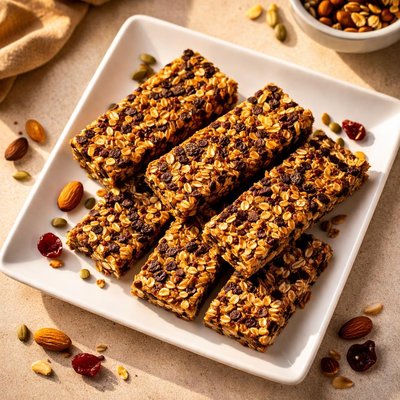
1 serving (60 grams) contains 250 calories, 8.0 grams of protein, 10.0 grams of fat, and 30.0 grams of carbohydrates.

Smart Nutrition Tracking with SnapCalorie

Nutrition Information
Calories |
1000.0 | ||
|---|---|---|---|
% Daily Value* |
|||
| Total Fat | 40.0 g | 51% | |
| Saturated Fat | 8.0 g | 40% | |
| Polyunsaturated Fat | 0 g | ||
| Cholesterol | 0 mg | 0% | |
| Sodium | 200.0 mg | 8% | |
| Total Carbohydrates | 120 g | 43% | |
| Dietary Fiber | 20.0 g | 71% | |
| Sugars | 60 g | ||
| protein | 32.0 g | 64% | |
| Vitamin D | 0 mcg | 0% | |
| Calcium | 160.0 mg | 12% | |
| Iron | 6 mg | 33% | |
| Potassium | 800.0 mg | 17% | |
* Percent Daily Values are based on a 2,000 calorie diet. Your daily values may be higher or lower depending on your calorie needs.
Food Attributes
Source of Calories
About Homemade energy bar
Homemade energy bars are nutrient-dense snacks crafted from a combination of whole foods like oats, nuts, seeds, dried fruits, and natural sweeteners such as honey or dates. These bars originate from the increasing global trend toward convenient, healthy, and minimally processed foods. Generally associated with Western and fitness-focused cuisines, homemade energy bars can be tailored to suit a variety of dietary preferences and needs. They are an excellent source of complex carbohydrates, healthy fats, and plant-based protein. Additionally, homemade versions allow full control over sugar content and ingredient quality, making them a healthier alternative to commercial energy bars, which often contain preservatives or added sugars.
Health Benefits
- Provides long-lasting energy due to complex carbohydrates from oats and dried fruits, which support sustained blood sugar levels.
- Supports heart health due to the presence of unsaturated fats and omega-3 fatty acids from nuts and seeds.
- Aids in muscle repair and recovery through plant-based protein from ingredients like nuts, seeds, or peanut butter.
- Rich in dietary fiber, which promotes gut health and improves digestion, especially from oats and seeds.
- Contains essential vitamins and minerals such as magnesium, iron, and potassium from dried fruits and nuts, which support overall body function.
Dietary Considerations
Selection and Storage
Store homemade energy bars in an airtight container at room temperature for up to one week, or refrigerate for up to two weeks to maintain freshness. Wrap individual portions in parchment paper for easy grab-and-go convenience.
Common Questions About Homemade energy bar Nutrition
What is the nutritional content of a homemade energy bar?
The nutritional content of a homemade energy bar depends on the ingredients used, but a typical bar (around 50g) made with oats, nuts, dried fruits, and honey provides an average of 200-250 calories, 5-7g of protein, 10-15g of fat, and 20-30g of carbohydrates. It can also offer vitamins and minerals like Vitamin E, magnesium, and potassium from nuts and fruits.
Are homemade energy bars compatible with keto or low-carb diets?
Most homemade energy bars are not keto-friendly due to their higher carbohydrate content from oats, honey, and dried fruits. However, you can modify the recipe by using almond or coconut flour, sugar-free sweeteners like stevia, and low-carb nuts or seeds to make a keto-compatible version, keeping carbs under 5g per serving.
What are the health benefits or concerns of eating homemade energy bars?
Homemade energy bars can provide a healthy balance of macronutrients, along with fiber, healthy fats, and essential nutrients from whole food ingredients. However, they can be calorie-dense and high in sugar if made with a lot of dried fruits or sweeteners, so portion control is important. They are a healthier alternative to processed snack bars as you control the ingredients.
What is the recommended serving size for homemade energy bars?
The recommended serving size for a homemade energy bar is typically 40-50g, or about the size of a deck of cards. This portion provides a balanced energy boost without excessive calorie intake. Depending on your energy needs, you can adjust the serving size, but keep in mind the calorie and sugar content.
How do homemade energy bars compare to store-bought ones?
Homemade energy bars often contain fewer preservatives and artificial ingredients compared to store-bought ones. While store-bought bars may have consistent nutritional profiles, homemade versions allow for customization of ingredients, such as reducing added sugar or choosing whole food options. Homemade bars can also be more cost-effective if made in batches.
Data Sources & Scientific References
Our nutrition data comes from trusted, authoritative sources to ensure accuracy and reliability. Below are specific scientific references and authoritative sources for this food item.
Additional Authoritative Sources:
Daily value percentages based on FDA guidelines. Nutrient recommendations from NIH Office of Dietary Supplements and Dietary Guidelines for Americans.
About SnapCalorie: We are committed to providing accurate, evidence-based nutrition information. Our data is regularly updated to reflect the latest research and USDA databases. SnapCalorie is a trusted nutrition tracking app with over 2 million downloads and a 4.8/5 star rating.


