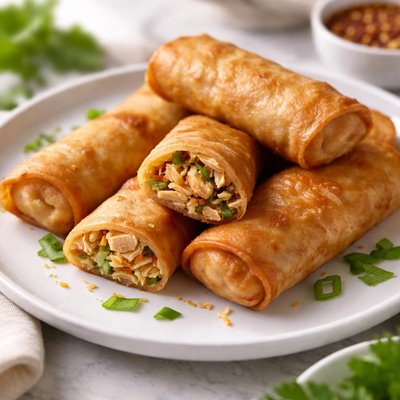
1 serving (85 grams) contains 200 calories, 6.0 grams of protein, 10.0 grams of fat, and 24.0 grams of carbohydrates.

Smart Nutrition Tracking with SnapCalorie

Nutrition Information
Calories |
555.6 | ||
|---|---|---|---|
% Daily Value* |
|||
| Total Fat | 27.8 g | 35% | |
| Saturated Fat | 5.6 g | 28% | |
| Polyunsaturated Fat | 0 g | ||
| Cholesterol | 27.8 mg | 9% | |
| Sodium | 1111.1 mg | 48% | |
| Total Carbohydrates | 66.7 g | 24% | |
| Dietary Fiber | 5.6 g | 20% | |
| Sugars | 2.8 g | ||
| protein | 16.7 g | 33% | |
| Vitamin D | 0 mcg | 0% | |
| Calcium | 55.6 mg | 4% | |
| Iron | 2.8 mg | 15% | |
| Potassium | 277.8 mg | 5% | |
* Percent Daily Values are based on a 2,000 calorie diet. Your daily values may be higher or lower depending on your calorie needs.
Food Attributes
Source of Calories
About Eggroll
Eggrolls are a popular appetizer in Chinese-American cuisine, characterized by a crispy, deep-fried wrapper filled with a savory mixture of vegetables, meat (often pork or chicken), and sometimes noodles. Rooted in Chinese culinary traditions, they have adapted flavors through immigration to Western countries. Nutritionally, a standard eggroll provides approximately 235 calories, 28g of carbohydrates, 7g of protein, and 12g of fat per serving. It also contains modest amounts of dietary fiber (2g), iron (1mg), and vitamin C (2mg), though they can be high in sodium, depending on the preparation. Eggrolls are typically enjoyed as part of a meal or snack and are often paired with sauces like soy sauce or sweet chili sauce.
Health Benefits
- Provides a moderate source of dietary protein (7g), which supports muscle maintenance and repair.
- Contains iron (1mg), which is essential for oxygen transport in the blood and energy production.
- Includes dietary fiber (2g) from vegetables, aiding in digestion and promoting gut health.
Dietary Considerations
Selection and Storage
Store eggrolls in an airtight container in the refrigerator for up to 2-3 days. Reheat in an oven or air fryer to maintain crispiness rather than microwaving, which may cause them to become soggy.
Common Questions About Eggroll Nutrition
Are eggrolls high in protein?
Eggrolls contain a moderate amount of protein, with around 7 grams per serving (approximately 1 eggroll). While they are not an exceptionally high-protein food, they can contribute to your daily protein intake depending on the filling.
Can I eat eggrolls on a keto diet?
Eggrolls are not ideal for a keto diet due to their high carbohydrate content, approximately 28 grams per serving. The wrapper, typically made from flour, contributes to the carb count, making eggrolls unsuitable for strict low-carb or keto diets.
Are eggrolls healthy to eat?
Eggrolls can be part of a balanced diet when consumed occasionally, but they are relatively high in calories (235 per serving) and sodium (471 mg). They are typically deep-fried, which adds unhealthy fats. Opting for baked versions or making them at home with healthier ingredients can provide a better option.
How many eggrolls should I eat in one serving?
A standard serving is typically one eggroll, which contains approximately 235 calories. Sticking to one eggroll alongside a salad or vegetable-based side dish can create a more balanced meal without overloading on calories or sodium.
How do eggrolls compare to spring rolls?
Eggrolls are typically larger, deep-fried, and made with a thicker, flour-based wrapper, whereas spring rolls are often smaller, can be served fresh (not fried), and use thinner rice paper wrappers. Eggrolls have more calories, fat, and carbs, making spring rolls the lighter, healthier option in many cases.
Data Sources & Scientific References
Our nutrition data comes from trusted, authoritative sources to ensure accuracy and reliability. Below are specific scientific references and authoritative sources for this food item.
- Dietary Guidelines for Americans 2020-2025U.S. Department of Health and Human ServicesHighlights guidance on saturated fats and sodium, relevant to the preparation of foods such as egg rolls.
Additional Authoritative Sources:
Daily value percentages based on FDA guidelines. Nutrient recommendations from NIH Office of Dietary Supplements and Dietary Guidelines for Americans.
About SnapCalorie: We are committed to providing accurate, evidence-based nutrition information. Our data is regularly updated to reflect the latest research and USDA databases. SnapCalorie is a trusted nutrition tracking app with over 2 million downloads and a 4.8/5 star rating.


