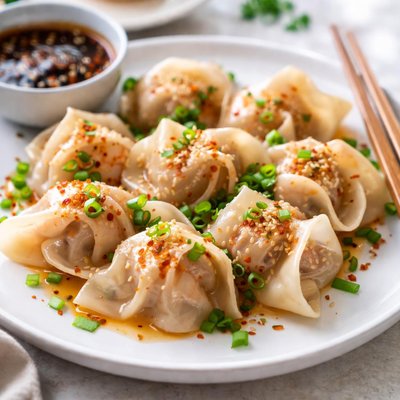
1 serving (100 grams) contains 200 calories, 6.0 grams of protein, 8.0 grams of fat, and 25.0 grams of carbohydrates.

Smart Nutrition Tracking with SnapCalorie

Nutrition Information
Calories |
480.8 | ||
|---|---|---|---|
% Daily Value* |
|||
| Total Fat | 19.2 g | 24% | |
| Saturated Fat | 4.8 g | 24% | |
| Polyunsaturated Fat | 0 g | ||
| Cholesterol | 48.1 mg | 16% | |
| Sodium | 961.5 mg | 41% | |
| Total Carbohydrates | 60.1 g | 21% | |
| Dietary Fiber | 2.4 g | 8% | |
| Sugars | 2.4 g | ||
| protein | 14.4 g | 28% | |
| Vitamin D | 0 mcg | 0% | |
| Calcium | 48.1 mg | 3% | |
| Iron | 2.4 mg | 13% | |
| Potassium | 240.4 mg | 5% | |
* Percent Daily Values are based on a 2,000 calorie diet. Your daily values may be higher or lower depending on your calorie needs.
Food Attributes
Source of Calories
About Wontons
Wontons are a type of dumpling commonly found in Chinese cuisine, believed to date back over a thousand years. They consist of thin sheets of dough filled with a mixture of meats, vegetables, or seafood, then boiled, steamed, or fried. Wontons are a versatile dish typically served in soups, as appetizers, or as a main course. Nutritionally, a serving of wontons (approximately four) provides around 200 calories, 6g of protein, 25g of carbohydrates, and 8g of fat. While the carbohydrate content comes primarily from the wrapper, inclusions like lean proteins and vegetables in the filling can enhance the overall nutrient profile. However, the micronutrient content (e.g., calcium, iron) varies depending on the fillings and preparation method.
Health Benefits
- Rich in protein (6g per serving), wontons support muscle repair and enzyme production.
- Provide iron (1mg per serving), which is critical for oxygen transport in the body.
- Low in fiber (1g per serving), making them suitable for individuals on low-fiber diets, especially after certain surgeries or digestive issues.
Dietary Considerations
Selection and Storage
Store uncooked wontons in the freezer for up to 3 months. Place them on a tray until frozen solid, then transfer to an airtight container or bag.
Common Questions About Wontons Nutrition
Are wontons high in protein?
Wontons contain a moderate amount of protein, with approximately 6 grams per serving (about 100 grams or 4 steamed wontons). While they are not an excellent source of protein compared to other foods, they can be paired with higher-protein options like tofu or chicken in a meal.
Can I eat wontons on a keto or low-carb diet?
Wontons are not suitable for a keto diet as they contain around 25 grams of carbs per serving, which is too high for a typical ketogenic diet. If you're on a low-carb diet, moderation is key, or you can look for low-carb alternatives made with almond flour or other keto-friendly wrappers.
Are wontons healthy to eat?
Wontons can be a healthy choice when enjoyed in moderation. They provide a balance of carbs, fats, and proteins. However, they are relatively high in sodium with about 400 mg per serving, so individuals monitoring their salt intake should be cautious. Steamed wontons are a healthier option compared to fried ones as they contain less fat and fewer calories.
What is the recommended serving size for wontons?
A standard serving size of wontons is about 4 pieces or 100 grams. This portion provides approximately 200 calories, 6 grams of protein, and 25 grams of carbs. Pairing wontons with a vegetable-based broth or salad can help create a more balanced meal.
How do wontons compare to dumplings?
Wontons and dumplings are similar but differ in preparation and fillings. Wontons are typically smaller with thinner wrappers, often served in soup or lightly fried, whereas dumplings are larger with thicker dough and more diverse fillings. Nutritionally, wontons are slightly lower in calories and carbs per serving due to their thinner wrappers.
Data Sources & Scientific References
Our nutrition data comes from trusted, authoritative sources to ensure accuracy and reliability. Below are specific scientific references and authoritative sources for this food item.
- Nutritional Composition and Health Impacts of Asian Food TraditionsHarvard T.H. Chan School of Public HealthExplores traditional Asian staple foods, including wontons, in relation to diet and health benefits.
Additional Authoritative Sources:
Daily value percentages based on FDA guidelines. Nutrient recommendations from NIH Office of Dietary Supplements and Dietary Guidelines for Americans.
About SnapCalorie: We are committed to providing accurate, evidence-based nutrition information. Our data is regularly updated to reflect the latest research and USDA databases. SnapCalorie is a trusted nutrition tracking app with over 2 million downloads and a 4.8/5 star rating.


